Air in Asturias

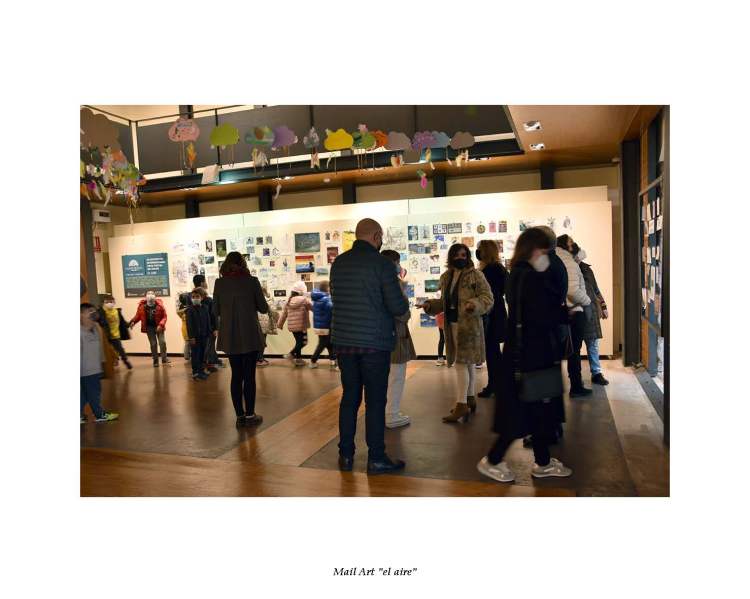
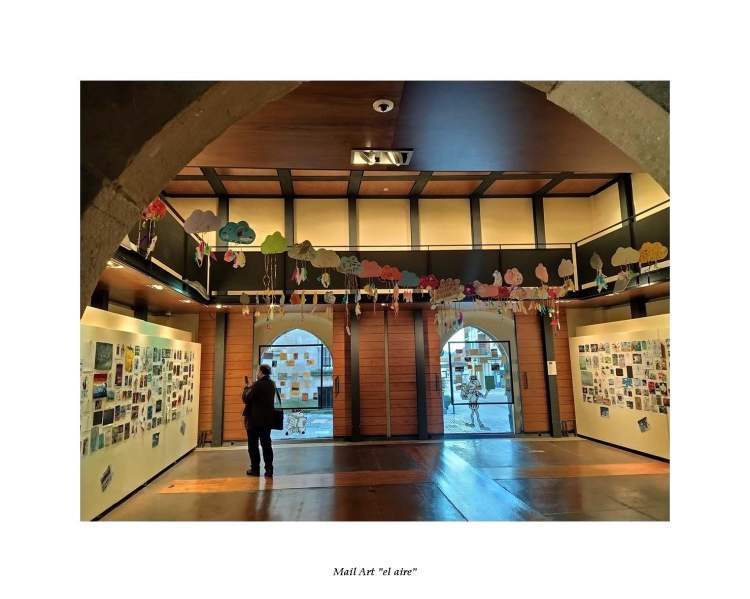
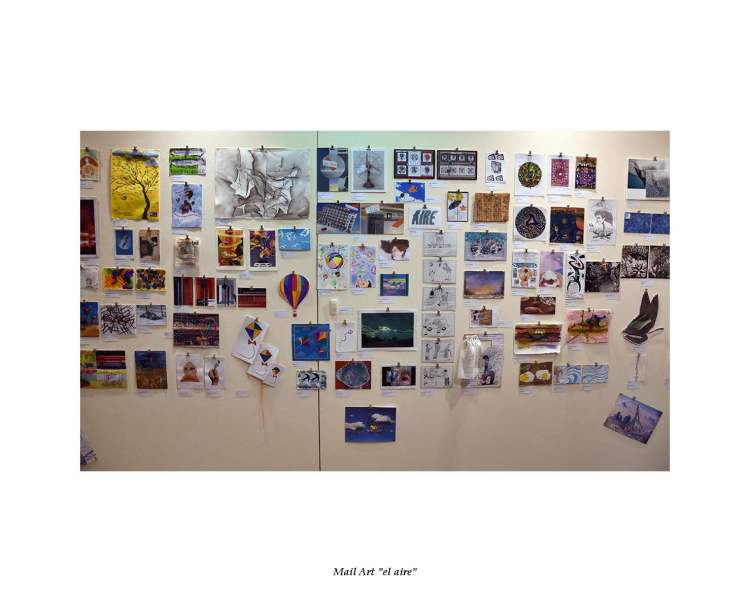
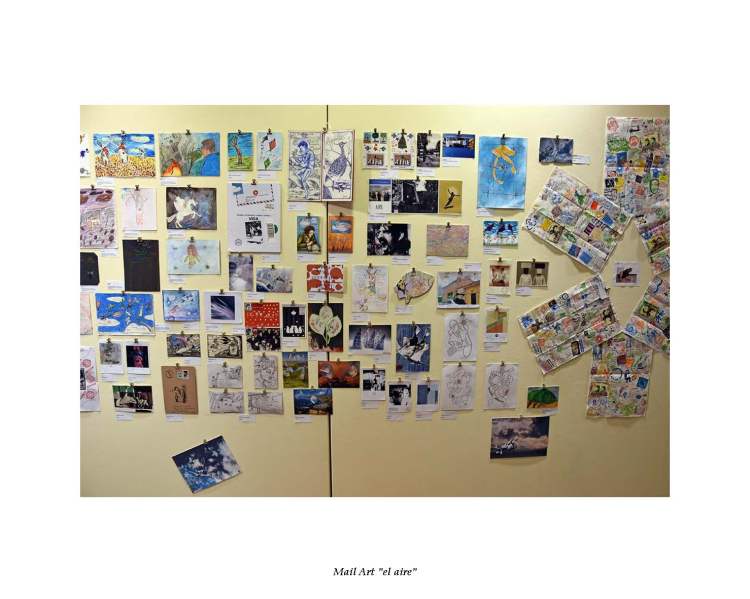
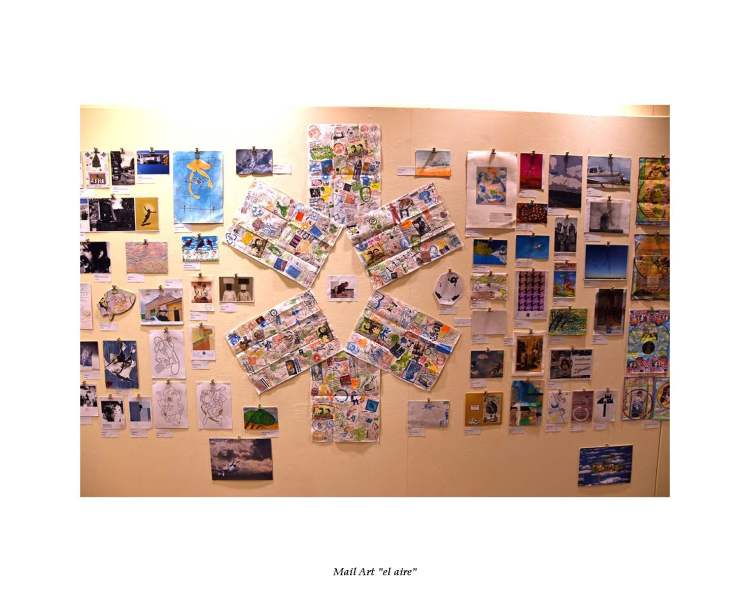
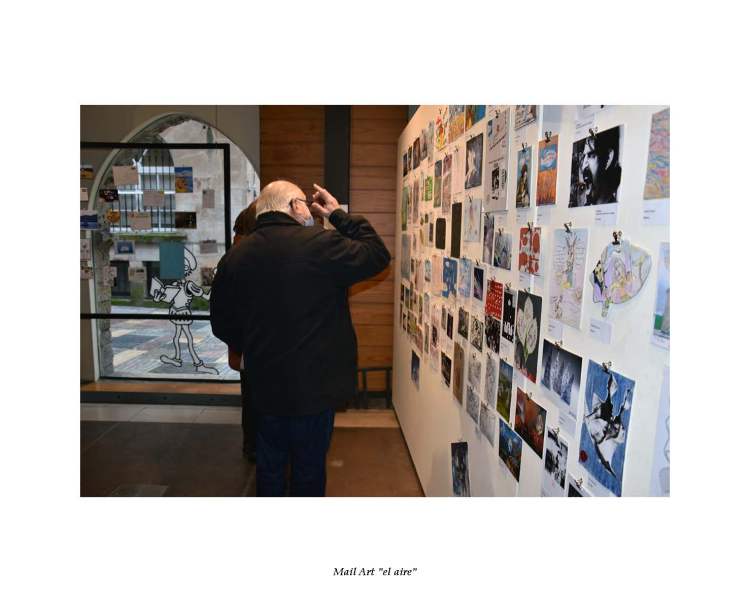
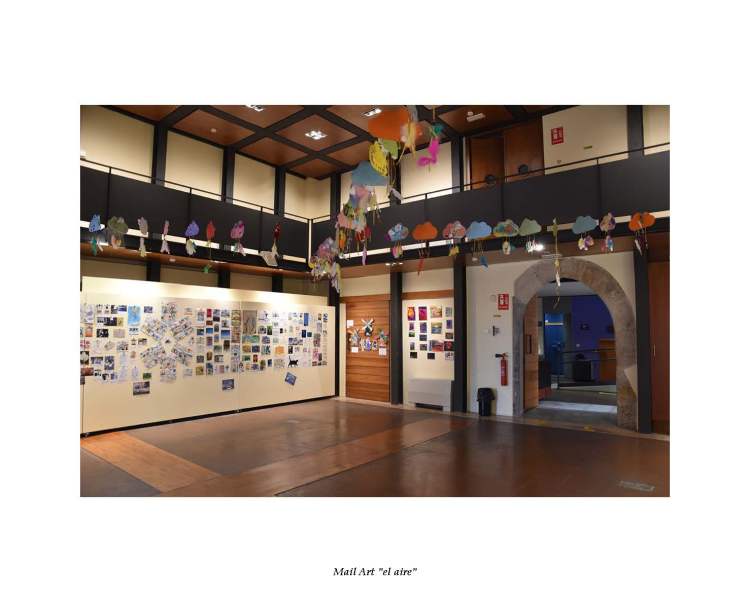
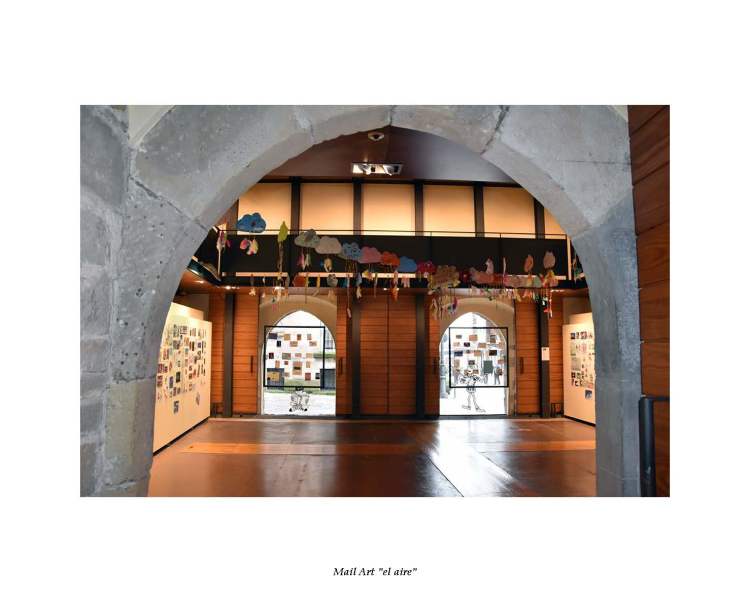
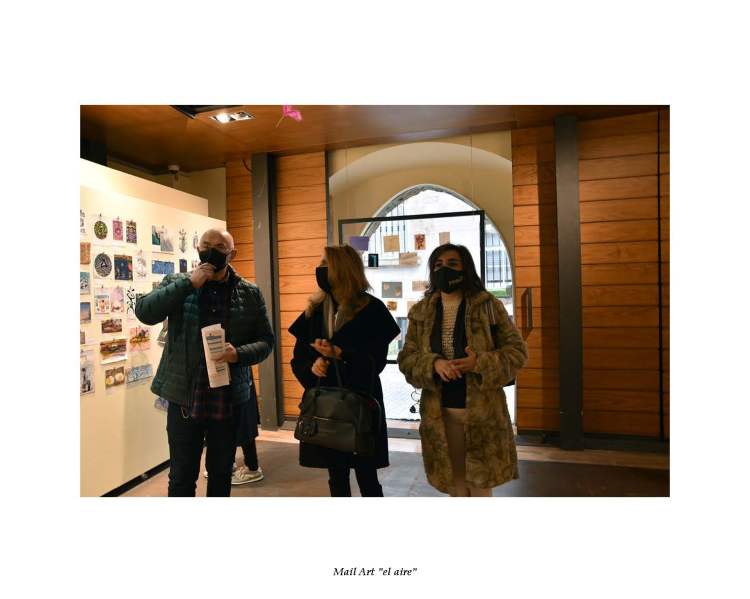
The city of Avilés in Spain invited creatives from around the world to participate in the VI International Avilés Mail Art Exhibition, themed El Aire (the air). The exhibition in the Palacio de Valdecarzana features works by artists from 42 nations. It closes on January 14th.

In cooperation with the city’s Department of Culture, the Correos (Spanish Postal Service) will edit a stamp based on one the artistic postcards.

Have fun watching the slideshow with photographs from the opening of the exhibition.
Gerald Jatzek contributed a collage about the the beatification of Karl I (1887-1922), Austria’s last emperor (1916-1918). Karl is supposed to have cured ulcers on the legs of a Brazilian nun in response to her pleas for the monarch’s help.

While this magical event is said to have happened in 1960, several years after his death, Karl is usually associated with the so-called Miracle of Caporetto: The 12th Battle of the Isonzo (10/1917) saw a triumphant victory of the combined Austrian-German armies over their Italian counterparts. While it is debatable whether God was on Austria’s side, the use of poison gas (chlorine arsenic and diphosgene) played a key role in the outcome of the battle. And there is no doubt that the emperor was ultimately in command.

Karl’s official beatification ceremony took place on October 3, 2004. Needless to say, none of the Italian victims were commemorated by the Roman Catholic Church.

Download

Catalogue (PDF, in Spanish)
Looking Back

2021 was, once again, special, insofar as Austria had two covid lockdowns. Hence, a lot of public cultural activities were cancelled. Gerald played a few concerts and held some readings, and they had one opportunity to join forces, with Gabriele reading and Gerald on guitar, mandolin and harps.

A highlight was without a doubt Gabriele’s first place in the Austrian literary contest fit for life with a story that oscillates between realistic descriptions and surreal inventions.

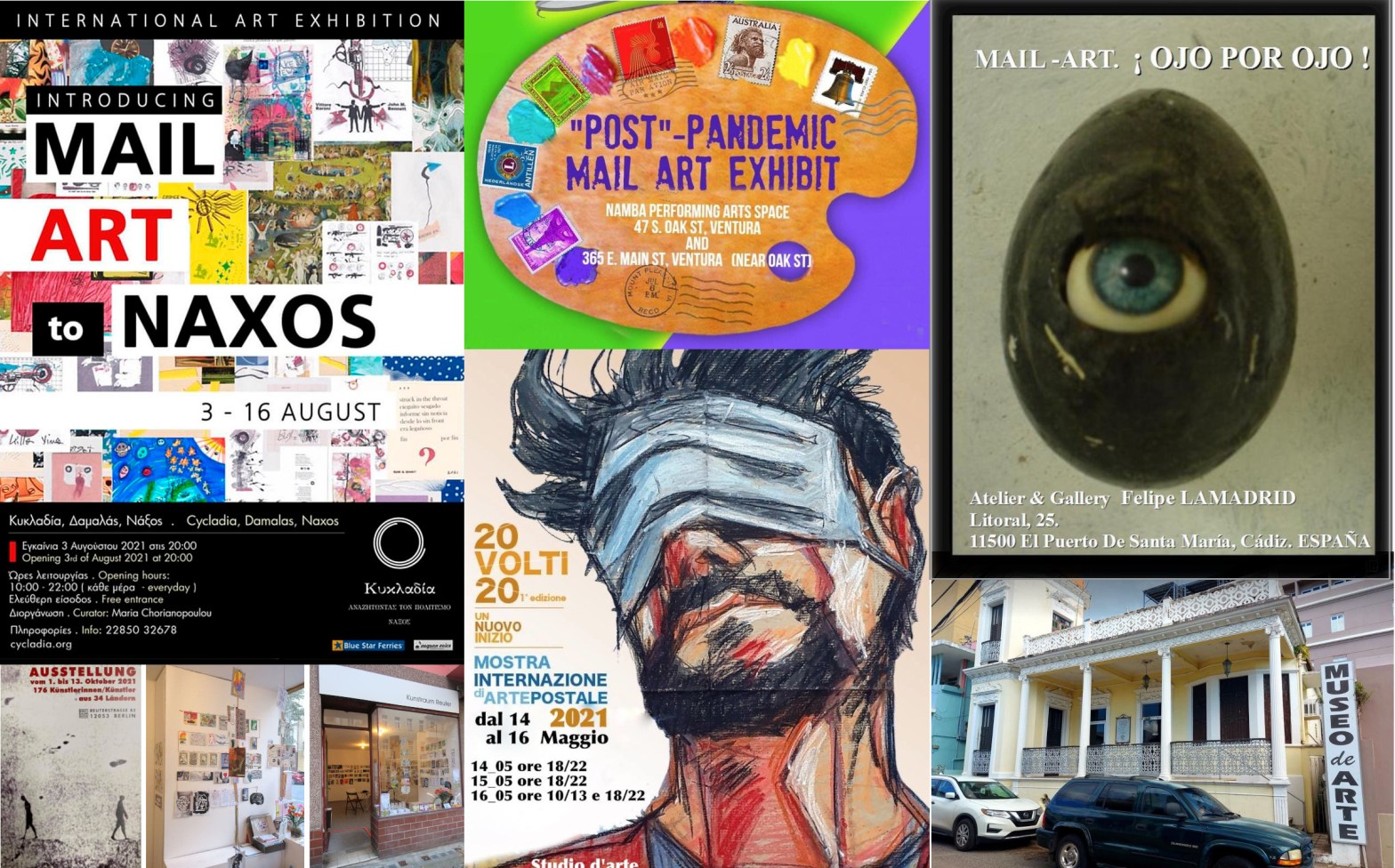
Mail art activities were less affected by the pandemic. and instead of traveling the two of them sent their works to destinations near and far. Their paintings, mixed media items and photos were shown at exhibitions in Germany, Greece, Hungary, Italy, The Netherlands, Puerto Rico, Romania, Spain and the USA.

Spanish Entrance

Arnolfini Mini[e]MailArt is a Hungarian initiative that has been collecting digital mail art since 2008. The current exhibition no.57 is dedicated to doorways. It features – among others – works by Reid Wood (USA), Gülşah Özdemir (Turkey), and Gerald Jatzek (from left to right).

Gerald’s Porta Granadina is based on a photo that he made in Granada’s historical Albaicin quarter. The work includes a statement by the Spanish poet Federico García Lorca (1898-1936) who was killed by fascist forces:

“I think that being from Granada inclines me toward a sympathetic understanding of persecuted peoples. Of gypsies, of blacks, of Jews, … of Moors, which we all carry inside.”

Poesie-Kalender

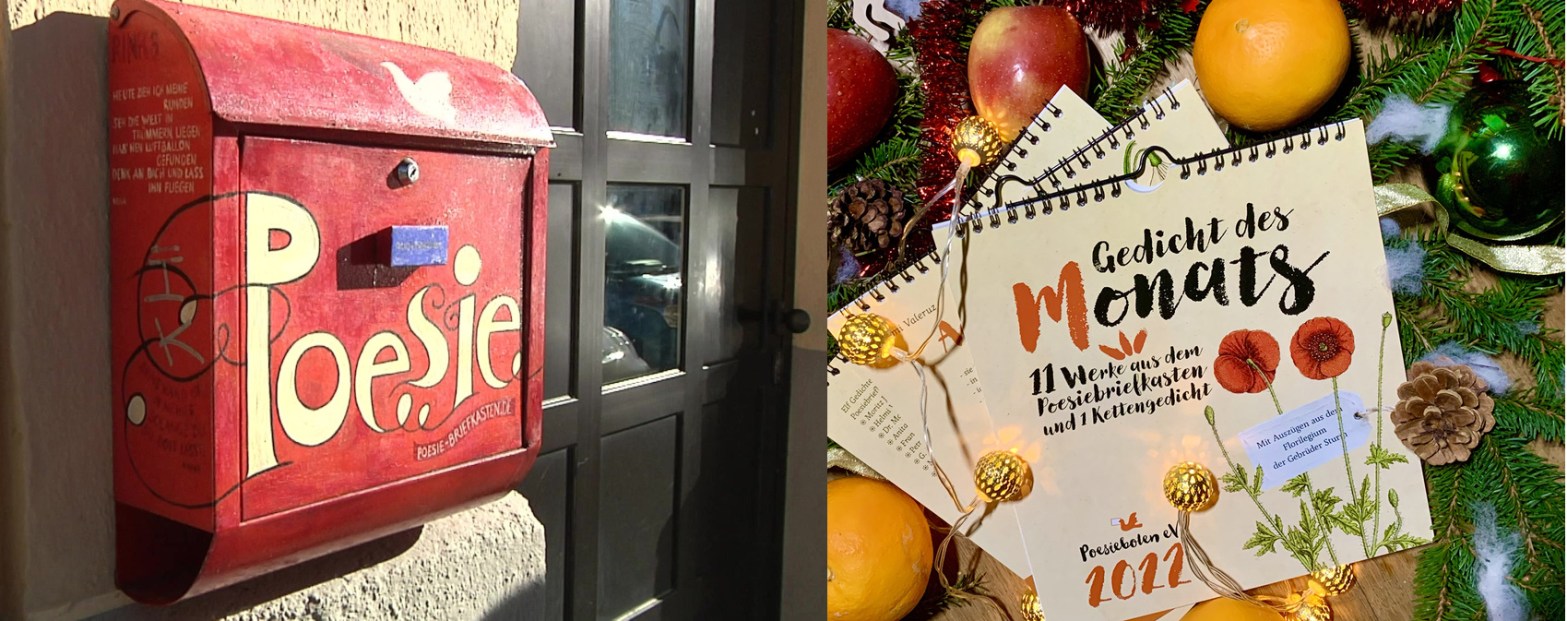
Jeden Monat wählt die Münchner Initiative Poesiepostkasten ein Gedicht aus, das in einem Schaufenster der Stadtbibliothek Gasteig ausgestellt wird. Zusätzlich erscheint am Ende des Jahres ein Kalender mit den prämierten Beiträgen.

Geralds Gedicht Die Zeit war das Gedicht des Monats im Jänner 2021 und ist im Kalender für 2022 enthalten. Den gibt es in der Stadtbibliothek Giesing, Deisenhofener Str. 20 oder per Bestellung unter info@poesiebriefkasten.de.

Der Text wurde auch vom Bibliothekar Florian Elsas im Rahmen einer Online-Lesung vorgetragen.

Quotes for Art Lovers, Part 1

What is Mail Art? (2)

“Mail art, also known as Postal art and Correspondence art, is an oddball in marketing terms. The whole movement values creating art, but in a sense it insists on not being taken particularly seriously by the established art world.”
Xamou Art

“La carte postale d’artiste est une œuvre indépendante, elle n’est pas une reproduction, mais un projet artistique en tant que tel, au même titre qu’une peinture, qu’une sculpture ou qu’un livre d’artiste.”
Véronique Gorczynski

“L’arte postale mette in comunicazione artisti di tutto il mondo che dialogano tra loro utilizzando il mezzo postale per scambiarsi ed interagire con le proprie opere
rispondendo a richiami, a progetti lanciati da latri artisti.”
Vittorio Baccelli

“Mail Art is far from finishing. I appreciate the role of collaboration in Mail Art.”
Ryosuke Cohen

“El Arte Correo es una forma subliminal de conciencia social ” 
Clemente Padín 

“Mail Art (…) ist eine historische Kunst- und Kommunikationsform, die eng mit Fluxus und Konzeptkunst verwoben ist und wie diese den tradierten Kunstbegriff sowie das Kunstsystem in Frage stellt.”
Akademie der Künste Berlin

“El arte correo en Sudamérica adopta una postura política en respuesta a las condiciones de represión imperantes.”
John Held, Jr. in: Mail Art. La Red Eterna

  • “Generally, mail art is sold and is traded between musicians.
  • Mail artwork is provided freely, with no expectation of something in return. You get exactly what you get.
  • When the envelope was dropped to the mail, overlook it.”
    Albert Morrow

“Le Mail Art souligne l’importance des liens sociaux et privilégie la relation humaine. Tout le monde peut faire de l’art postal, des anonymes s’approprient également ce moyen d’expression jouant avec humour avec la rigidité de l’institution postale.”
Typhaine Rouillard

“Bei der Mail Art schwingt der Wunsch mit, dass sich Nähe über eine räumliche Distanz transportieren lässt und dass sich das Erlebnis des Reisens stellvertretend in ein Objekt einschreiben kann,”
Saskia Trebing

“El Mail Art se plantea como un red de intercambio entre artistas.”
Fabiane Pianowski

“In essence Mail Art is noncommercial art created by an artist and sent directly to the audience.”
Marilyn Dammann

Photo: Rinck Content Studio

Yesterday’s News

Sometimes yesterday’s news can be quite exciting. While searching for children’s songs I stumbled over the recordings of an excellent choir from Germany. I checked their playlist – and found one of my poems that has been set to music by the composer Claudia Nicolai.

Of course, I knew the song. But I had never heard it performed by the Rundfunk-Kinderchor Berlin, although the video dates from 2016. The song is part of a collection of 53 songs on 3 CDs with the title Alle Lieder sind schon da (all the songs are already here). An optional book with scores, chords and lyrics is also part of the project.

Night Sky

It was a very nice surprise to find a letter from Canada on my return to Vienna. Inside a found a drawing by Awyn in the mail . I looked at it and a poem by Paul Lawrence Dunbar (1872-1906) came into my mind. I only had a vague memory of the text, but when I looked it up, it fit perfectly:

A Starry Night

A cloud fell down from the heavens,
And broke on the mountain’s brow;
It scattered the dusky fragments
All over the vale below.

The moon and the stars were anxious
To know what its fate might be;
So they rushed to the azure op’ning,
And all peered down to see.

Haiku, bibliophil

Eine bibliophile Anthologie hat Ingo Cesaro herausgebracht: 372 Haiku , die mit Bleilettern gesetzt, auf Werkdruckpapier gedruckt und mit japanischer Blockheftung per Hand gebunden wurden. Es ist schön, in einem Band mit Kolleginnen wie Klara Hurkova und Barbara Zeizinger vertreten zu sein.

Ingo Cesaro: Säe Hoffnung aus, Neue Cranach Presse, Kronach 2021.
Bestellungen beim Verlag.

Der Herausgeber Ingo Cesaro ist ein deutscher Autor, der sich vor vielen Jahren entschlossen hat, den gesamten Produktionsprozess von Literatur selbst abzudecken. Er stellt im eigenen Verlag Bücher auf einer mobilen Handpresse her und kümmert sich um den Vertrieb und de Werbung. Sein Wissen vermittelt er auch bei Workshops in Schulen und im Rahmen der Erwachsenenbildung.

Photo: Andrew Bossi, Bearbeitung: Gerald Jatzek – CC-By-SA

Future Art

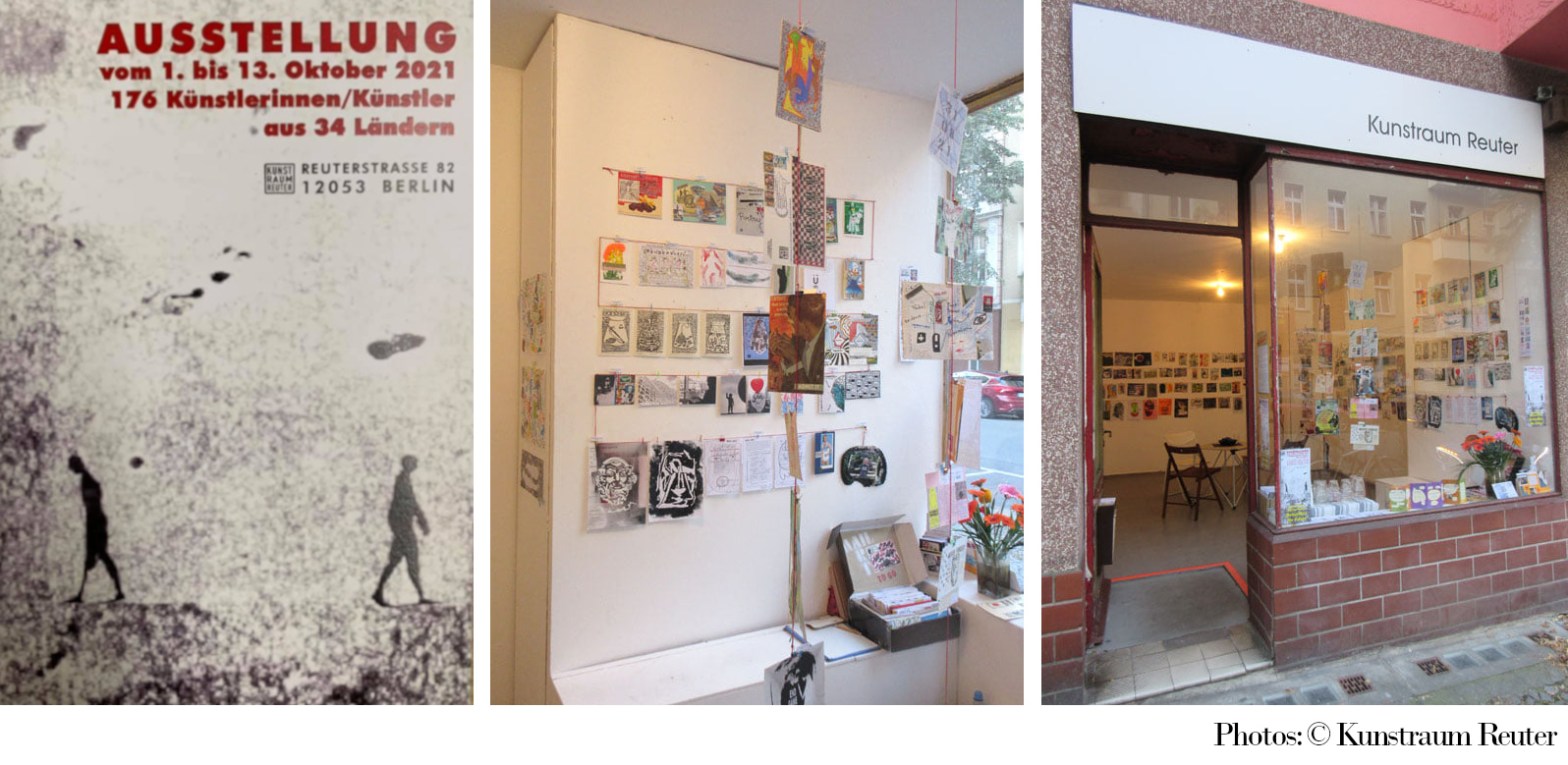
Kunstraum Reuter in Berlin not only organized an exhibition, curated by Lutz Anders; they also produced a calendar with works of 176 artists from all over the place. This means that you can remember the future (the theme of the call) the whole year 2022.

Part of the publication is a combination of watercolor & poetry titled Send in the Dolphins.

The photos are impressions from the exhibition that took place in October 2021.

Delay…

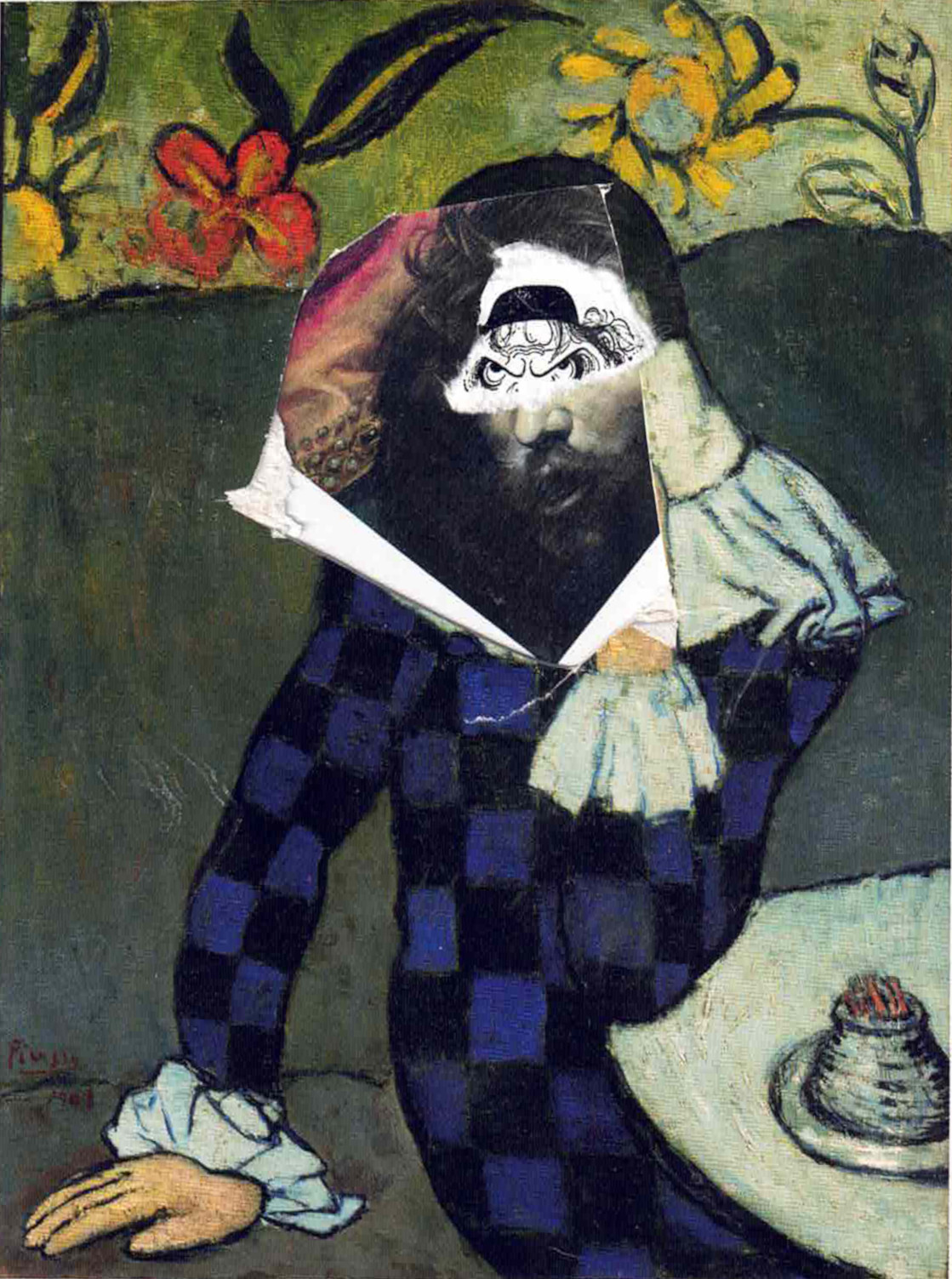
Jay Block’s Collage reached Vienna some weeks ago, but it was only after my return from Crete that I found it.

Preis für Gabriele Müller

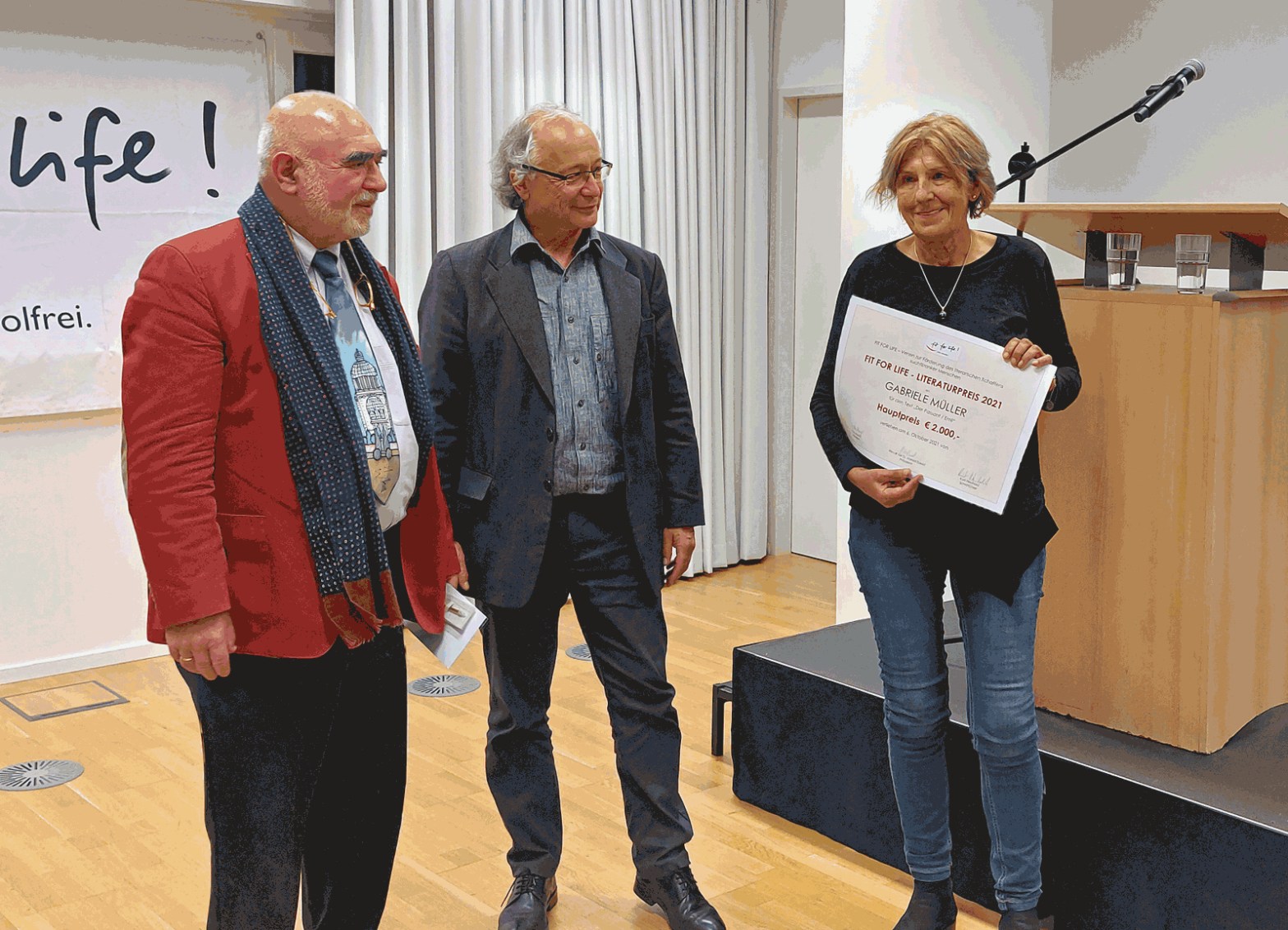
Der diesjährige Literaturpreis Fit for Life wurde im Rahmen einer Veranstaltung an der Sigmund Freud Privatuniversität an Gabriele Müller vergeben. Mit dem Preis wird die künstlerische Auseinandersetzung mit den Themen Sucht und Abhängigkeit gewürdigt.

Die Autorin überzeugte die Fachjury (Margit Niederhuber, Manfred Chobot, Gerhard Ruiss) mit der Kurzgeschichte Emil, die mit surrealen Bildern Innen- und Außenwelt in einer Therapie miteinander verknüpft. “Mühelos schwebend” nannte Margit Niederhuber die Verbindung.

Die Laudatio hielt der Literaturwissenschaftler Helmut Neundlinger, der Schauspieler Erwin Leder ließ die Facetten der Texte mit seinem Vortrag leuchten.

Das Foto zeigt die Autorin mit Harald David von der Sigmund Freud Privatuniversität und Kurt Neuhold vom Verein Grüner Kreis.

Der prämierte Text: Emil

Gabriele Müller

Fit for Life

Lots of Things

Jean-Philippe Giniot (Gilliot) from Belgium sent a bunch of small things, prints, readymades, stamps, and photocopies from mail art that he has collected.

It all arrived in an envelope made from magazine pages, and it wasn’t all that easy to find the least destructive method to open it.

But now it’s all here on the table.

A little History

What is Mail Art? (1)

So you want to learn about the history of mail art. Here are two great places to start:

Angie Kordic’s story How Did Mail Art Develop into a Global Art Movement? (Widewalls) regards the mail art movement “as the anticipator of the cyber communities founded on the Internet today because of its spirit and the idea of creating virtual groups of people bonding over a common interest”. She then introduces various types of mail art, such as artists’ stamps, collages, copy art, and decorated envelopes.

Lucy Ives’ article In 1971, Both the USPS and The Term Mail Art Were Born (Art in America) is a roundup of fifty years of development. It includes a plethora of names, some of which are well known from other fields of art, such as Marcel Duchamp, Yves Klein, Yoko Ono, and Jean-Marc Poinsot.

The author alternates between the spheres of art and down-to-earth-descriptions of artists’ problems. Ken Friedman’s goal to send all kind of unusual objects by mail “required not only precise knowledge of acceptable dimensions and packaging rules but an ability to negotiate with postal workers, who themselves became more intimately involved in the work of art in the case of a bulky or unusually shaped package—perhaps more to their annoyance than creative fulfillment”.

Exhibition

The Oberlin College Mail Art Collection contains approximately 25,000 pieces from the 1970s to the present, but only a portion is accessible through their website.

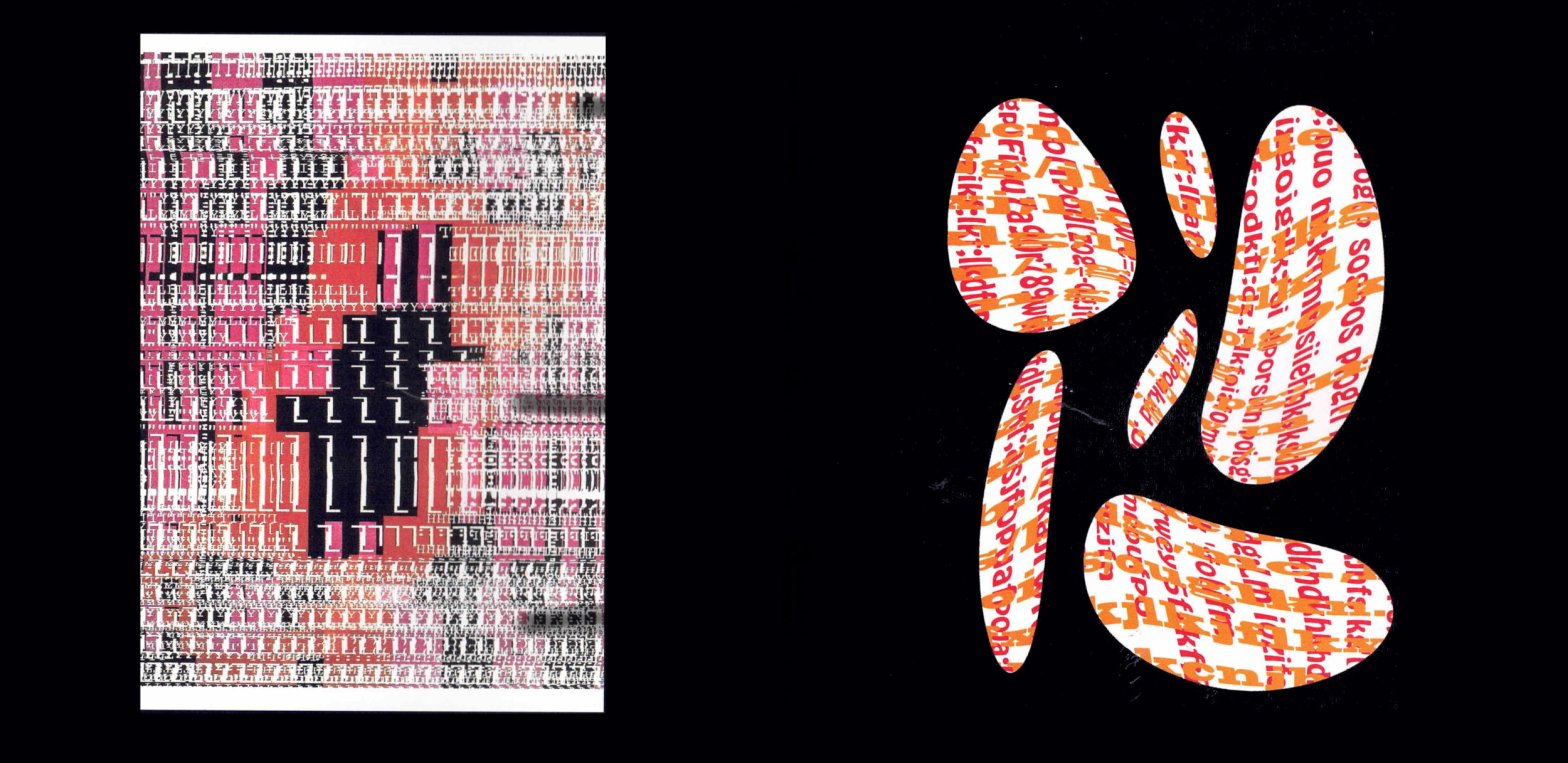
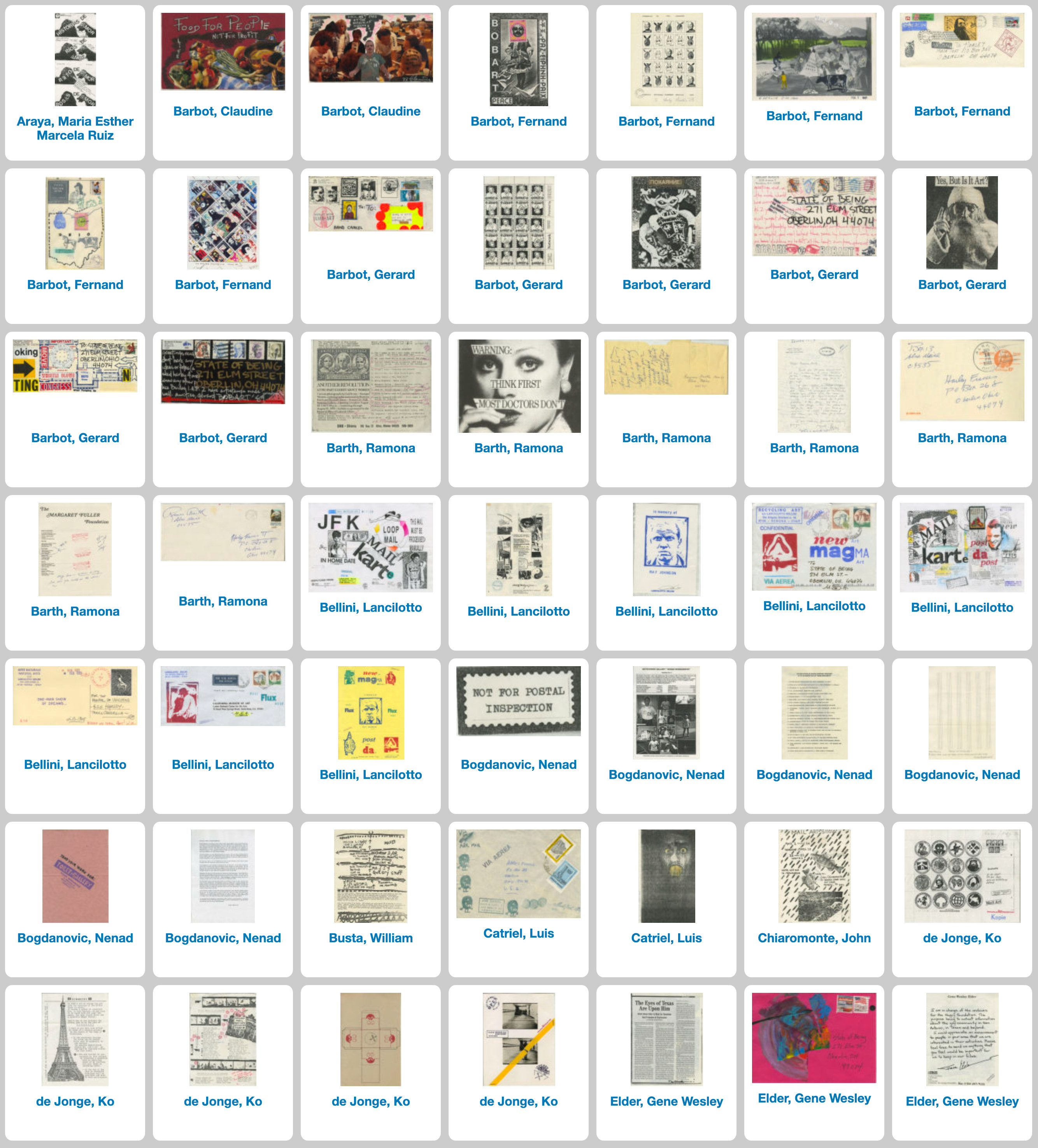
The online exhibition covers the years 1977 to 2004 and features approximately 1,000 works by 35 artists, including Lancillotto Bellini, Claudine Barbot, Dick Higgins, Hazel Jones & Michael Leigh, Patricia Tavenner, and Chuck Welch.

Traveling Exhibition

Finally, the “Post” Pandemic Mail Art Exhibit has come to Europe. The works of artists from 22 countries form a street art exhibition in Aiud, Romania. Among the exhibits is Gerald’s satirical take on the return of medieval views on the world.

The cross-continental art exchange has been organized by the Inter-Art Foundation of the city in Alba County, Transylvania.

Here are some impressions from the opening night.

Photos: Inter-Art” Foundation Aiud

From a Torn Poster…

Fevers of the Mind is an online magazine and an edition that publishes poetry books. You may have heard about the anthologies Fevers of the Mind 5: Overcome (2021), The Poets of 2020 (2021) and Avalanches in Poetry  (poetry inspired by Leonard Cohen, 2019).

Recently, editor David L. O’Nan made an Interview with Gerald Jatzek covering themes like literary influences, social background, the pivotal moment when you decide to become a writer, and travels:

“Traveling was especially important when I was young and felt like suffocating in the conservative Viennese atmosphere where the elders suffered from amnesia regarding the atrocities of the Nazi era.”

“Sometimes, I overhear a half-sentence from a conversation on the street, or I read a line from a torn poster, and it’s a powerful writing prompt.”

You can read the interview online here.

(Photo: MarcusObal – CC 3.0)

Fascinating Coproduction

Sharon Silverman is an artist and an art instructor. She regularly combines forces with other visual artists to produce books that show art in conversation. In these volumes she responds to works of other artists, an approach that gives the reader / viewer the opportunity to understand her analysis of the works in a direct, emotional way (and without the footnote-prone explanations of many art historians).

The illustration is taken from volume 18 of her books that documents the artistic dialogue with De Villo Sloane from New York. Other volumes document cooperations with artists like Joachim Buchholz, David Jones, Jayne B. Lyons, Olga Romanova, and Nancy Bell Scott.

If you are want to know more about Sharon’s documentations, visit her web presence at the International Union of Mail-Artists.

Music in Agia Galini

Οnce again in Agia Galini, Crete, the place where you may achieve a state of tranquility (γαλήνη). That doesn’t necessarily mean you stay silent all the time. Gerald played the guitar and the piccolo mandolin at Zorbas Cafe And Wine Bar.


Why this really tiny mandolin? Because airlines nowadays tend to charge a fortune for transporting instruments. Some won’t even accept a guitar as part of your checked baggage allowance (thanks, Austrian Airlines).
Anyway, the piccolo – built by Paul Hathway, London – proved to be handy and versatile, even though it’s sometimes a little tedious to transpose songs on the fly (from G3-D4-A4-E5 to C4-G4-D5-A5).

Art in the Window

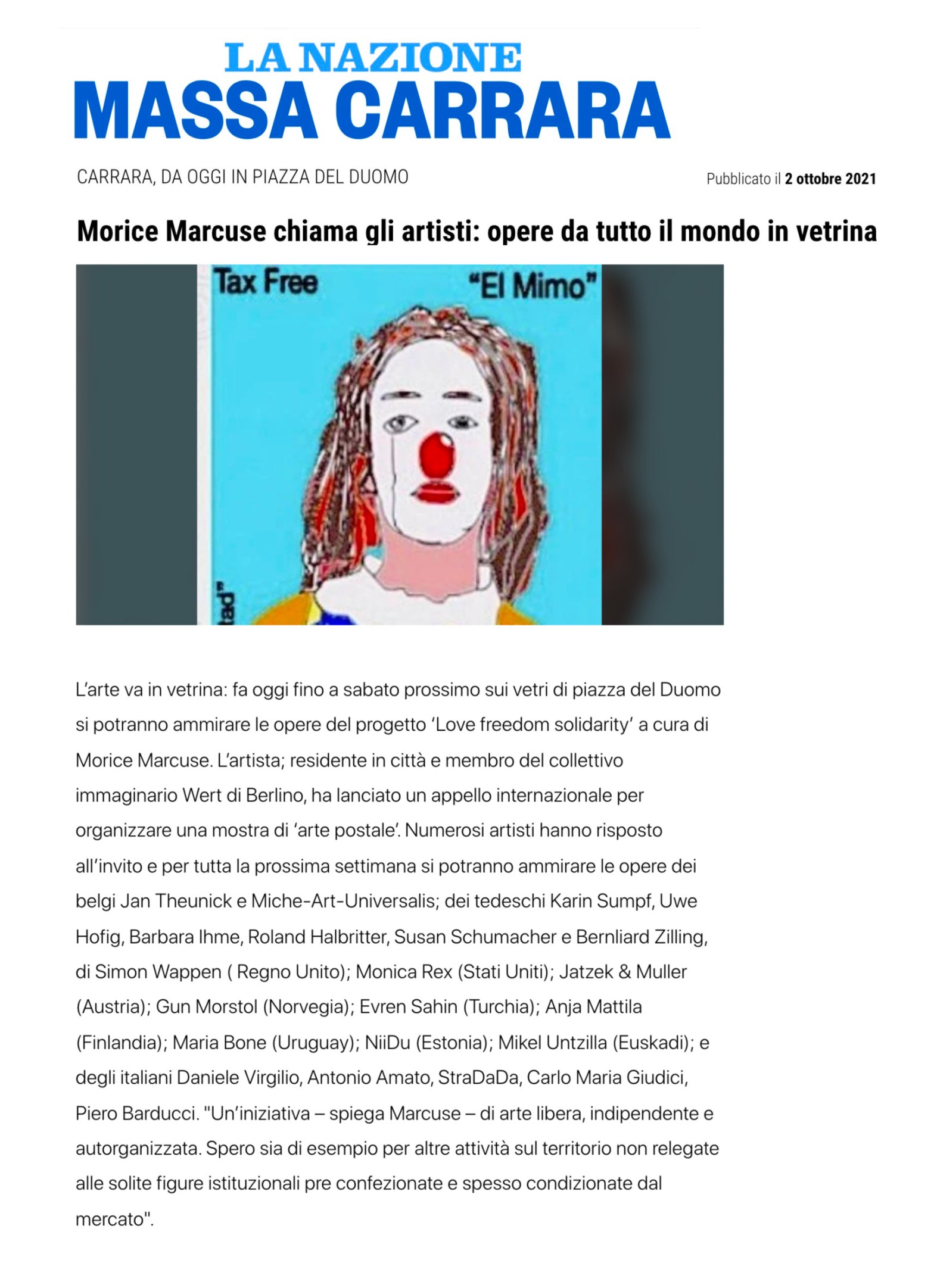
Morice Marcuse is the organizer of a mailart exhibition in shopping windows (l’arte va in vetrina) in the Italian town of Carrara under the title Love – Freedom – Solidarity. He invited artists from all over the place to reflect on the theme contextualizing it in their socio-geographical framework.

Gabriele and Gerald contributed the joint solution The Dancer’s Movements, a combination of a poem and a watercolor painting.

The newspaper La Nazione covered the opening.