Geschichten und Bilder von Toten werden täglich in unsere Augen und Hirne geschickt, und langsam, aber sicher, werden wir abgestumpft. Das ändert sich augenblicklich, wenn wir die Opfer kennen, als Freunde, Verwandte oder als Personen des öffentlichen Lebens.
“Femizid bezeichnet die gezielte Tötung von Frauen aufgrund ihres Geschlechts.”
Amnesty International
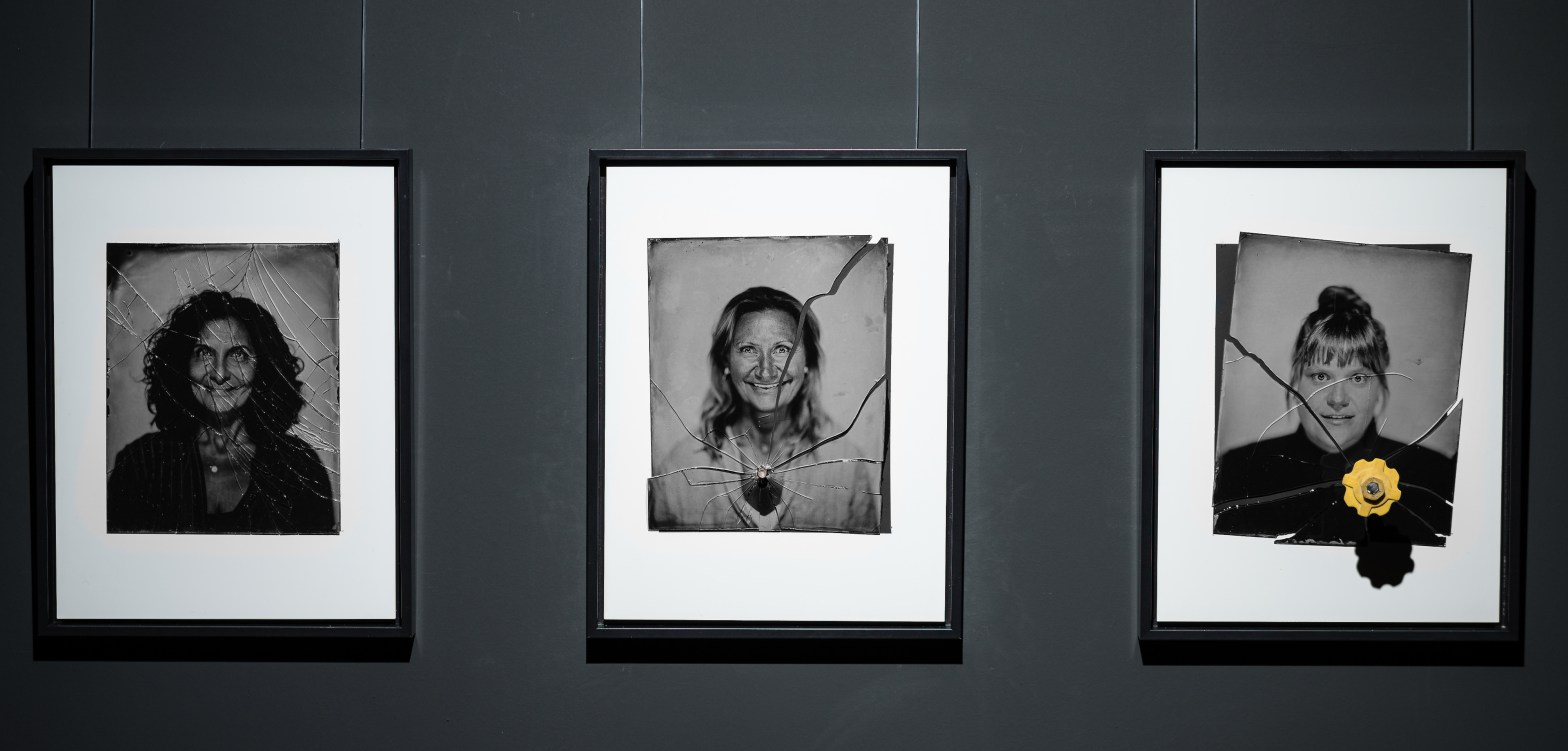
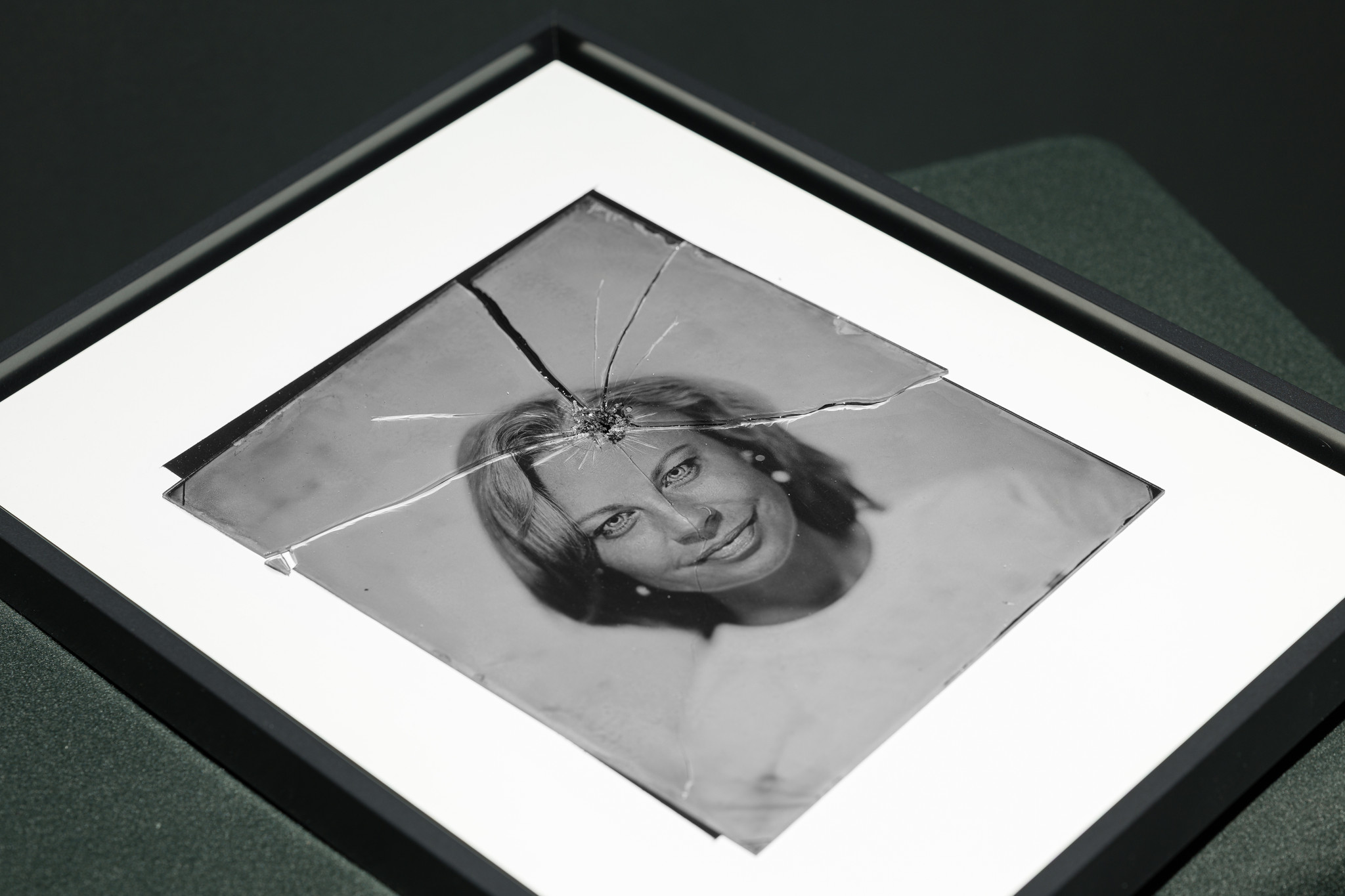
Diese Nähe zu schaffen, ist das Ziel von Iris und Erik Diewald-Hagen. Jedes ihrer Porträts weiblicher Persönlichkeiten weist eine Besonderheit auf: Verletzungen, die an die Wunden von Frauen erinnern, die in Österreich ermordet wurden, weil sie sich nicht so verhielten, wie es Männer von ihnen erwarteten.
Die Morde sind die letzte Konsequenz einer Haltung, die sich herausnimmt, die Rollen vorzugeben, die Frauen auszufüllen haben: gesellschaftlich, beruflich, sexuell, ökonomisch und familiär. Die Täter sind in vielen Fällen nicht Fremde, sondern Freund, Ehemann, Bruder oder Vater.
“Globally, 83,000 women and girls were intentionally killed in 2024, with about 60% murdered by intimate partners or family members.”
United Nations
Modell für die Fotos standen Barbara Blaha, Virginia Ernst, Irmgard Griss, Michaela Kirchgasser, Clara Luzia, Proschat Madani, Stefanie Reinsperger, Katharina Straßer, Barbara Karlich, Lilian Klebow, Kristina Sprenger, Teresa Vogl, und andere. 37 Frauen aus Kunst, Kultur, Medien, Politik und Sport holen mit ihren Gesichtern die Opfer aus dem Vergessen.
Die Bilder wurden als Kollodium-Nassplatten auf Glas entwickelt, einer Technik aus der Frühzeit der Fotografie, die durch ihren Detailreichtum besticht. Die brutale Bearbeitung und teilweise Zerstörung der fertigen Glasplatten überträgt die Wirkung der Gewalt. Der simulierte Kopfschuss macht Gewalt für die Betrachter unmittelbar erlebbar.
Iris und Erik Diewald-Hagen drücken es so aus: “Uns geht es darum, etwas sichtbar zu machen, das in Zahlen und Statistiken schnell abstrakt wird. Gewalt gegen Frauen ist kein Randthema und kein einzelner Fall”.
Headshots
Ausstellung im Künstlerhaus Karlsplatz 5 1010 Wien Vernissage: 27. November 2026 28. November bis 6. Dezember 2026, 10.00-18.00
Ausstellung in der ERIS Gallery Johann-Wilhelm-Klein-Straße 53 4040 Linz / Urfahr ab 20. Jänner 2027
In October 2025, Deaborah Ríse started a call for mail art with the theme “Fugitive Hearts”, a year later she opened an exhibition at the Dark Forest Studio that ran from 25 October to 31 October 2026.
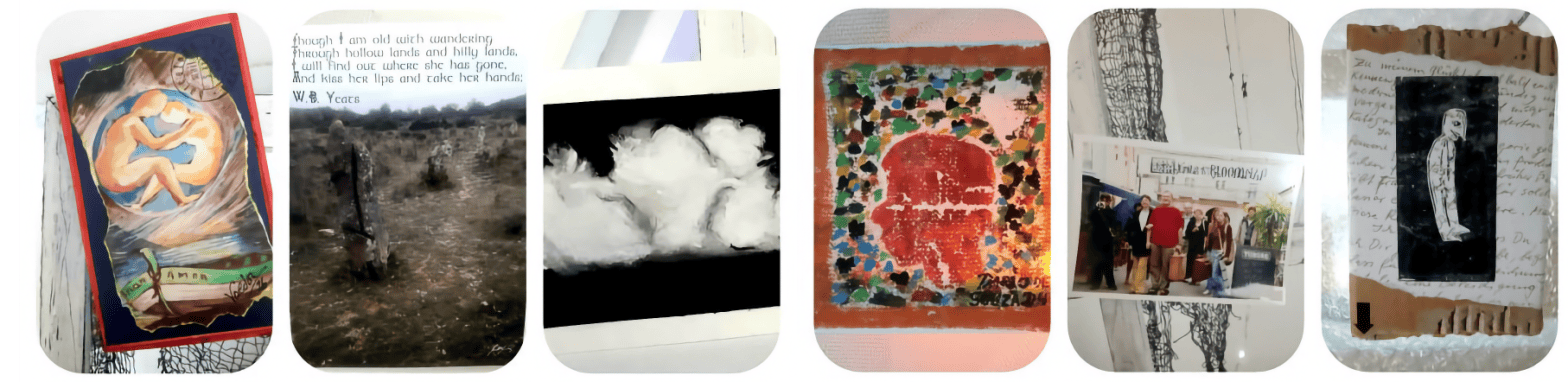
The illustration on ttop of the page shows from left to right: ‘Amor’ by Valdor/Spain; unnamed works by Gerald Jatzek/Austria, Vanessa Kister/Brasil, and Dario De Souza/Brasil; ‘Go Into All The World’ by Peter Abajkovics/Hungary, and ‘Heart Wanted’ by Susan Mitterwieser/Germany.
Wer die Kunstwerkstatt Tulln (KWT) besuchen will, muss erst durch den Gastgarten eines griechischen Lokals. Danach öffnet sich überraschend der rund 400 m2 große Saal, in dem der 1988 gegründete Verein KWT Kunst und Kultur auf die Beine stellt. Er bietet nicht nur eine Bühne für Veranstaltungen, sondern versteht sich auch als Werkstatt in der Kunst entstehen kann.
Diesen Ansatz teilt das Druckgraphiker:innenkollektiv Typos, für den Anna Doppler die erste Ausstellung in Tulln organisiert hat. Unter dem Titel “Druckzeit” zeigen zehn Künstlerinnen, ein Künstler und zwei Kollektive was Druckgraphik der unterschiedlichsten Techniken alles kann.
Da sind die Arbeiten in Sieb- und Hochdruck “Wer hätte das gedacht. Femina cogitans” von ART:inkollektiv, in denen sich graphische Elemente mit Lyrik von Harald Vogl verbinden. Mit leichter Ironie lädt die Textstelle “A lies im Wanderland” zum Lesen der Botschaften ein, die aus der Verbindung von Graphik mit Text entstehen.
Beeindruckend sind auch die poetischen Linolschnitte von Kathi Erben und Renée Kellner. Besonders bei den im Duo KR angefertigten Werken spielt der Zufall eine geplante Rolle. Wird eine Graphik der einen mit einer der anderen überdruckt, entsteht ein neues stimmiges Bild, wie aus einer Hand.
Die Sieb- und Moosdrucke von Anna Doppler erinnern an die spielerische Leichtigkeit von Kinderzeichnungen. Kein Wunder: Als Lehrerin und Mutter zweier Kinder lässt sie deren Einfluss ganz selbstverständlich einfließen.
Und das ist nur ein kleiner Ausschnitt der Vielfalt an Positionen und Techniken: Monotypie, Photopolymer, Prontolithograpie, Materialdruck, Strich- und Flächenätzung und Kombinationen daraus bis hin zum traditionellen Holzschnitt in aktuellem Kontext. Der Weg nach Tulln und durch den Gastgarten lohnt.
Ausstellung
31.10 bis 15.11. jeweils Sa und So: 14 bis 18 Uhr
Kunstwerkstatt Albrechtsgasse 18, 3430 Tulln, Eingang neben Gasthaus Mythos oder über die Donaulände
Ausstellende: Art:inkollektive (Helga Neuhauser, Susanne Schober), Anna Doppler, Kathi Erben, Sieglinde Fercher, Barbara Fuchs, Renate Holpfer, Renée Kellner, KR (Erben&Kellner), Brigitte Meissl, Gabriele Müller, Susanne Schober, Anne-Bé Talirz, Christian Wirth
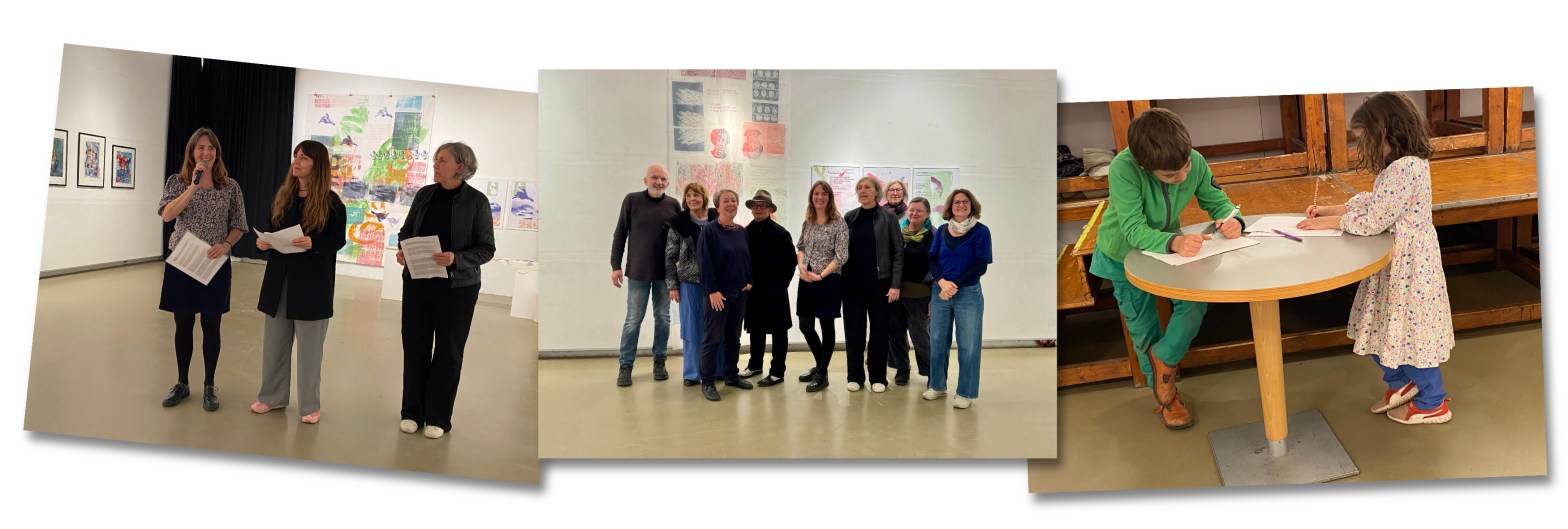
Die Fotos
v.l.n.r.: Anna Doppler, Stadträtin Veronika Kulenkampff (Foto: Renée Kellner) Die Ausstellenden (Foto: Kunstwerkstatt) Die beiden Kinder von Anna Doppler (Foto: Renée Kellner)
Peter Platel, zeitweise Schauspielschüler, später Inhaber von Friseursalons in Antwerpen, Brüssel und Gent, “Haar- und Beauty-Experte” (Wikipedia) in Zeitschriften und im TV, fertigt seit 2020 Collagen an. In einem. einleitenden Text des Bandes versucht er einen inneren Zusammenhang zwischen dieser Kunstform und Queerness darzustellen, was freilich nicht überzeugt.
Die apodiktische Feststellung “In ‘queer’ schwingt immer etwas Rebellisches mit” stellt eine Befindlichkeit des Autors dar, für die er keinerlei Beweise anführt. In der Werbung des Verlags heißt es gar “Collage an sich ist eine queere Kunstform – denn sie wurde von queeren Künstler*innen erfunden”.
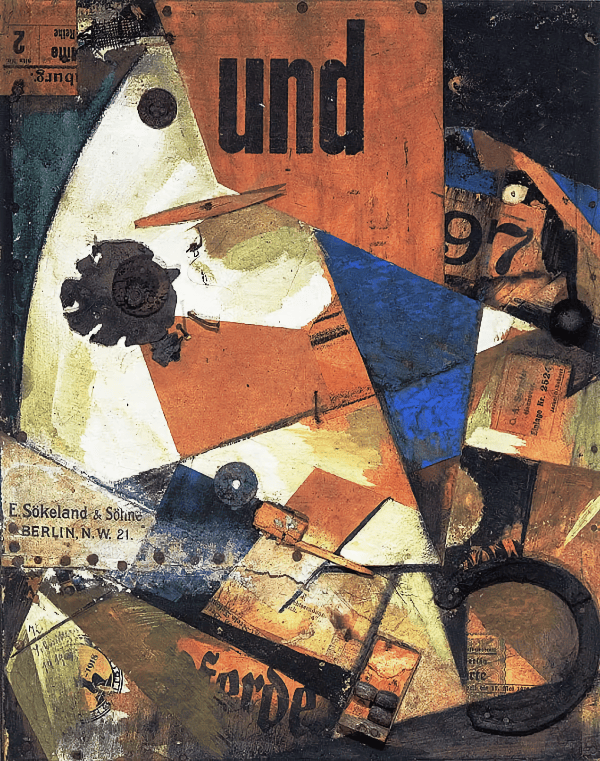
Eine Collage des Einzelgängers Kurt Schwitters: Das Undbild (1919), Staatsgalerie Stuttgart, PD.
Das ist definitiv falsch: Platel selbst nennt als Wegbereiter der Collage Georges Braque, Hannah Höch und Pablo Picasso. Höch war bisexuell. Braque lebte ab 1912 mit Marcelle. Lapré, zusammen, die er 1926 heiratete. Und Picasso … Und die in der Folge einflussreichsten Künstler? Max Ernst war mit Peggy Guggenheim und Dorothea Tannin verheiratet, John Heartfield, der Collagen mit beißender Ironie gegen den Nationalsozialmus schuf, brachte es auf drei Ehen.
Im Anschluss an Kurzvorstellungen queerer Collagisten gibt Platel drei Seiten Tipps zur Produktion und stellt schließlich einige eigene Werke vor.
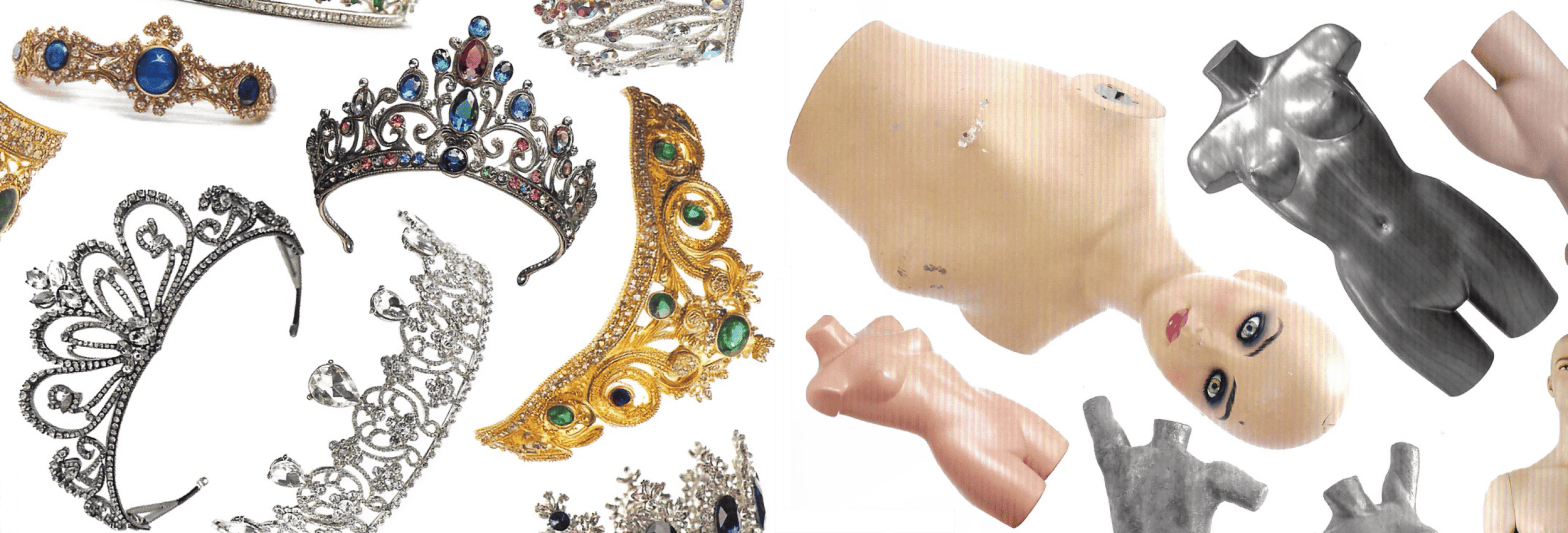
Danach beginnt mit den Bildmotiven der wesentliche Teil des Bandes. Es sind zumeist opulente Darstellungen, die dem Stil des Autors entsprechen. Der wichtige Bereich der Typografie ist dabei nicht vertreten. Abbildungen von Personen, Körperteile, Lippenstifte, Kronen, Schmuck, Pflanzen, Tiere, Fahrzeuge u.a.m. werden in nicht nachvollziehbarer Reihenfolge präsentiert. Ein Register würde die Suche nach Motiven wesentlich vereinfachen.
Die bisweilen extrem ausgefransten Darstellungen erfordern einen ausgesprochen routinierten Umgang mit der Schere. Die Konkurrenz, etwa Collage Soup, bietet derlei zeitgemäßer als eBooks für digitale Collagen an. Aber vielleicht überlegt man sich das ja noch.
Peter Platel: Collage Fantastique Laurence King Verlag, Berlin 2026, 208 Seiten, übersetzt aus dem Englischen von Thomas Hauffe ISBN 978-3-9624-4532-4
In November 2025, the International Museum of Electrography (MIDE-CIANT) launched mail art call, dedicated to Pere Sousa (1955–2023).
Sousa was a mail artist, poet, activist, collector, radio producer and reciter of DADA poetry, in particular Kurt Schwitters and his own works. He founded the Merz Mail Cultural Activism Factory (MACBA) and published several zines.
Cesc Fortuny emphasizes Sousa’s lifelong fight against strict rules and restrictive concepts: “Pere Sousa understood that every alternative artistic practice runs the risk, with time, of hardening into a bureaucratic liturgy full of labels, more-or-less consecrated names and a survival sustained largely by inertia.”
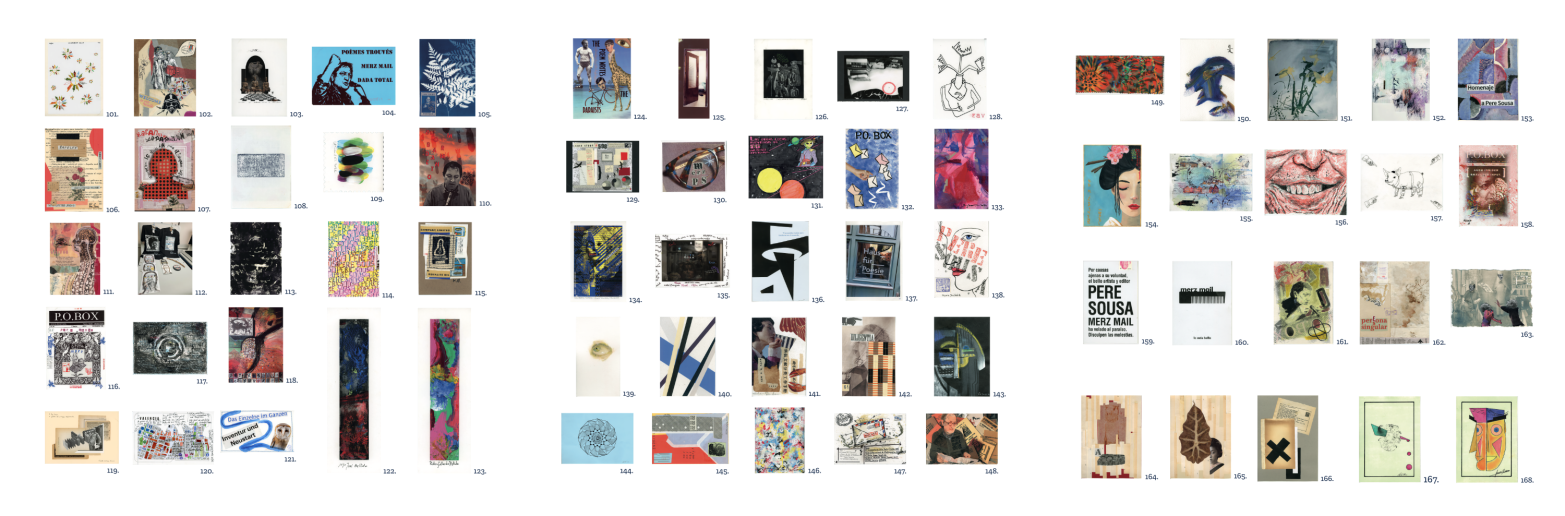
The reaction to the call were 296 works by 220 artists from 26 countries. The University of Castilla-La Mancha (UCLM) states that the “works submitted showcase the diversity of languages, formats, and cultural contexts that characterise the eternal network, an open, decentralised, and constantly evolving artistic community”.
The Exhibition
Homenaje a Pere Sousa comissioned by Ana Navarrete Tudela 8.10.2026-10.1.2027 Museo Internacional de Electrografía (MIDE-CIANT) Edificio Antonio Saura, Campus UCLM Spain
Online Exhibition: Historical Snapshots and Sketches
It is impossible to succinctly summarize the 20th century. However, memorable phrases can characterize pivotal moments. Churchill’s “I have nothing to offer but blood, toil, tears, and sweat” is undoubtedly one of them. “An American airplane dropped a bomb on Hiroshima, destroying its usefulness to the enemy” (President Harry S. Truman on August 6, 1945) is another.
In 1961, Frantz Fanon predicted that there would be no single revolution against colonial rule. He pointed out, “They say the struggle goes on. The people realize that life is an unending combat.”
Ahead of Their Time: New Zealand was the first self-governing country in the world to give women the right to vote in parliamentary elections, starting in 1893. That same year, a woman was elected mayor of the village of Ohakune.
Mikail Gorbachev’s statement “Democracy is the wholesome and pure air without which a socialist public organization cannot live a full-blooded life” on the 27th Party Congress on February 25, 1986, swept aside decades of arguments against democracy.
Much has remained just a promise: “I have a dream that my four little children will one day live in a nation where they will not be judged by the color of their skin, but by the content of their character.”
Mail Art about a Century
Works of artists that followed the call by La Collettivah (Chiara Bertoncello, Cris Piloto, Elisa Rioda, Giuliana Ceretta, Silvia Gervason, and Rita Stevanato) can be viewed at the site InspirArtePostal
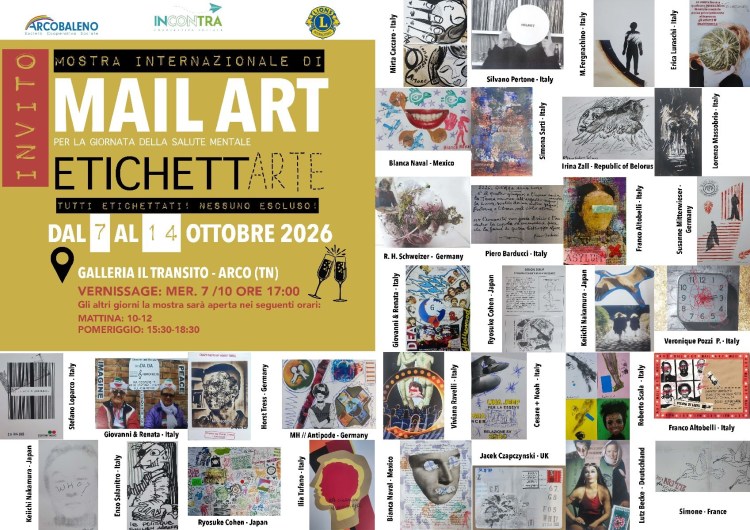
Labels was the theme of a mail art call that originated within a therapeutic rehabilitation community with the aim of prompting patients – and subsequently the wider community – to reflect on the issues of prejudice and stigma surrounding mental health. The labels referred to in the title are both the physical tags attached to the artworks and the social or diagnostic labels that cause suffering.
The call spoke about “social labels, diagnostic labels, labels we’ve placed on ourselves and those we’ve been given”. The keywords were “stigma, self-stigma, identity, or simply how do you feel when someone reduces you to a word” – a description with a trace of self-irony.
What was extraordinary about the initiative was the collaboration between two institutions: the Comunità Terapeutica Riabilitativa Villa Ischia and The Recovery Center Living Museum in Orangeburg, New York.
Required were flat pieces of art in one of the three sizes 10x15cm (A6, postcard), 14.8x21cm (A5), 21×29.7cm (A4) in any technique, e.g. drawing, painting, collage, photography, visual poetry, mixed media, and more.
Exhibition: EtichettArte / ArtLabels
Galleria Il Transito via Giovanni Segantini, 81 Arco (Trento), near Riva del Garda Trentino – Alto Adige / Südtirol Italy 7–14.10.2026 Opening: 7.10. 17:00
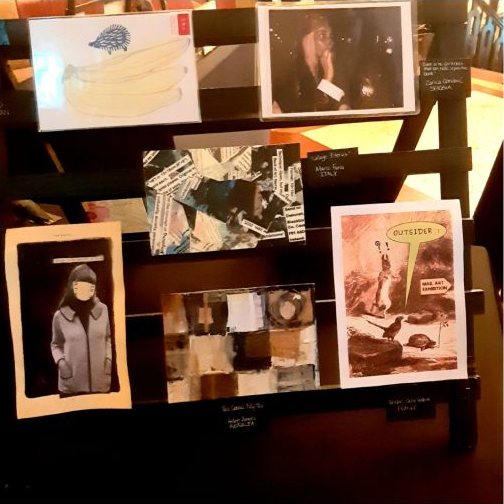
The event is organized to coincide with World Mental Health Day and as part of Mental Health Week. Works submitted by local and international artists are displayed alongside pieces created by the patients who launched the initiative.
Welcome to the World Mental Health Day exhibition.
Participants
Mirta Caccao / No title / Due Ville (VI), Italy
Marco Furia / No title / Genova, Italy,
Silvano Perton e, Psyche out Fanzine / No title / Varazze (SV) – Italy
Horst Tress / Mr- Nobody/Sig.Nessuno / K öln – Germany
Fabrizio Pavolucci / Incontro tra uomini pollo/Meeting between chicken men / Rimini – Italy
Sabela Baña / Extrovert/Estroversa / Cruña, Spain
Keiichi Nakamura / No title / Tokyo, Japan
Stefano Loparco / Il disagio è pubblico/The discomfort is public / Cormons (GO), Italy
Viviana Ravelli / Isolitudine / Milano, Italy
Cesare + Noah Serafino / No title / Spilinbergo (PN), Italy
MH//Antipode / No title / Weißdorf, Germany
Simona Sarti / Non giudico/I don’t judge / Roma, Italy
Renate Helene Schweizer / Non arrenderti, starai bene/Don’t give up, you’ll be fine / Germany
Margherita Fergnachino / In bilico/Hovering / Chieri (TO) – Italy
Enzo Salanitro, Fobie del denaro/Money phobias / Catania, Italy
Keiichi Nakamura / No title / T okyo, Japan
Piero Barducci / 2226 Guerra alla Luna/ 2226 War on the Moon / Bologna, Italy
Jacek Czapczynski / No title / Worcester, UK
Jacek Czapczynski / No title / Worcester, UK
Desplanque Ludovic / No title / Saint Aubert, France
Blanca Naval / No title / Mexico City, Mexico
Blanca Naval / No title / Mexico City, Mexico
Blanca Naval / No title / Mexico City, Mexico
Roberto Scala / No title / Milano, Italy
Ila Tufano/Movimento Aperto / Per ciascuno il suo meglio/To each his own best / Italy
Giovanni&Renata/StraDADA / No title / Ravenna, Italy
Giovanni&Renata/StraDADA / No title / Ravenna, Italy
Giovanni&Renata/StraDADA / No title / Ravenna, Italy
Royosuke Cohen / No title / Ashiya City, Japan
Royosuke Cohen / No title / Ashiya City, Japan
Lutz Becke / I nclusion/Inclusione / Neverin, Germany
Erica Luraschi / No title / Riva del Garda, Italy
Lorenzo Massobrio / No title / Genova, Italy
Susanne Mitterwieser / No title / Liepzig, Germany
Irina Zall / No title / Minsk, Republic of Belarus
Irina Zall / No title / Minsk, Republic of Belarus
Simone / No title / France
Veronique Pozzi Patnè / No title / Milano, Italy
Gerard Jatzek / No title / Austria
40 Joy Patrick / No title / California, U.S.A.
Joy Patrick / No title / California, U.S.A.
Joy Patrick / No title / California, U.S.A.
Pedro Bericat / No title / Spain
Susann Gold / No title / Canada
Simona Sarti / No title / Roma, Italy
Carmela Sarcina / Respect/Rispetto / Italy
Cristiano Palla / No title / Tione, Italy
Cristiano Palla / No title / Tione, Italy
Franco Altobelli / No title / Bari, Italy
Franco Altobelli / No title / Bari, Italy
Franco Altobelli / No title / Bari, Italy
Katerina Mandarik / No title / Strasburgo, Austria
Luc Fierens / No title / Weerde, Belgio
Keeichi Nakamura / Who?/Chi? / Japan
Keeichi Nakamura / No tile / Japan
Keeichi Nakamura / No title / Japan
Toan Vinh La / No title / Montreal, Canada
Bernhard Zilling / Irresponsabile/Irresponsabile / Berlin, Germany
Stefano Salvadori / Nome dell’artistaguera / Riva del Garda, Italy
Valentina / La mia personalità/My personality / Riva del Garda, Italy
Alessio / No title / Riva del Garda, Italy
104 Unsigned Artist / Capovolgendo/Turning upside down / Riva del Garda, Italy
Michela, Paola / L’apparenza inganna/ Appearances can be deceiving / Riva del Garda, Italy
Paola, Marilena, Roberta / Il lato positivo delle etichette/The bright side of labels, Italy
The top Image
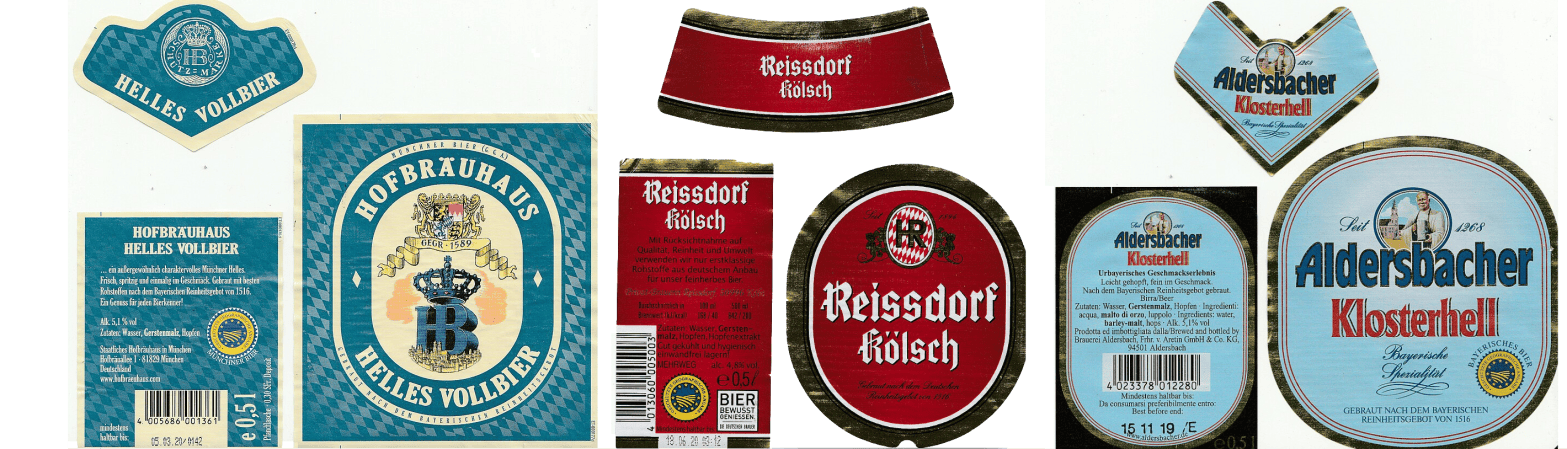
Paola, Marilena, Roberta / Il lato positivo delle etichette/The bright side of labels / ItalyThe beer labels at the top were scanned by by 5snake5 and are in the public domain.
The Ukrainian mail artist Lubomyr Tymkivis has started a call to support people undergoing psychiatric treatment in the Inpatient Ward No. 2 in Lviv, Ukraine. These are people whose lives have been affected by the horrors of war and who are now seeking rehabilitation and recovery.
He states: “To bring them some joy and help them return to everyday life, I have proposed organizing a mail art exhibition on the theme of flower at the hospital.”
The works should be in one of the following international standard sizes: A6, A5 or A4.
All techniques are welcome, e.g., collage, rubber stamps, drawing, or painting. Handmade works are especially welcome, as he hopes to involve patients in therapeutic art activities and encourage them to create their own artworks. Format: any size.
Freedom: The concepts of philosophers such as Plato, Kant, Sartre, and Feyerabend are difficult to compare. Indeed, Feyerabend even denied being to be a philosopher at all. That is – supposedly – the reason why the mail art call of the Kansas City Public Library uses a more practical approach:
Freedom to: Freedom from
The organizers further break down the topic using questions: Are you free to act as you wish? Or are you free from something that is acting upon you? How far have we come? How far do we still need to go? What are the freedoms that you treasure most? Is freedom really free?
Artists worldwide are requested to send a visual representation of what liberty means to them.
format: A6 or 5“x7” (12,7 x 17,8cm) mounted in the center of a white 8″x10″ (20,3 x 25,4cm). Unfortunately, his provision ignores the DIN paper sizes that are widely used around the world.
deadline: 10 October 2026
exhibition: 14 October 2026 – 17 January 2027
address: Kansas City Public Library Attn: FREEDOM 14 W. 10th St., Kansas City, MO 64105, USA
Additional rules
All media will be accepted, including but not limited to collage, drawing, painting, photography, and fiber art. Representational, narrative, non-narrative, and abstract artworks will be accepted. All ages and skill levels will be accepted.
Text-based or typographic artwork is accepted and encouraged, but entries must be intended as visual art.
Please include a folded self-addressed, stamped envelope if you would like your work to be returned.
The Library will not exclude materials because of the origin, background, or views of those contributing to their creation.
The Library will not prohibit or remove materials because of partisan or doctrinal disapproval.
The Library will not display works that include nudity, sexually explicit content, graphic violence, or profanity.
The Library rejects works that are racist, sexist, homophobic, transphobic, ableist, religiously exclusive, or promote violence.
The Exhibitions Coordinator reserves the right to omit entries that do not adhere to the guidelines above. Otherwise, all mailed entries will be guaranteed inclusion in the exhibition.
By mailing in your entry, you accept that your artwork may be photographed by the public, and that your entry may be used in various promotional media. You agree that your work will remain on view for the entire exhibition period.
The Photos
The photos document the Athens Polytechnic uprising of students in November 1973 against the Greek military junta of 1967–1974. The image in the middle shows a banner with the word ελευθερία (freedom).
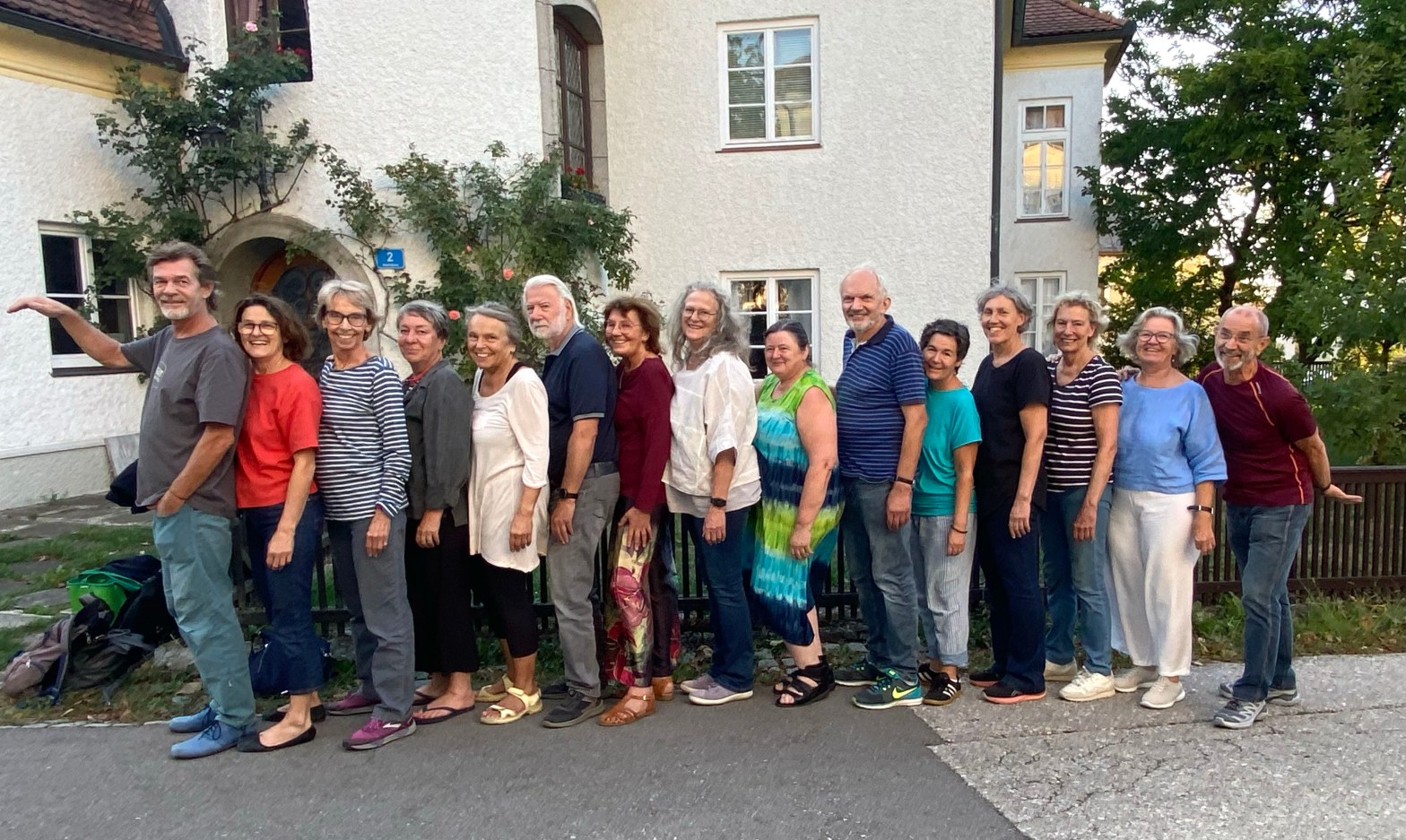
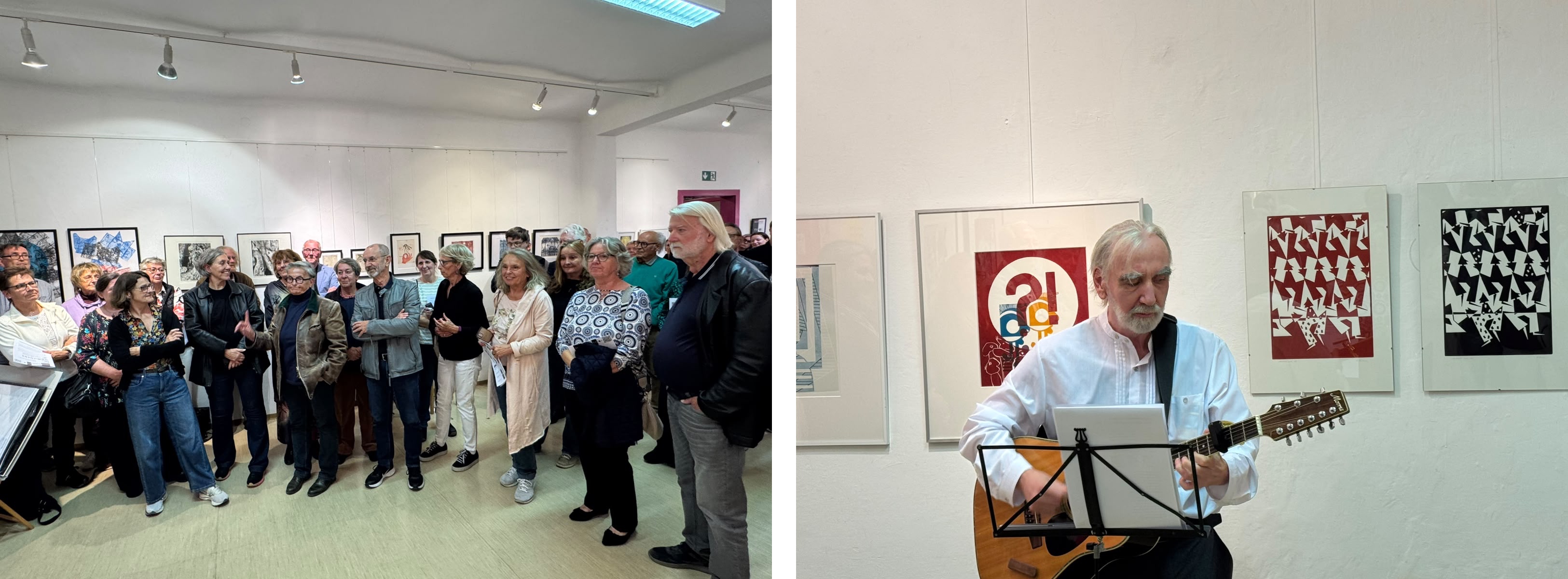
Mit der Ausstellung Phantastisch VER:rückt II lockert die Galerie Kultur Mitte in Krems an der Donau ihre Maxime, vorrangig Künstler:innen aus der Region Raum zu geben. Vom 13. bis 27. Oktober zeigt sie die Werke von 15 Druckgrafiker:innen, allesamt vom Verein Typos, Mitglieder aus ganz Österreich, einige davon allerdings aus Krems und Umgebung.
Die Basis von Typos ist die kunst&DRUCKwerkstatt am alten Bahnhof der Ortschaft Hausmening bei Amstetten. Dort fand auch das vierte druckgrafische Symposium zum Jahresthema phantastisch VER:rückt statt. Die zugehörige Ausstellung im Schloss Ulmerfeld läuft bis 18. Oktober.
Andere Arbeiten aus den Werkstätten des Symposiums werden in Krems zu sehen sein: Radierungen in verschiedensten Varianten, wie Aquatinta, Chine collé und Strichätzung, Siebdruck, Holz- und Linolschnitt, Alu- und Papierlithographie oder auch Tetrapackradierung.
14.-27.10.2026, Mo – Sa 9:30 – 13:00 Uhr und nach telefonischer Vereinbarung: G. Müller +43 676 45 54 305
Vernissage am 13.10.2026, 19 Uhr Laudatio: Kulturgemeinderätin Elisabeth Kreuzhuber; Eröffnung durch Staatssekretärin Ulrike Königsberger-Ludwig; Gerald Jatzek spielt Lieder zum Thema.
Zu sehen sind Werke von: ART:inkollektiv (Helga Neuhauser, Susanne Schober), Karin Bauer, Kathi Erben, Hedwig Finster, Barbara Fuchs, Anneke Hodel-Onstein, Hans Kreitler, Renée Kellner, Gerlinde Mair-Heinschink, Brigitte Meissl, Gabriele Müller, Leo Schoder, Anne-Bé Talirz und Christian Wirth.
Nachtrag: Fotos von der Vernissage
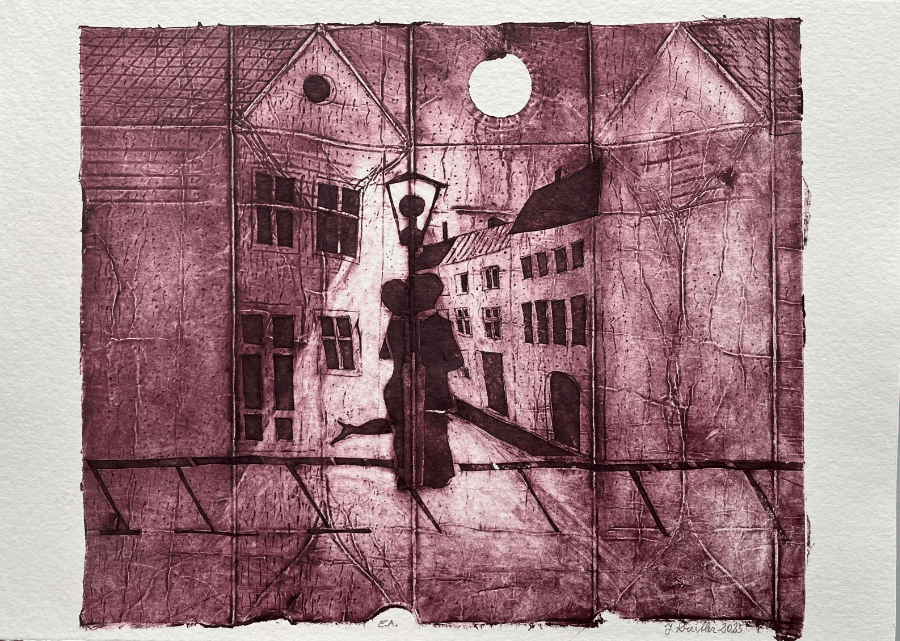
Galerie Kultur Mitte am 13.10.2026:Druckkünstler | Gerald Jatzek [Vergrößerung]
Sondertermin
Im Rahmen der Tage der offenen Ateliers, am 17. und 18.10. werden zusätzlich Mappen mit Druckgrafiken von Anna Doppler-Kunčić, Barbara Fuchs und Gabriele Müller gezeigt. Die Künstlerinnen sind anwesend und können auch umfassend zu den verwendeten Techniken Auskunft geben.
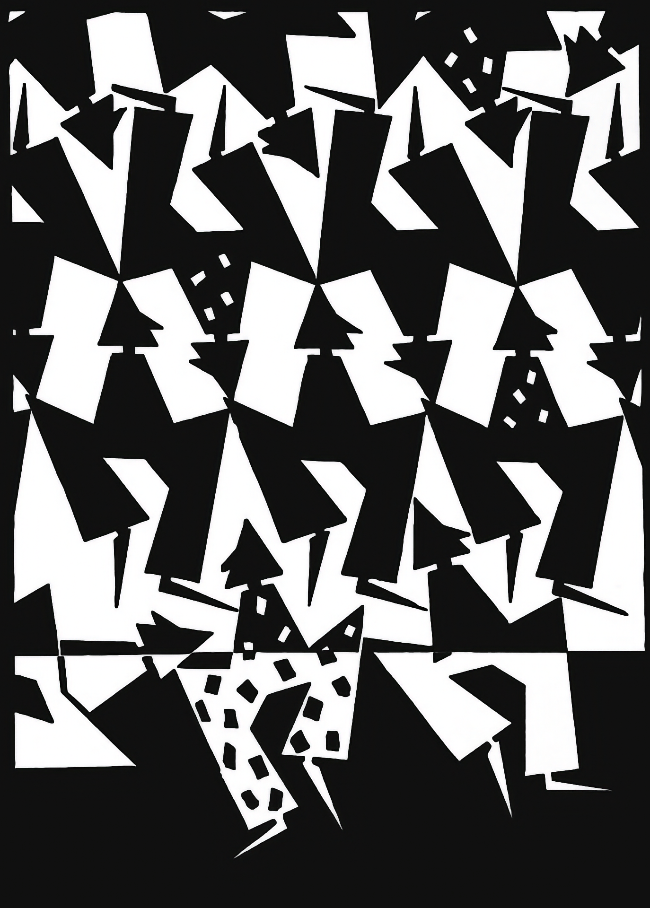
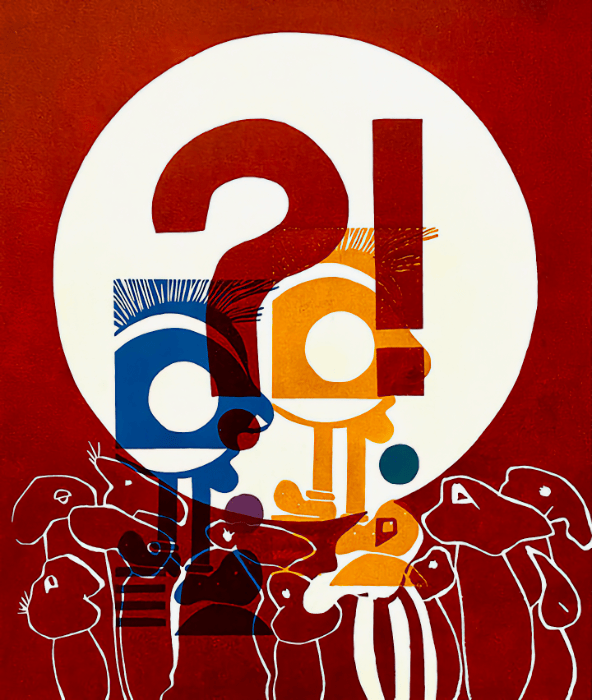
Hans KreitlerKathi Erben: KasperlheaterRenée Kellner: ohne TitelChristian Wirth: Division of the worldworld 1e
Einige Werke der Ausstellung (Vergrößerung per Klick)
World Book Night (WBN) in Britain is one of MailYour.Art’s favorite initiatives:
Its annual calls are interesting and challenging.
It brings literature and the arts together.
It is a truly international series of events. This is all the more important after Brexit.
It is organized by an incredibly effective team
This year, they sent three prints (two A6, as seen at the top of the page, and one A5) in a plain brown envelope to participants as a thank you. As an ordinary person, you wouldn’t think much of it. Not so if you work for Austrian customs. In that case, you might suppose that the wrapper contained special lightweight diamonds, the most important part of the Epstein files, or an inflatable Lamborghini.
For this reasonable reason, a heroic customs officer informed us that the value of the mailing could not be determined and that we were required to state the price and provide the necessary documentation.
We didn’t know the contents of the envelope ourselves. So, we told the customs office that we expected to receive homemade postcards from our friends. We included a quote from Wikipedia about the noncommercial nature of mail art, as well as links to support our claim.
What do women want to say? That’s the question behind an international call in the tradition of political relevant mail art.
Some of the questions the organizers ask are:
What do you carry?
Whose voice has shaped you?
What do you witness?
What do you dream?
What vision of the future do you hold?
All formats are welcome, traditional art forms like watercolor and print as well as collages and visual poetry handmade stamps, mixed media works, and assembled objets trouvés.
The maximal size is A4. Deadline is December 31, 2026
Mail to:
C. A. McEntee 1728 13th Ave. N Lake Worth Beach, FL 33460 USA
All submissions will be displayed in a physical or digital exhibition or both.
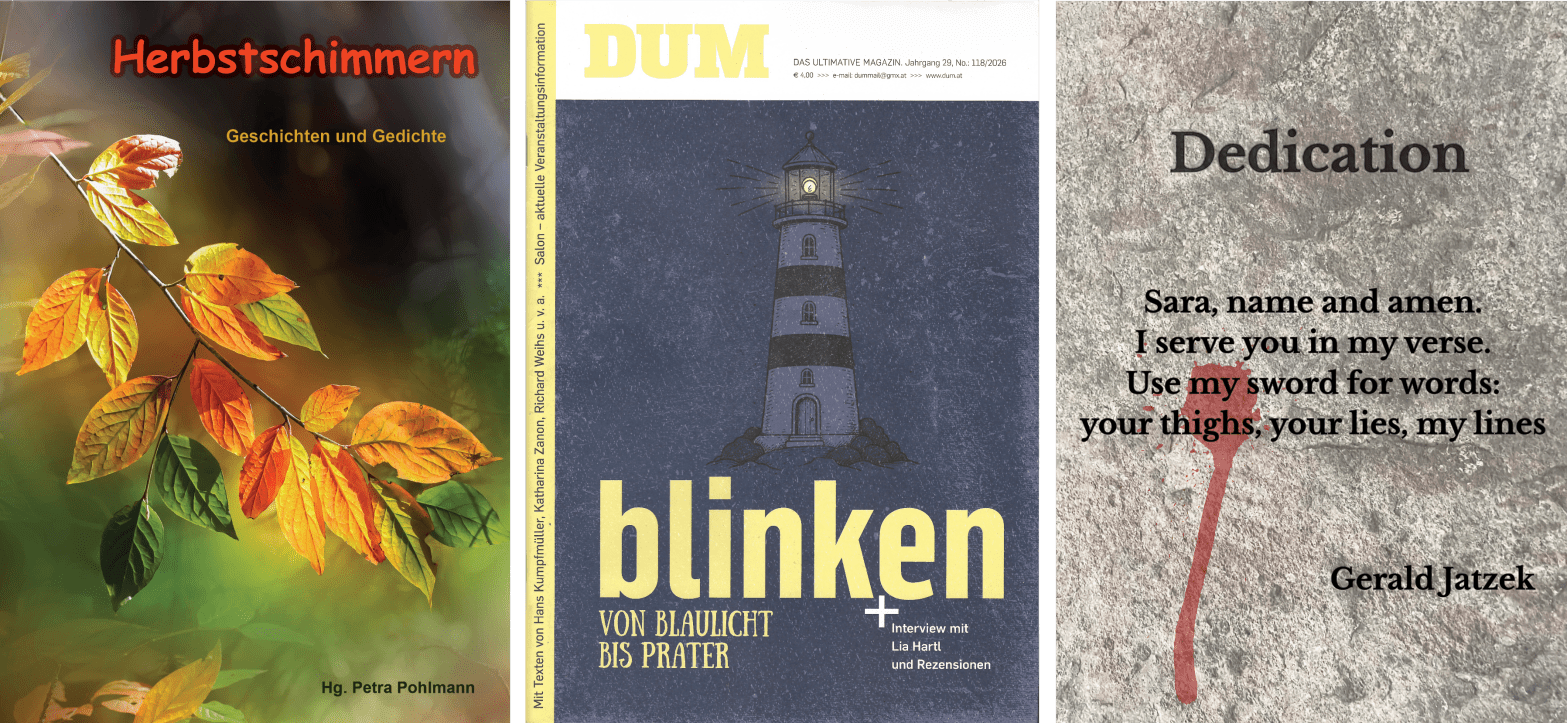
Drei Veröffentlichungen in unterschiedlichen Medien hat Gerald Jatzek zu vermelden.
Liebe im Museum
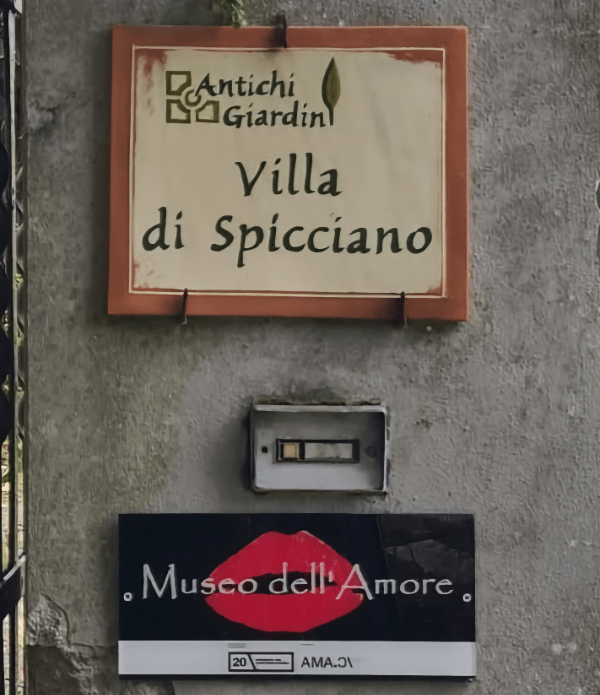
Wenn einen das Museum der Liebe um einen Beitrag bittet, kann man nicht nein sagen. Eine entsprechende Einladung langte kürzlich in Wien ein: Das von Elisa Mantellassi und Roberto Casati gegründete Museum in Vaiano in der Toskana bereitet gerade eine Ausstellung von Mailart zum Valentinstag 2027 mit Werken internationaler Künstler und Poeten vor.
Zur Liebe … bitte läuten!
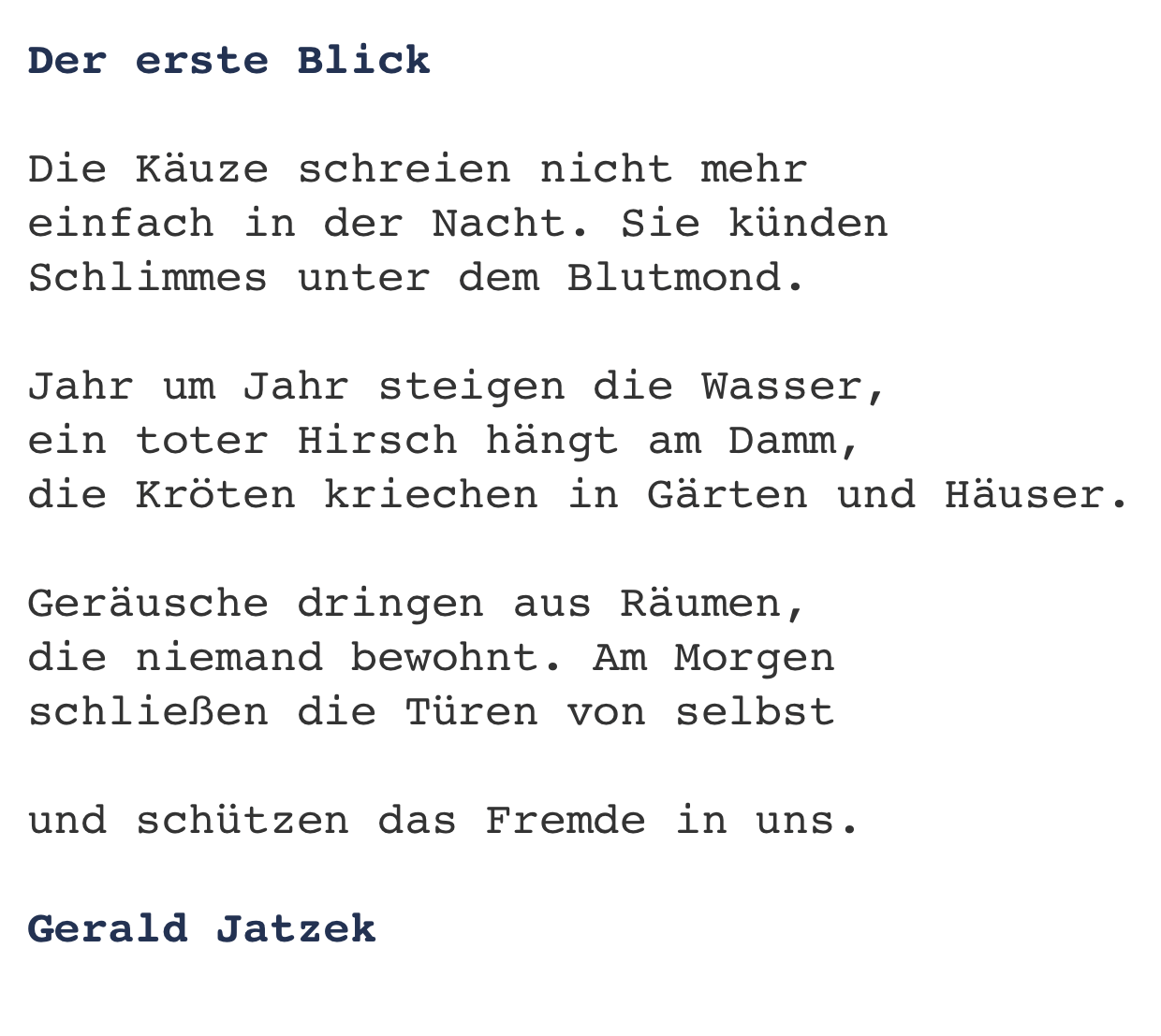
Geralds Text (s. Titelbild) knüpft an die Klangfiguren von Liebeszaubersprüchen in der oralen Literatur und dem Minnesang an und verknüpft dabei die hohe und die niedrige Minne.
Museo dell’Amore Via di Spicciano 18 59021 Vaiano (PO), Italia
Spätestens seit der Romantik ist der Herbst ein – manchmal zu – beliebtes Thema der Literatur. Man denke an Paul Verlaines “Chanson d’automne”, Rainer Maria Rilkes “Herbsttag” oder John Keats’ “To Autumn”.
Paul Verlaine: Chanson d’automne par Nadine Eckert-Boulet (LibriVox, Public Domain)
Im vorliegenden Sammelband finden sich neben manchen eher klischeehaften Metaphern auch neue Zugänge., darunter eine tröstliche Geschichte für Kinder über Fliegenpilze von Janthe Schröder.
Es herrscht viel Harmonie in diesen Texten, wesentlich mehr als in Anthologien, die vor 20, 30 Jahren erschienen sind, obwohl Deutschland gerade einen politischen Herbst erlebt.
Nicole Maria Hermanns “Novemberbrot” ist einer der wenigen Texte, die nicht versöhnlich enden.
Hier reicht die Autorin die Entscheidung ihrer Protagonistin an die Leser weiter, ermöglicht ihnen also das Probehandeln im Sinne des deutschen Autors und Literaturtheoretikers Dieter Wellershof (1925-2018).
Petra Pohlmann (Hg.): Herbstschimmern, Pohlmann Verlag, Bad Laer 2026, ISBN: 978-3-948552-64-0
Flackern, funkeln, aufleuchten
In der Fülle der Anthologien und Zeitschriften ist es nicht leicht ein Thema zu finden, das gleichzeitig zum Schreiben anregt und einschränkt. Dem niederösterreichischen DUM ist das mit „blinken“ gelungen. Es handelt sich dabei um eine Dialekt-Ausgabe, weshalb man die Texte am besten laut liest. Mit der Methode erschließen sich einem meistens auch Formulierungen in fremdartigen Mundarten. Die künstliche Stimme für österreichisches Deutsch auf speechgen.io ist hingegen keine Hilfe.
Die Texte behandeln Naheliegendes (selbstverständlich die Mobiltelefoniererei) und Originelles. Hans Kumpfmüller sieht es in der Kirche blinken (“des elegdresche ewege liachd”), Ulrike Titelbach beschreibt die zarten Signale der Poesie.
Nostalgische Romantik (bei Stephan Kaiblinger) hat ebenso Platz wie feministisches Auflehnen gegen klassische Rollen (bei Andrea Ch. Berger), gescheiterte Kommunikation mit Geräten (bei Bianca C. Klein) und Lichter, die einem den Weg weisen oder auch nicht (bei Barbara Rieger).
Blinken DUM – das ultimative Magazin Nr. 118 (2026), Langenlois, Österreich
mit Texten von Lia Hartl, Andrea Heinisch, Claudia Dvoracek-Iby, Doris Leeb, Johannes Lerch, Hans Kumpfmüller, Sabine Schnepfleitner, Sylvia Bacher, Barbara Rieger, Renate Schiansky, Franziska Zussner, Gertraud Kammerer, Mario Huber, Dominik Kurcsics, Hannes Thauerböck, Julia Costa, Monika Schoberberger, Katharina Zanon, Eva Schreiber, Elisabeth Hafner, Silke Gruber, Camille Herter, Ulrike Titelbach, Birgit Rietzler, lüüs, Brigitte Thurner, Veronika Schneider, Stephan Kaiblinger, Matthias Hütter, Bianca M. Klein, Andrea Ch. Berger, Angelika Woska, Christine Tippelreiter, Christine Rainer, Gerald Jatzek, Dominik Unterthiner, Daniela Dangl, Richard Weihs, Katherina Braschel, Markus Manfred Jung, Lea Jehle, Katrina Mogler, Denise Wiesmahr, Irene Zoller, Karin Seiner, Hannelore Futschek, Franziska Bauer, Iris Gassenbauer und Andreas Pavlic
und Zeichnungen von Eckholz und Oleg Estis.
Einzelheft: EUR 4.- (EUR 7.- außerhalb Österreichs) Abonnement (4 Ausgaben): EUR 15.- (EUR 20.- außerhalb Österreichs) Bestellung im Web oder via dummail@gmx.at
“Vorwärts, und nicht vergessen, worin unsre Stärke besteht. Beim Hungern und beim Essen, vorwärts, nicht vergessen die Solidarität!”
Um 1930 riefen Bert Brecht (Text) und Hanns Eisler (Musik) die Arbeitenden dazu auf, für die eigenen Interessen zu kämpfen statt sie mit nationalistischem Hass zu übertünchen. Zu wenige verstanden die Botschaft, zu viele zogen 1939 für die faschistischen Verbrecher in den Krieg – ein Fehler, der mehr als 65 Millionen Menschen das Leben kostete.
Dabei hatten es schon die Klassiker gewusst: “Verbunden werden auch die Schwachen mächtig”, schrieb Friedrich Schiller im Wilhelm Tell.
Auch heute wird mit massiver Propaganda das Trennende über das Gemeinsame gestellt. In den USA macht sie die Latinos für sinkende Lebensqualität verantwortlich. Am Elend in Russland sind angeblich die Ukrainer schuld. Und wenn in Europa bei den Sozialausgaben gespart wird, schiebt man es auf die Flüchtlinge.
Viele lassen sich damit von den tatsächlichen Ursachen ablenken: den Verlagerungen der Produktion in Billiglohnländer, der Korruption und der damit einhergehenden Politik im Sinne von Superreichen und Oligarchen, den Gewinnverschiebungen, die zu lächerlichen Steuerleistungen globaler Konzerne führen.
Mailart gesucht
Um die künstlerische Auseinandersetzung mit dem Thema zu fördern hat die deutsche Sisyphos-Gesellschaft einen Aufruf für Mailart gestartet.
Thema: Solidarität
Technik: frei
Format: max. A5
max. eine Arbeit pro Teilnehmer
Absender nicht vergessen
Deadline: 1.10.2026
Adresse: Sisyphos-Gesellschaft (Thomas) Franz-Mehring-Platz 1 10243 Berlin Deutschland
Bei der geplanten Ausstellung Ende 2026 / Anfang 2027 werden die Ergebnisse der Mailart-Calls Mut, Sisyphos und Solidarität in einer gemeinsamen Ausstellung präsentiert.
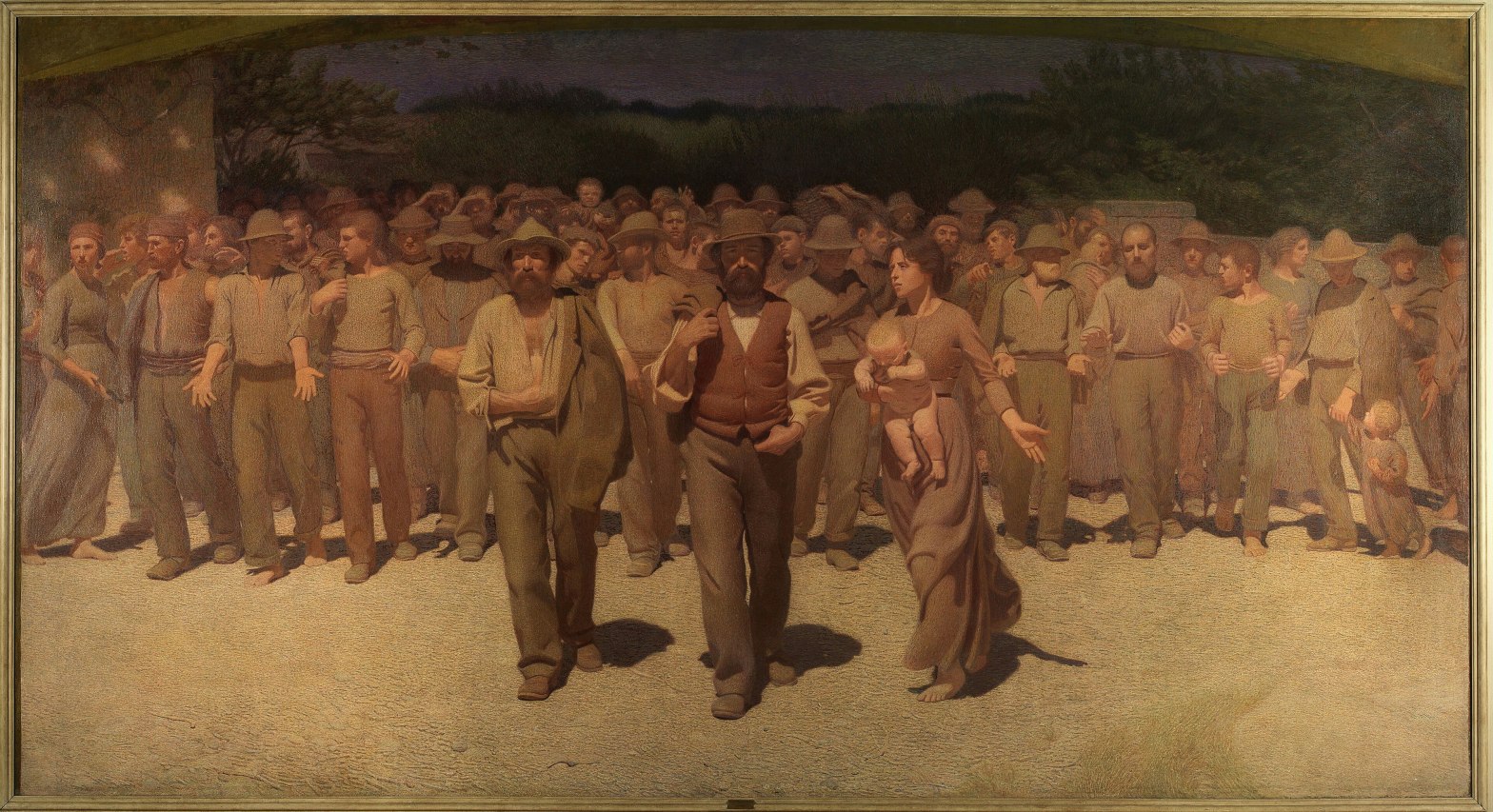
Das Gemälde “Il Quarto Stato” (“Der vierte Stand”) von Giuseppe Pellizza da Volpedo entstand 1898-1901. In besserer Auflösung ist es hier zu betrachten.
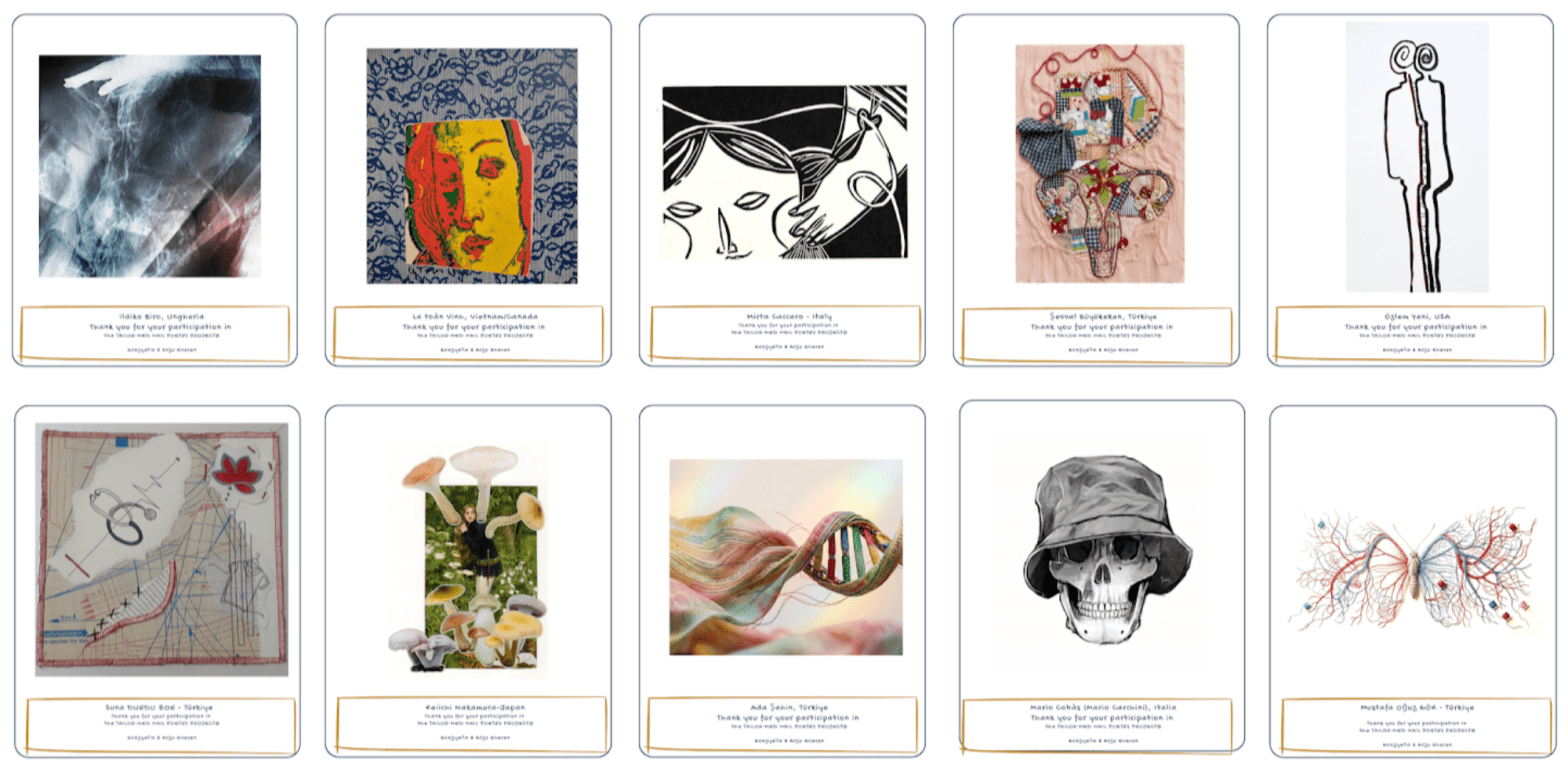
This call for mail art was undoubtedly unusual: “Combine medicine and tailoring through your imagination”.
Participants were asked to produce poetic and visual interpretations “inspired by the conceptual intersection between medicine and tailoring” and supply them as postcards. The persons behind the initiative were Graziella Di Grezia a.k..a. Grazyella from Italy and Arzu Evecen from Turkey.
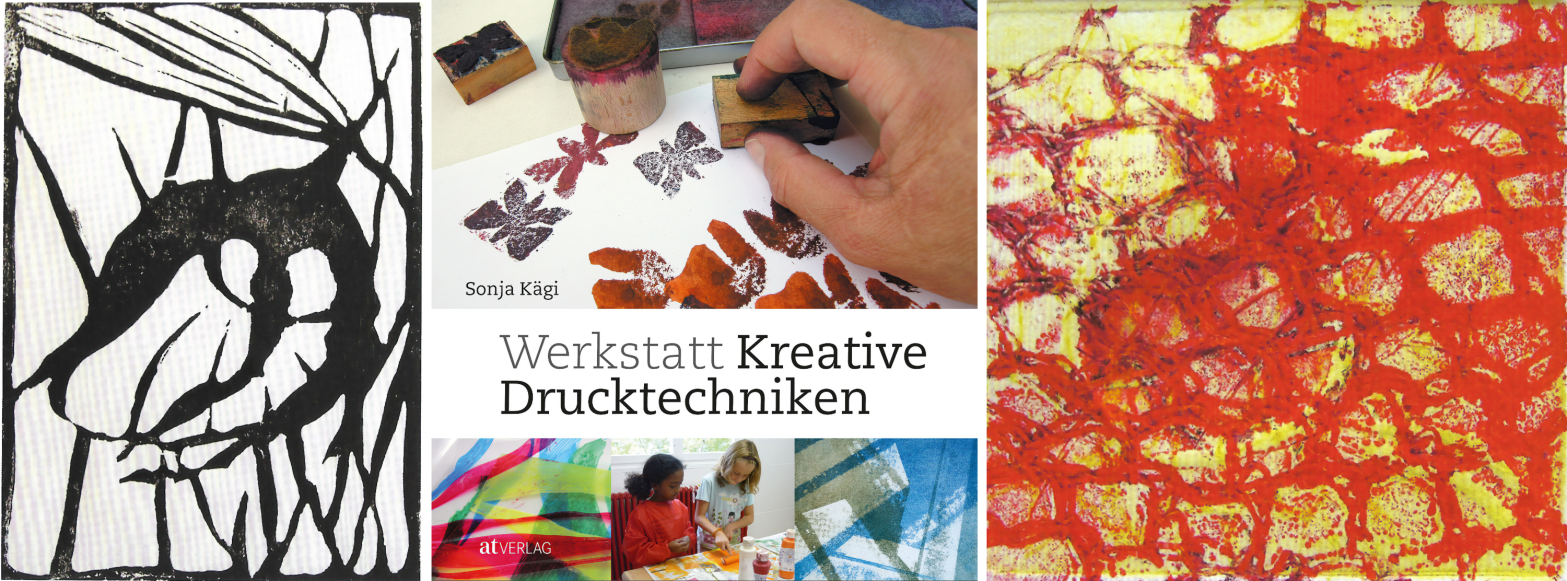
Die Lektüre dieses Buches erschwert vorübergehend ein ruhiges Sitzen am Sofa oder in der Küche. Zu viele Materialien kommen ins Blickfeld, mit denen sich Druckgrafiken herstellen lassen.
Besonders geeignet ist der Band “Werkstatt Kreative Drucktechniken” für die Arbeit mit Kindern: auf Techniken, die Chemikalien oder teure Apparaturen erfordern, wird verzichtet. Mit Abriebwerkzeugen für den Handdruck oder anderen Tipps zum Ersetzen einer Druckpresse können etwa Stempel-, Schwamm-, Pflanzen- oder Klebebanddrucke erzeugt werden.
Für Kinder …
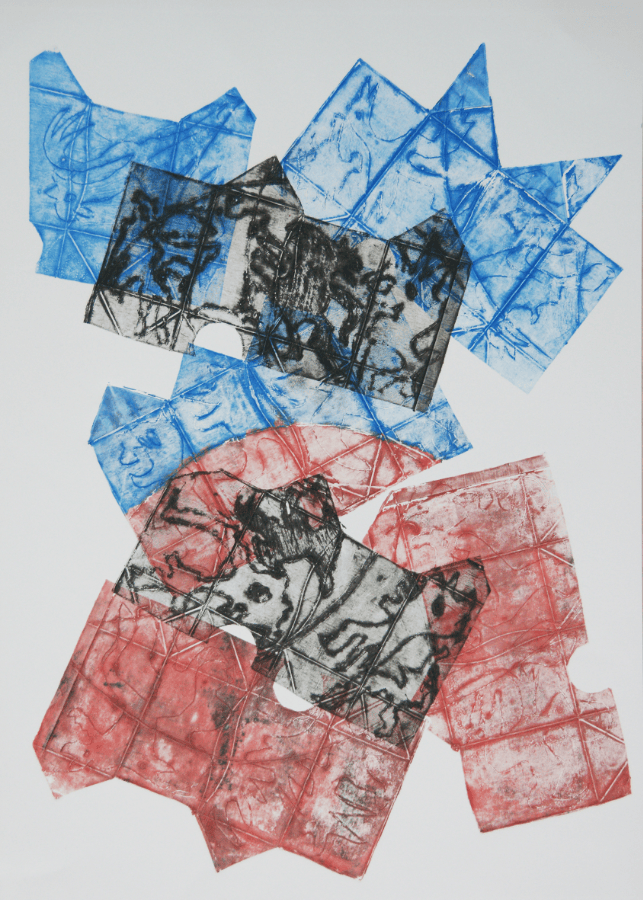
Hier findet man unter anderem Ideen für unterschiedlichste Formen des Materialdrucks: So dient die beschichtete Innenseite von Getränkekartons als Druckstock für Kaltnadelradierung, Plastikfolien als Material für Schablonendruck, oder Karton für “Puzzleteile” zum Mehrfarbendruck.
…und Erwachsene
Aber nicht allein Nachwuchskünstler:innen und Neulinge finden hier Anregungen und mit mehr als 100 Bildbeispielen eine illustrative Einstieghilfe. Manche der kurzen, rezeptartigen Anleitungen sind eher für Erfahrene geeignet, die Ideen fürs Experimentieren und Kombinieren suchen. Angeführt werden Beispiele mit verschiedensten Werkstoffen für Hoch- und Tiefdruck, der Belichtung mit UV-Licht, Lithographie ohne Stein, Siebdruck und Monoprints.
Der Band gibt einen Überblick über zumeist einfach umsetzbare Techniken mit oder ohne Druckerpresse. Er zeigt, wie man Werkzeuge und Druckfarben selbst herstellen kann und welche Materialien aus Haus und Garten sowie Wald und Wiese interessante Drucke liefern.
Sonja Kägi, Werkstatt Kreative Drucktechniken, AT Verlag, 4. Auflage, € 33, , ISBN 978-3-03800-074-7
According to ancient Greek cosmogony, chaos (χάος) was the first being of the universe. For Heraclitus it was the very foundation of reality. Hesiod taught that Chaos was followed by Erebos (darkness), Eros, Gaia (earth), Tartarus (hell), and others.
The mathematician Edward Lorenz examined the chaos and realized that it isn’t as chaotic as it seems. Underlying the apparent randomness of chaotic complex systems, he found patterns which led to the theory of the deterministic chaos.
In everyday life, after all, the term is often understood to mean the absence of effective organization in human structures.
No matter which approach you choose, it can serve as a starting point for contributions to a mail art project:
Chaos and Simplicity
Curato Cristina Piloto invites mail artists to share their interpretation of these opposing forces that (may) find a common meeting point. There are two submisson addresses, depending on the theme you choose.
Kein Thema war das Thema der 71. Ausgabe der Literaturzeitschrift erostepost. “Stark” sollte der Text sein, und in einer ebensolchen Sprache verfasst. Aus 176 Einsendungen wurden schließlich 25, teils bereits zuvor veröffentlichte Beiträge, für die Sommerausgabe 2026 gewählt.
erostepost #26
Das fast ereignislose Geschehen unter einer Glühbirne, das spannend zum dramatischen Ende führt, bilderreiche Textfragmente, eine traditionelle Oma, die Apfelstrudel bäckt, vom Leben alter Mieter im Erdgeschoß bis zu Schreiben von Korrespondenten für Grenzphänomene: In dem, vom Maler Jonas Geise illustrierten Heft, versammelt diese Ausgabe eine spannende Auswahl an Themen. Lyrik und Prosa wird gleich viel Platz eingeräumt, was auch das ungewöhnliche Layout zeigt:
Zwei Gedichte erstrecken sich über mehrere Seiten, die sie sich, durch ein Zitat getrennt, mit Prosatexten teilen. So auch der Text Emil von Gabriele Müller, in dem das Ich ein unheimliches Tier in einer Tasche mit sich trägt, das durch die Begegnung mit einem Mann in schwarz samt dieser verschwindet.
Beiträge
Lyrik von: Julian Baumer, Elisabeth Hafner, Bernhard Kaute, Bastian Kienitz, Andreas Köllner, Thomas Laessing, Ferenc Liebig, Anne Lukas, Florian Neuner, Thomas Steiner, Clemens Schittko, Ulrike Titelbach Prosa von: Johannes Bruckmann, Kristian Dimitrijeski, René Gröger, Gabriele Müller, Carla-Nagel, Lukas Felix Pohl, Maria Scalet, Detlef Seydel, Christine Steindorfer, Markus Tacik, Lukas Tessiner, Günter Troll, Benjamin Wimmer
erostepost Nr. 71
Salzburg 2026 Literaturhaus Salzburg Strubergasse 23 A – 5020 Salzburg
Das Bild im Kopf der Seite zeigt die Skulptur “The Question Mark” von Ben Langlands und Nikki Bell. Das bearbeitete Foto von Keith Edkins und ist lizensiert unter CC BY-SA 2.0.