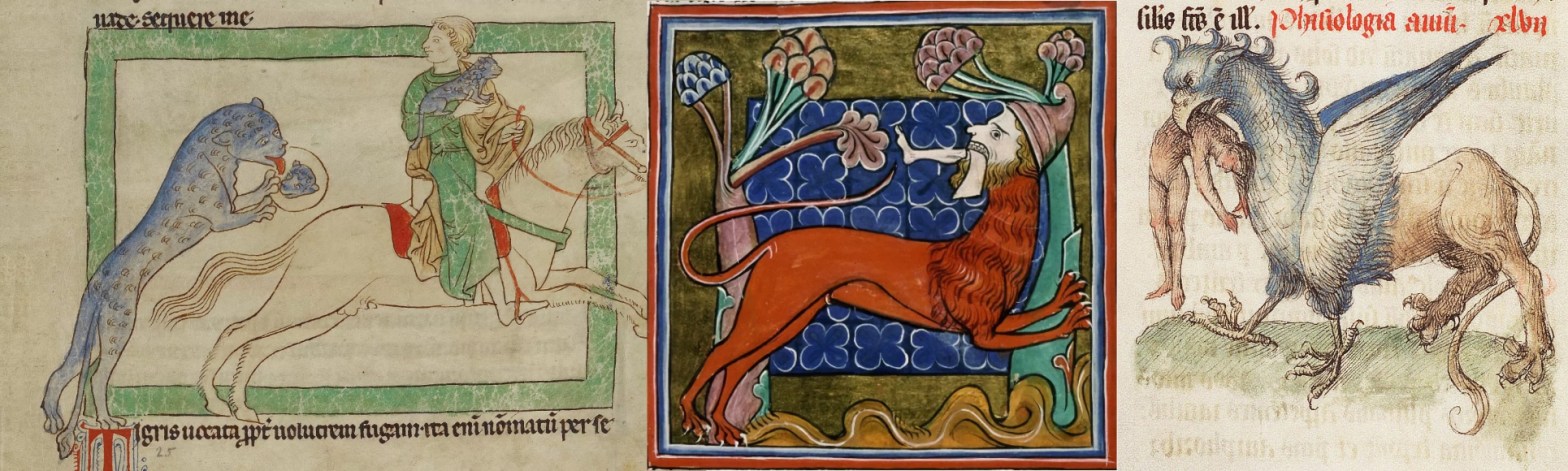
Some of the earliest cave paintings depict animals, as hunters and prey. Domestic animals came later. During the Middle Ages, artists who knew their subjects only by hearsay, let their imaginations run wild.
In sharp contrast are the drawings and watercolors that emerged during the Enlightenment. These works were created by artists who often considered themselves scientists rather than artists. They observed their subjects firsthand and sought to produce the most lifelike depictions possible.
A call for mail art and digital art from Italy on the theme “fauna” allows the participating artists to choose whatever point of view and technique they prefer.
Terms
The terms for analog mail art are:
- maximum dimensions: 10 x 15 cm;
- all artistic, pictorial, and graphic techniques are permitted;
- to:
Associazione Echorama
via principe 5
15020 Villamiroglio (AL)
ITALIA
To avoid customs fees and other charges, send your contributions from outside the European Union marked with:
Documents without commercial value
The terms for digital art are:
- no less than 150 dpl and a minimum of 1,000 px on the shortest side;
- in a format equivalent to a maximum of 10×15 cm;
- to: echo.rama@hotmail.com
Deadline
The deadline is June 12, 2026.
Further information
https://faunamailart.wordpress.com/
The Images
The images at the top of the page are:
- Blue Tiger, Northumberland Bestiary, 1250–60, The J. Paul Getty Museum’s Open Content Program
- Manticore, 13th century, Oxford Bodleian Library, Wikimedia Commons
- Griffin from Book of Flowers, 1460, (The Hague, Koninklijke Bibliotheek, National Library of the Netherlands
 mail your art