Remembering the Sea

Stephan J. Mitterwieser is a newbie to mail art, but he quickly found the right persons to answer his questions, namely Lutz Wohlrab and Ryosuke Cohen.

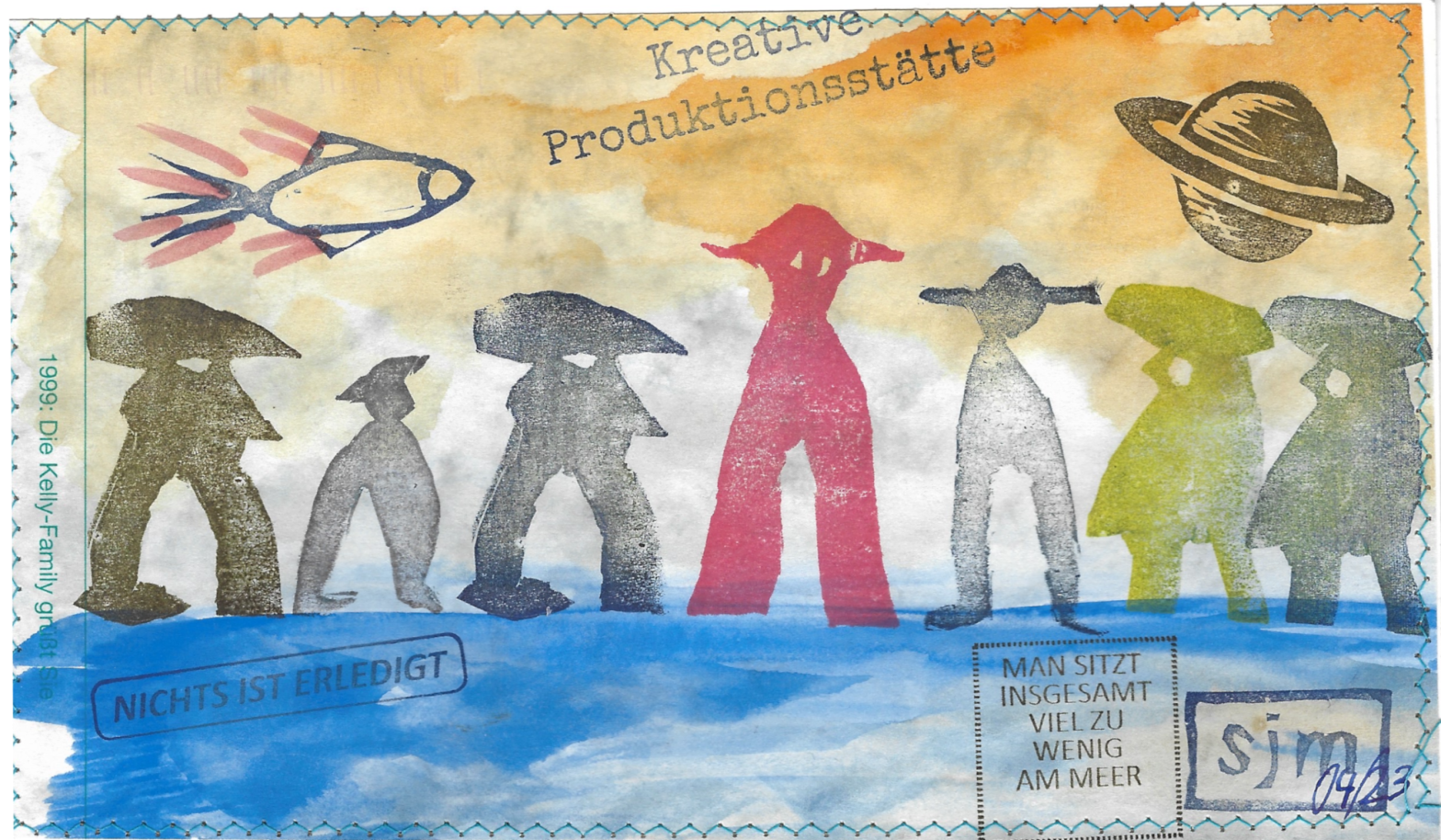
He sent us a beautiful collage that employs painting, stamps, text and even sewing. The text Man sitzt insgesamt viel zu wenig am Meer (One spends too few time by the sea) is a statement that Gerald can only support.

Did anyone say “Greece”?

Bella Ciao!

There are two Italian songs that everybody knows: O Sole Mio and Bella Ciao, the latter being an anthem of resistance against Italian fascism and German nazism.

This makes it a fitting title for a cultural program around the festa della liberazione, the anniversary of Italy’s liberation on 25 April 1945.

This year, the city of Stradella, which lies somewhat south of Milan, has decided to stage an international exhibition of mail art during the event. 

The opening of the mostra di arte postale is on 25 April at 11 a.m. The show which is curated by Claudio Gavina closes on 5 May.

Gerald’s photo of the red rose behind the wire fence uses the symbol of the democratic left in Italy.

Stamattina mi sono alzato,
oh bella, ciao! Bella, ciao! Bella, ciao, ciao, ciao!
Stamattina mi sono alzato,
e ho trovato l’invasor.

Oh partigiano, portami via,
oh bella, ciao (…)
Oh partigiano, portami via,
ché mi sento di morir.

E se io muoio da partigiano,
oh bella, ciao (…)
E se io muoio da partigiano,
tu mi devi seppellir.

Seppellire lassù in montagna,
oh bella, ciao (…)
Seppellire lassù in montagna,
sotto l’ombra di un bel fior.

Tutte le genti che passeranno,
oh bella, ciao (…)
Tutte le genti che passeranno,
mi diranno “Che bel fior!”

Participants

AUSTRIA: Gerald Jatzek; BELGIUM: Luc Fierens, Miche-Art-Universalis; BIELORUSSIA: Irina Novikova; BRAZIL: Roberto Keppler, Marcia Rosenberger; CROATIA: Juraj Janke; DANMARK: Paul Poclage; FRANCE: Herve Alexandre, Eric Bendison, Chistiane Carrè, CLPA, Virginia Loreau, Alexa Oana; GERMANY: Lutz Anders, Michael Georg Bregel, Joachim Bucholz, Uwe Hofig, Tom Riebe, Lars Schumacher, Susanne Schumacher, Hans Jurgen Steiner; GREECE: Maria Chorianopoulou; HUNGARY: Peter Abajkovics; JAPAN: Kelichi Namakura; ITALY: Andreina Argiolas, Franco Ballabeni, Vittore Baroni, Mariano Bellarosa, Giorgio Biffi, Anna Boschi, Isabella Branella, Mirta Caccaro, Angelo Caruso, Bruno Cassaglia, Laura Chiarello, Antonio De Marchi-Ghedini, Adolfina De Stefani, Claudio Gavina, Dania Gentili, Federica Grandi, Claudio Grandinetti, Benedetta Jandolo, Serse Luigetti, Ruggero Maggi, Emilio Morandi, Cristiano Pallara, Laura Pintus, Veronique Pozzi, Progetto Metropolis, Psyche Out Fanzine, Ramailart, Viviana Ravelli, Serena Rossi, Roberta Savolini, Roberto Scala, Giovanni & Renata Strada, the Students of the Santachiara School of Stradella, Manlo Zanini; THE NETHERLANDS: Marius De Schaar, Reen Sanderse; ROMANIA: Pantea Andrei Alecsandru; SINGAPORE: Gloria Keh; SPAIN: Sabela Bana, Pedro Bericat, Manuel Xo Blanco, Deadvax, Amelia Arias Glaz, El Taller De Zenon; UK: Kevin & James Gillen, Mary Ann, Alan Turner, Simon Warren; URUGUAY: Maria Victoria Bone’Ramirez; USA: Michelangelo Mayo, Honoria Starbucks

Griechischer Abend

Einen griechischen Abend mit Gerald Jatzek und Reinhard Wegerth gab es am 25. Februar im Salon von Gabriela Habenschuss in Laxenburg.

Wegerth las Geschichten über das Griechenland von gestern und heute aus dem Band Fast unglaublich (Sisyphus Verlag). Das Leben unter der Militärdiktatur (1967-1974) hat in Texten ebenso Platz wie kulturelle Missverständnisse zwischen Einheimischen und mitteleuropäischen Hippies.

Gerald Jatzek trug Gedichte aus dem Buch Die Lieder riechen nach Thymian (Verlag Berger) vor. Bei den griechischen Stücken von der Moll der Morgenröte (Το Μινόρε της αυγής) bis zu den kleinasiatischen Veilchen und Hyazinthen (Μενεξέδες και ζουμπούλια) kamen diverse Saiteninstrumente zum Einsatz.

Der Rest des Abends gehörte dem Buffet und den Diskussionen …

Art for Surgeries

Jenny Rowbory is a young British woman who suffers from Myalgic Encephalomyelitis (inflammation of the brain and spinal cord). She has been bed-bound for the last sixteen and a half years.

In May 2015, Jenny was also diagnosed with Ehlers-Danlos Syndrome. This genetic disorder causes the body to produce faulty collagen. The biggest problem for Jenny is that the faulty collagen causes the ligaments and connective tissue in her neck to be lax, which means that it can’t support the skull. So the vertebrae and skull move around and subluxate (subluxation is like dislocation) and blood flow is severely reduced, causing increasing numbness.

The only neurosurgeon in the world who specializes in fusion—and fusion revision—surgeries and invasive bolt traction testing to determine the correct fusion position for highly complex Ehlers-Danlos Syndrome patients, is in the USA. Jenny is clinging to life by the skin of her teeth and has been trying to hang on for over a year while trying to fundraise enough money for the three surgeries that this neurosurgeon has said Jenny needs to have a hope of staying alive and regaining some sort of quality of life.

Enough money—that is 750.000 £! As of today, the total donations sum up to 223.565 £.

Fundraising

Her friends have started a number of fundraising projects, the most important being a book of Jenny’s poetry, which is available at her website and on Amazon.

Another initiative was the Secret Artist Postcard Auction on eBay with works from more than hundred artists from different fields. Among them were visual artist Tracey Emin, illustrator Nick Sharrat, comedian Lee Mack, broadcaster Jonathan Ross, and, well, a bunch of mail artists. The auction raised £5059.22.

Links

Illustrations

The illustrations show the cover of Jenny’s book, a small portion of the cards that were auctioned, and my photo card “Reversed Time” with a poem on the backside.

Spaß in der Schule

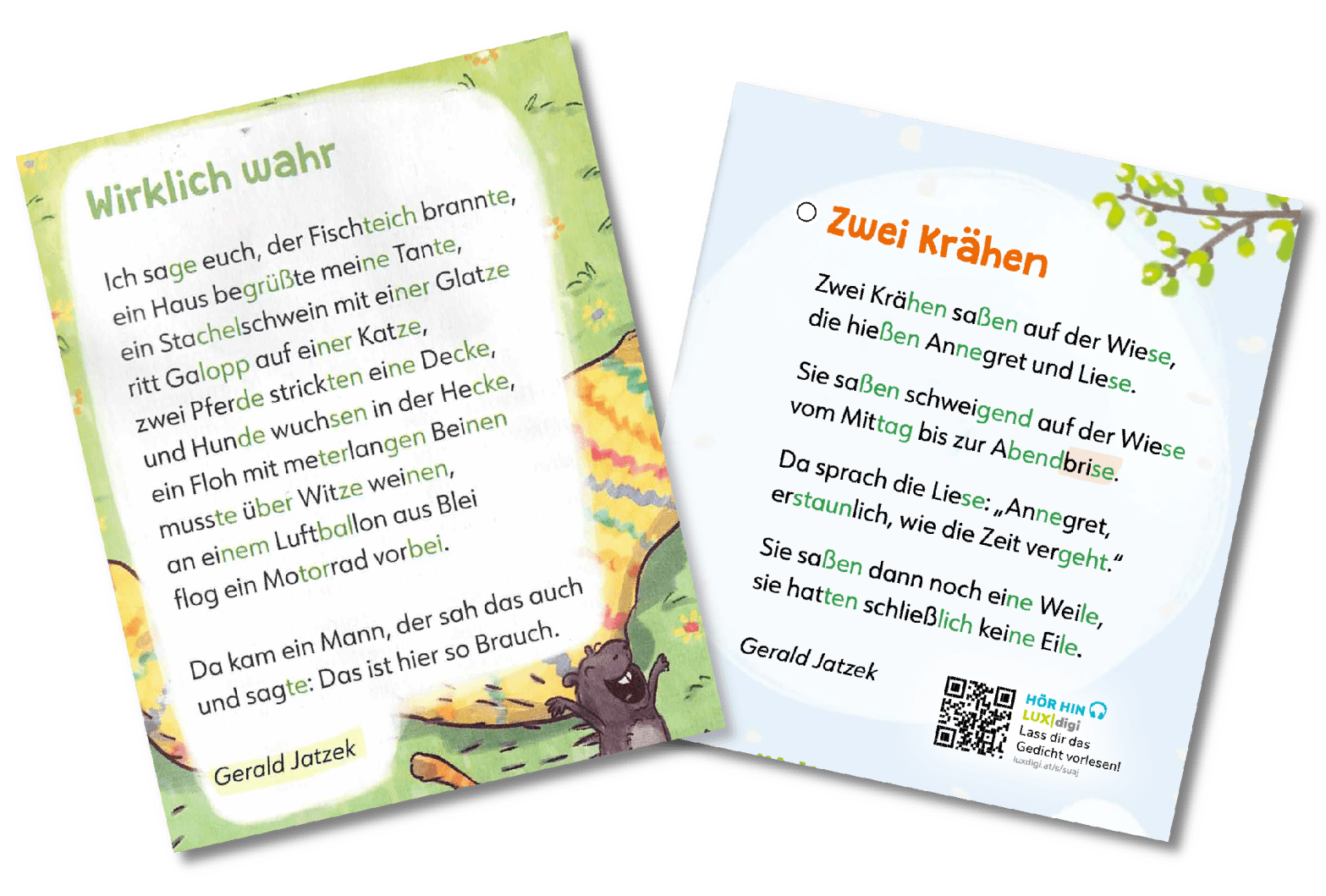
 “Wir haben es mit einem Barden zu tun, mit einem jener Dichter, die fest davon überzeugt sind, Kinder sollten vor allem eins haben: ihren eigenen Kopf. Nach dem dritten Akkord stellt sich zudem heraus: Gerald Jatzek hat den Dreh raus, er weiß, wie Kinder aus der Reserve zu locken sind, und nimmt sofort Kontakt zu ihnen auf.”
So beschreibt die taz einen Auftritt von Gerald Jatzek beim Berliner Literaturfestival.

Dementsprechend beliebt sind seine Gedichte und Liedtexte. Sie überraschen, machen Spaß und laden zum Nachdenken ein. Man muss sie nicht mühsam auswendig lernen. Man merkt sie sich einfach so.

Wer mag, kann sich das Krähengedicht vorlesen lassen:

Die beiden Texte auf dieser Seite erschienen 2022 und 2023 in der österreichischen Schulzeitschrift LUX.

Links

Dada is alive

Last year dadaStation21 from Austin, Texas, was looking for mail art postcards without a specific theme or motto.

Opening of the Dada exhibition in 1920.

However, the word dada provided enough inspiration. Hundred years ago, the European avant-garde took a firm stance against imperialism and chauvinism: John Heartfield’s Prussian Archangel, a dummy of a German soldier with a pig’s head was the central installation at the International Dada Fair in 1920.

The fair featured almost 200 works by 31 artists including Hans Arp, Johannes Baader, J. T. Baargeld, Otto Dix, Max Ernst, George Grosz, Raoul Hausmann, Hannah Höch, Francis Picabia, Walter Serner, Rudolf Schlichter, Kurt Schwitters, and Hans Heinz Stuckenschmidt.

Their works often appeared grotesquely exaggerated. In fact, they were realistic warnings about the militarization of German society, which was supported by both industry and the petty bourgeoisie.

Against Imperialism

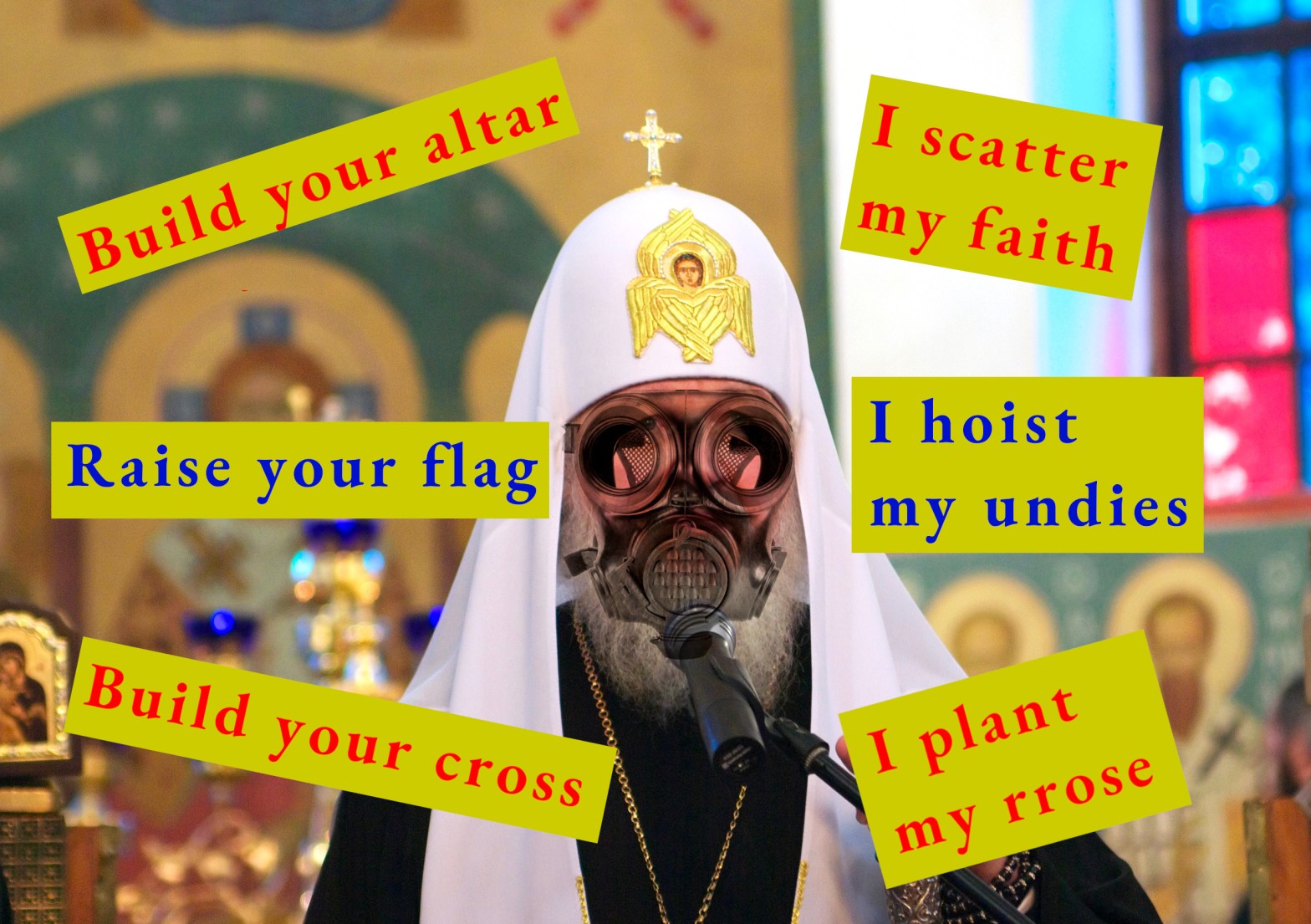
Gerald’s collage tackles imperialism and its supporters today in the spirit of Heartfield.February 24, 2023, marks the anniversary of the Russian invasion in Ukraine, which is heavily supported by the Russian Orthodox Church. Patriarch Kirill of Moscow has been a staunch ally of president Putin for many years.

The phrases to the left and right of the Orthodox primate’s head mock the pathetic language of both the state and the church. (The final statement is a homage to the French artist Marcel Duchamp aka Selavie Rrose.)

dadaStation21 provides a virtual exhibition on YouTube.

Luther und Cranach und Müntzer

Ingo Cesaro ist Autor, Herausgeber, Verleger, Drucker, Galerist sowie Mastermind von Kunstmessen, Ausstellungen, Lesungen und Konzerten. Vergangenes Jahr organisierte er ein internationales Projekt zum Septembertestament Martin Luthers. Unter diesem Namen wurde die am 21. September 1522 erschienene Übertragung von Das Newe Testament Deùtzsch bekannt.

Junker Jörgs Manuskript

Getarnt als Junker Jörg verwendete Luther vor 500 Jahren als Quellen neben dem griechischen Text die Übertragung von Erasmus ins Lateinische sowie die Vulgata. Als Diskussionspartner stand ihm vor allem der Griechischprofessor Philipp Melanchthon (1497-1560) zur Verfügung.

Von Lucas Cranach dem Älteren (1472-1553) stammen nicht nur Illustrationen zu Luthers Text. Er schoss auch Geld für den Druck vor und nahm damit ein bedeutendes finanzielles Risiko auf sich.

Gedruckt wurde das Werk in Kronach, der Heimatstadt Cranachs und Cesaros, der – und damit schließt sich der Kreis – die einzige mobile Handpresse Deutschlands verwendet, wie sie schon Gutenbergs gekannt  hat.

Die Ergebnisse der internationalen Auseinandersetzung mit Luther und Kranach wurden im Herbst 2022 bei den Internationalen Druck-Kunst-Wochen in Kronach gezeigt.

Der Reformator als Gegner der Armen

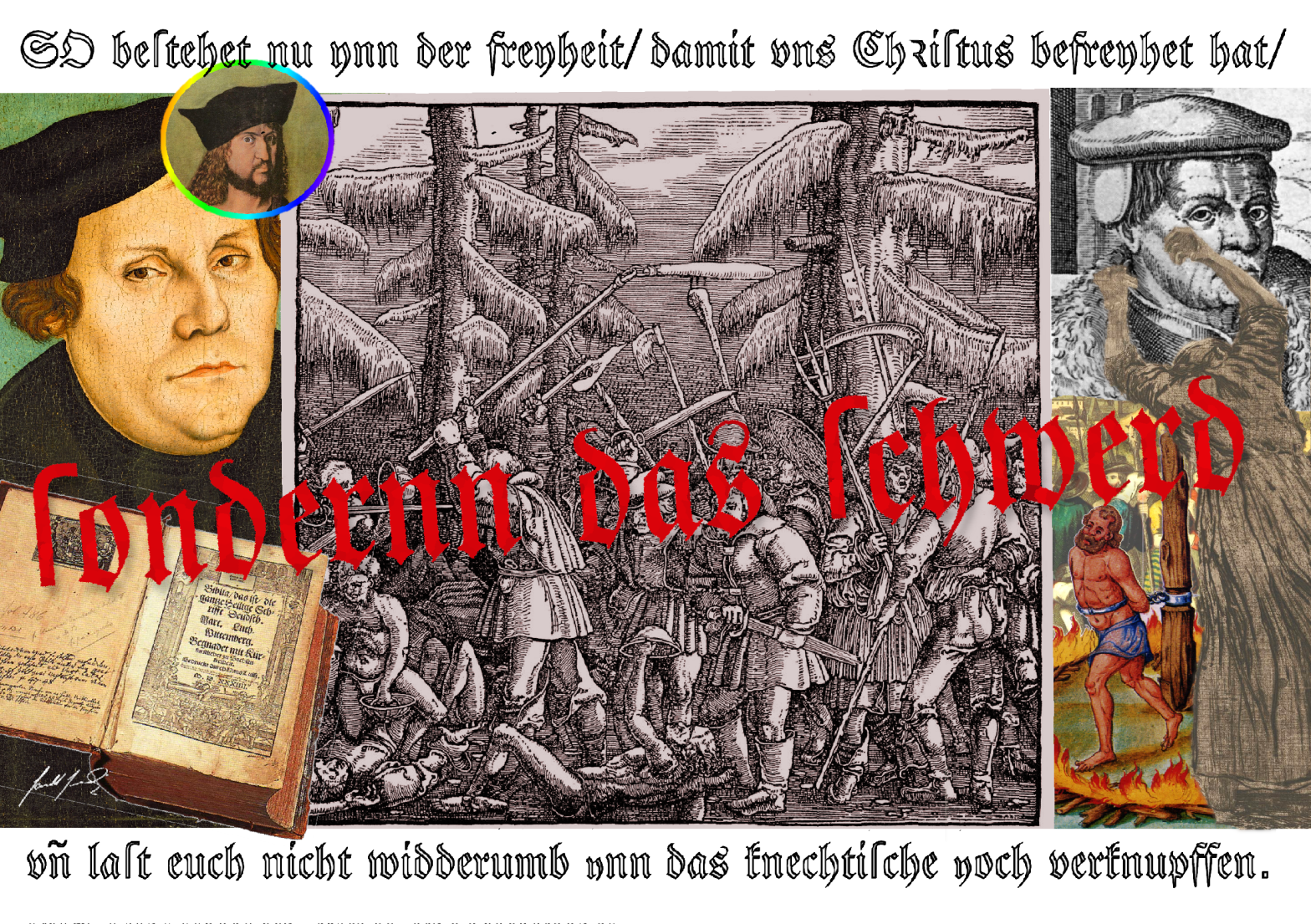
Gerald Jatzek stellt in seinem Beitrag dem Wittenberger Reformator den Revolutionär Thomas Müntzer (auch: Münzer; 1489–1525) gegenüber. Während Luther vor allem die Kirche ändern wollte, stellte Müntzer die Gesellschaftsordnung radikal in Frage und begleitete damit den Deutschen Bauernkrieg 1524-1526 publizistisch. Dabei konnte er sich zunächst auf Luther berufen. Bewies dessen Übertragung doch, dass das Neue Testament die Herrschaft des Adels und die feudalistische Unterdrückung mit keinem Wort rechtfertigt.

Die zwölf Artikel der Bauernschaft
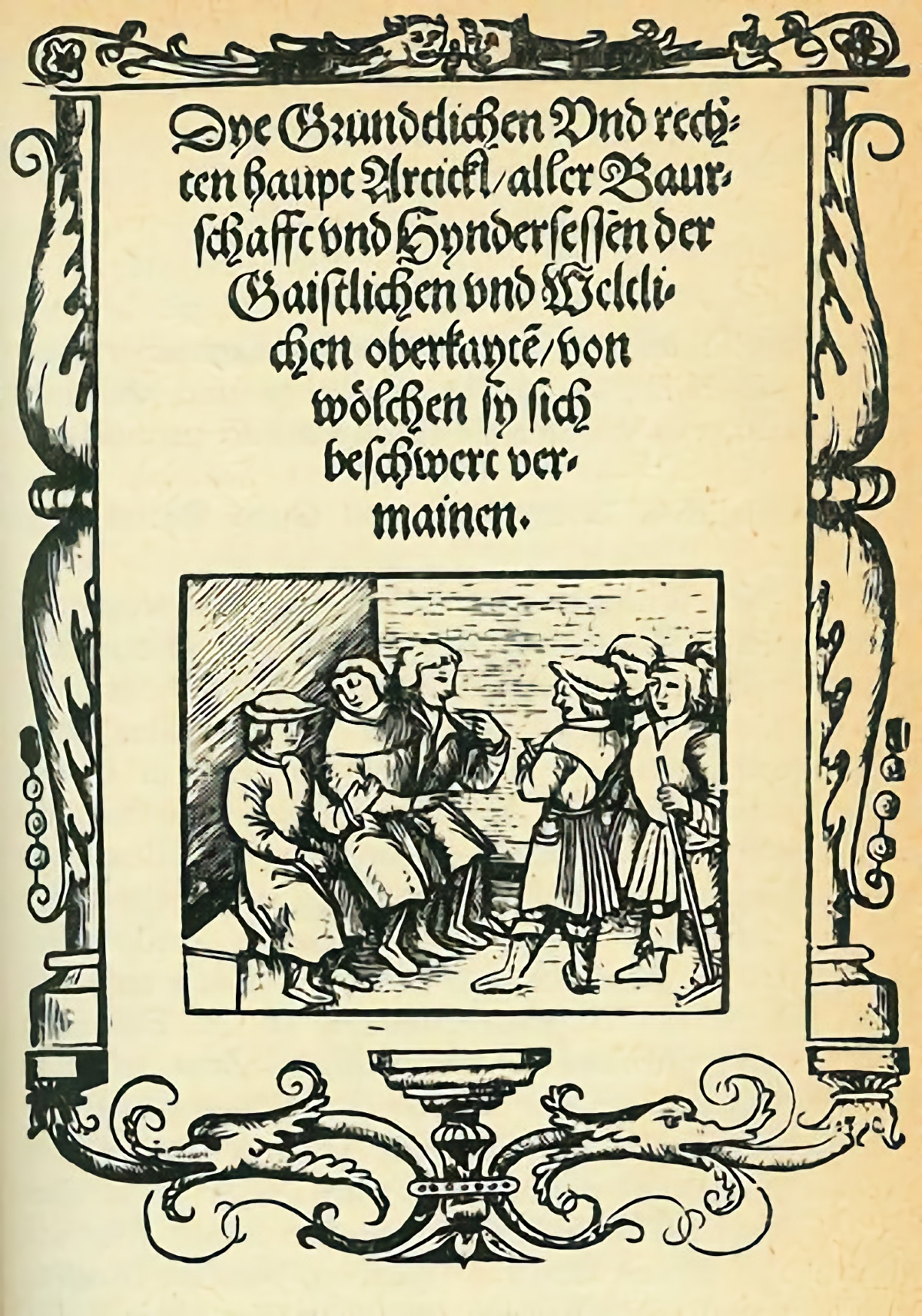
Titelblatt der Zwölf Artikel. [Vergtößerung]

In den 1525 veröffentlichten Zwölf Artikeln verlangten die Bauern unter Berufung auf die Bibel die Abschaffung der Leibeigenschaft, eine Verringerung der oft horrenden Abgaben, das – dem Adel vorbehaltene – Recht auf Jagd und Fischerei, die Rückgabe der ursprünglich gemeinschaftlich bewirtschafteten Flächen, die Verringerung der Frondienste sowie die freie Wahl des Pfarrers.

Sie gelten nach der Magna Carta (1215) als der zweite Schritt auf dem Weg zur Formulierung der Menschenrechte.

Luther anerkannte zwar einzelne Forderungen, verwarf aber die Argumentation mit Bibelstellen. Müntzers Idee von der Gleichheit aller Menschen lehnte er kategorisch ab.  Diese werde es erst im Reich Gottes geben.

“Drumb sol hie zuschmeyssen, wurgen und stechen heymlich odder offentlich, wer da kan (…) gleich als wenn man eynen tollen hund todschlahen mus.”

Martin Luther

“Darum soll man sie zerschmeißen, würgen, stechen, heimlich und öffentlich, wer da kann (…) wie man einen tollen Hund erschlagen muss.“

Martin Luther

Auf Erden aber sah Luther die Herrschaft des Schwerts. Genau dagegen zogen die Bauern ins Feld, in der Ausbildung und der Waffentechnik den Truppen des Adels freilich hoffungslos unterlegen.

Müntzer verspottete Luther wegen der Ablehnung revolutionärer Veränderungen als “Vater Leisetritt”. Der wiederum verfasste eine Polemik Wider die Mordischen und Reubischen Rotten der Bawren, in der er die bestehenden Besitzverhältnisse und die Gewalt der Fürsten nicht nur rechtfertigte, sondern sogar zur Ermordung ungehorsamer Bauern aufrief:

Der Adel ging längst ohne diese Ratschläge brutal gegen die Bauernschaft vor. Als Rechtfertigung kam ihm die Schrift Luthers freilich gelegen.

“Die herren machen das selber, daß in der arme man feyndt wirdt. Dye ursach des auffrurß wöllen sye nit wegthun.”

Thomas Müntzer

“Drumb seyt keck und vorlasset euch allein auf Got, so wyrt ehr euch ym kleynen haufen mehr sterk geben, dan yhr gleuben kunnet.”

Thomas Müntzer

Am 15. Mai 1525 schlug ein Heer von mehr als 6.000 Landsknechten die vereinten etwa 8.000 schlecht bewaffneten Bauern und Bergknappen in der Schlacht bei Frankenhausen (Thüringen) vernichtend. Mindestens 6.000 Aufständische fielen auf dem Schlachtfeld, weitere 600 wurden gefangengenommen, von denen 300 hingerichtet wurden.

Müntzer wurde festgenommen, gefoltert und am 27. Mai 1525 enthauptet.

Friedrich Engels’ Analyse

Friedrich Engels analysierte die Entwicklung in seinem Aufsatz Der deutsche Bauernkrieg (1850):

Foto: Immanuel Giel - CC

“Während sich in dem ersten der drei großen Lager, im konservativ-katholischen, alle Elemente zusammenfanden, die an der Erhaltung des Bestehenden interessiert waren, also die Reichsgewalt, die geistlichen und ein Teil der weltlichen Fürsten, der reichere Adel, die Prälaten und das städtische Patriziat, sammeln sich um das Banner der bürgerlich-gemäßigten lutherischen Reform die besitzenden Elemente der Opposition, die Masse des niederen Adels, die Bürgerschaft und selbst ein Teil der weltlichen Fürsten, der sich durch Konfiskation der geistlichen Güter zu bereichern hoffte und die Gelegenheit zur Erringung größerer Unabhängigkeit vom Reich benutzen wollte.

Die Bauern und Plebejer endlich schlossen sich zur revolutionären Partei zusammen, deren Forderungen und Doktrinen am schärfsten durch Münzer ausgesprochen wurden.”

Anm.: Das Foto zeigt das Denkmal für die Bauernkriege von Peter Brauchle nach einem Entwurf Albrecht Dürers in Landau in der Pfalz. (Foto: Immanuel Giel – CC)
Offenheit

“Komm! ins Offene, Freund!” lautet der Beginn eines unvollendeten Gedichts von Friedrich Hölderlin, das – offenbar – auch die Redaktion der Jahresschrift Das Gedicht angeregt hat.

Die einflussreichste Lyrikpublikation des deutschen Sprachraums feierte im Herbst 2022 ihren 30. Geburtstag. Das Motto der Jubiläumsausgabe lautet offen. Es gibt nur wenige Wörter im deutschen Sprachschatz, die eine solche Bedeutungs- und Assoziationsvielfalt aufweisen wie dieses schlichte Eigenschaftswort: Wir kennen die offene Rechnung, die offene Wunde, das offene Geheimnis, aber auch offene Grenzen, offene Herzen, ganz zu schweigen von offenen Fragen, die sich im offenen Gespräch mit offenen Freunden vielleicht nicht endgültig beantworten lassen, wohl aber zu einem offenen Ergebnis führen können. Wenn man sich nur öffnet dafür.

Der Band enthält Gedichte von 226 Poetinnen und Poeten aus 15 Nationen, darunter Friedrich Ani, Sujata Bhatt, Ulrike Draesner, Nora Gomringer, Durs Grünbein, Ulla Hahn, Gerald Jatzek, Uwe Kolbe, Jan Koneffke, Helmut Krausser, Nils Mohl, Dagmar Nick, Dirk von Petersdorff, Matthias Politycki, Arne Rautenberg, Nikola Richter, Joachim Sartorius, Gundula Schiffer, Raoul Schrott, Xóchil A. Schütz, Jürgen Theobaldy und Jan Wagner. Mit Essays von Ulrich Johannes Beil, Paul-Henri Campbell und Christoph Leisten.

Bestellungen

A Travel Journal

In September 2003, Raphael Nadolny traveled from Poland to Slovakia and Ukraine. On the road he wrote a journal with interesting descriptions and reflections and photographs. It contains his thoughts on borders, folk museums, and history that is inscribed in the layout of a town.

He mailed a copy of the musings together with a self-made postcard with a photo from Bardejov, a small  town in North-Eastern Slovakia.

Esserci…

The 15th edition of the mail art exhibition esserci senza esserci (one translation of the ambiguous expression would be to be around without being around) took place in the Italian town of Viareggio. As usual, the opening was quite a spectacle with performances, a poetry reading and and lots of music.

The organizers _guroga and Enzo Correnti integrated the art works into an anti-war installation in the avant-garde gallery Ri-Cre-Azion3.

Gabriele Müller’s contribution was an ink drawing. The work is a kind of picture puzzle where the characters and creatures become visible only after a thorough inspection.

Skeletons living it up

The Day of the Dead (Día de los Muertos) is a Mexican holiday celebrated on November 1 and 2. Since 2008 it is part of the UNESCO’s Representative List of the Intangible Cultural Heritage of Humanity.

There are still academic debates about the origins of the holiday. While the belief in a temporary return of the dead to their families seems to back to an Aztec festival, the modern customs and iconography have been heavily influenced by Christian traditions.

Yet, the festivities don’t revolve around the medieval memento mori (“remember that you must die”) and the solemn memory of the departed. Mexicans celebrate a joyful holiday with their family and friends, sharing food and drinks. The returning dead are a merry bunch as well. The famous prints of José Guadalupe Posada (1854-1913) depict them as dancing and singing skeletons.

Gabriele Müller’s drawing and Gerald Jatzek’s collage are responses to a call with the title el buzón de la calaca (the postbox of the skull). Both works have been part of an exhibition in the Museo de la Filatelia de Oaxaca.

Gatos…

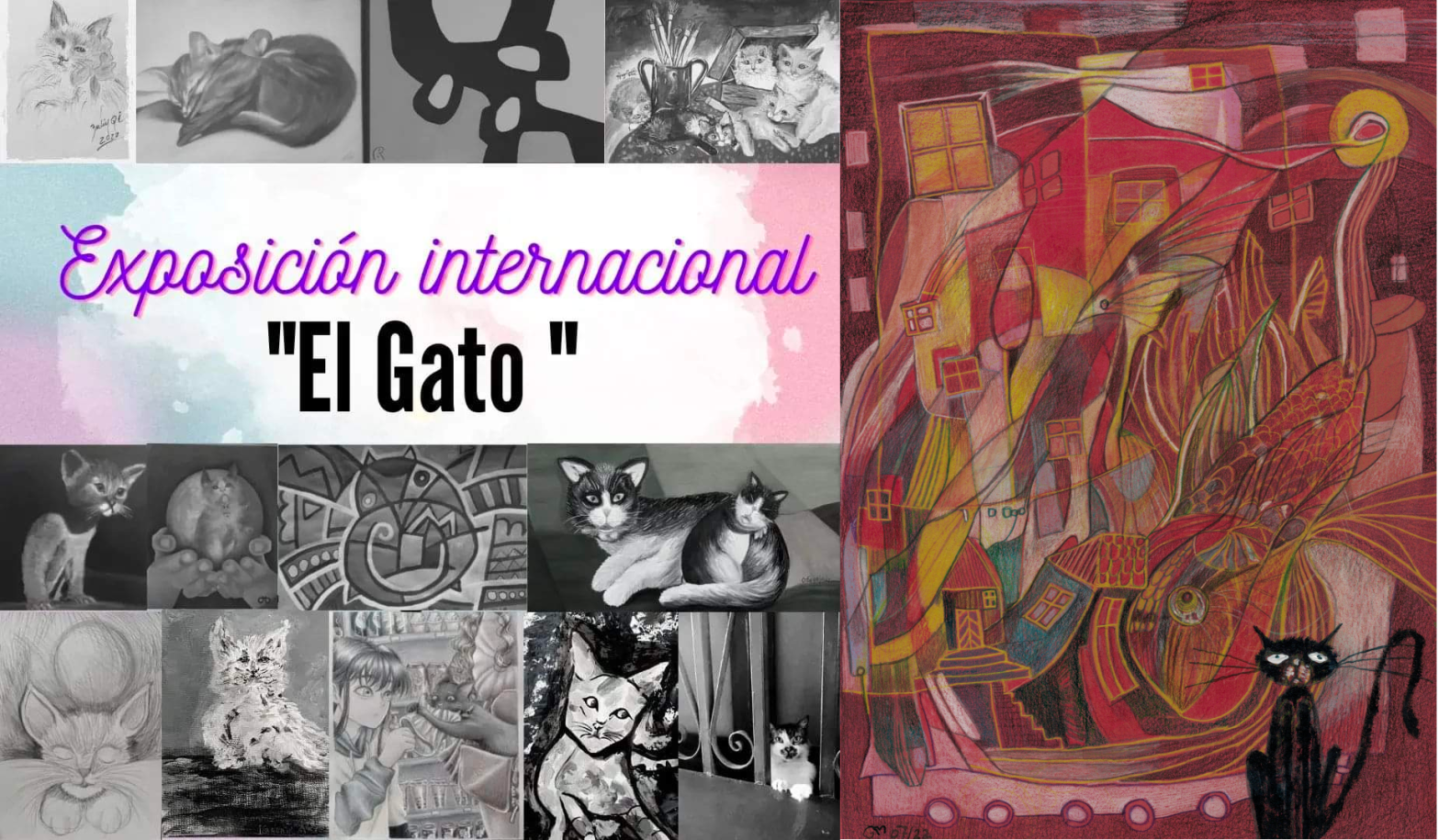
El cuadro gato soñando con casa y peces formó parte de la exposición internacional virtual “el gato”. Bajo la curaduría de Johanna Díaz, la dirección de Angélica Leal y la coordinación de Jahary Pérez se siguen publicando las presentaciones que fueron seleccionados entres los 147 participantes de 31 países.

El dibujo de lápices a colores sobre papel rojo mide 21×29,5 cm y es un homenaje a Maya y a Katzi , las dos gatitas que durante casi 20 años formaron parte de la vida de la dibujante.

Cabaret: 90 Years later

“Life is a cabaret.” Everybody knows this line from the song which has been recorded by the likes of Ella Fitzgerald, Louis Armstrong, Liza Minnelli, Brenda Lee and Frankie Vaughn:

“What good is sitting alone in your room?
Come hear the music play.
Life is a cabaret, old chum.
Come to the Cabaret.”

The musical Cabaret is set in Berlin in the years 1929/1930. Weimar Germany is about to collapse. The Nazi party is getting stronger and their thugs spread terror among jews, pacifists, centrists and left-wingers. Yet, the show has to go on in the dubious Kit Kat Klub, but the end is already in sight.

Lutz Anders, the untiring organizer of mail art events, had the idea to transform the hook line into the 2020s – and inspired 230 artists from 43 countries.

The exhibition took place at the Kunstraum Reuter, a well known venue for contemporary art, between October 8 and 19. The wonderful catalog has immediately become a collector’s item. Gerald is lucky to own number 67 of 300 which includes his his collage of Pussy Riot’s fight against the Russian authorities.

Art from two Countries

Not all things gone smoothly for a time. That’s why we have been offline for some weeks.

We are back with some great examples of mail art that we received in October:

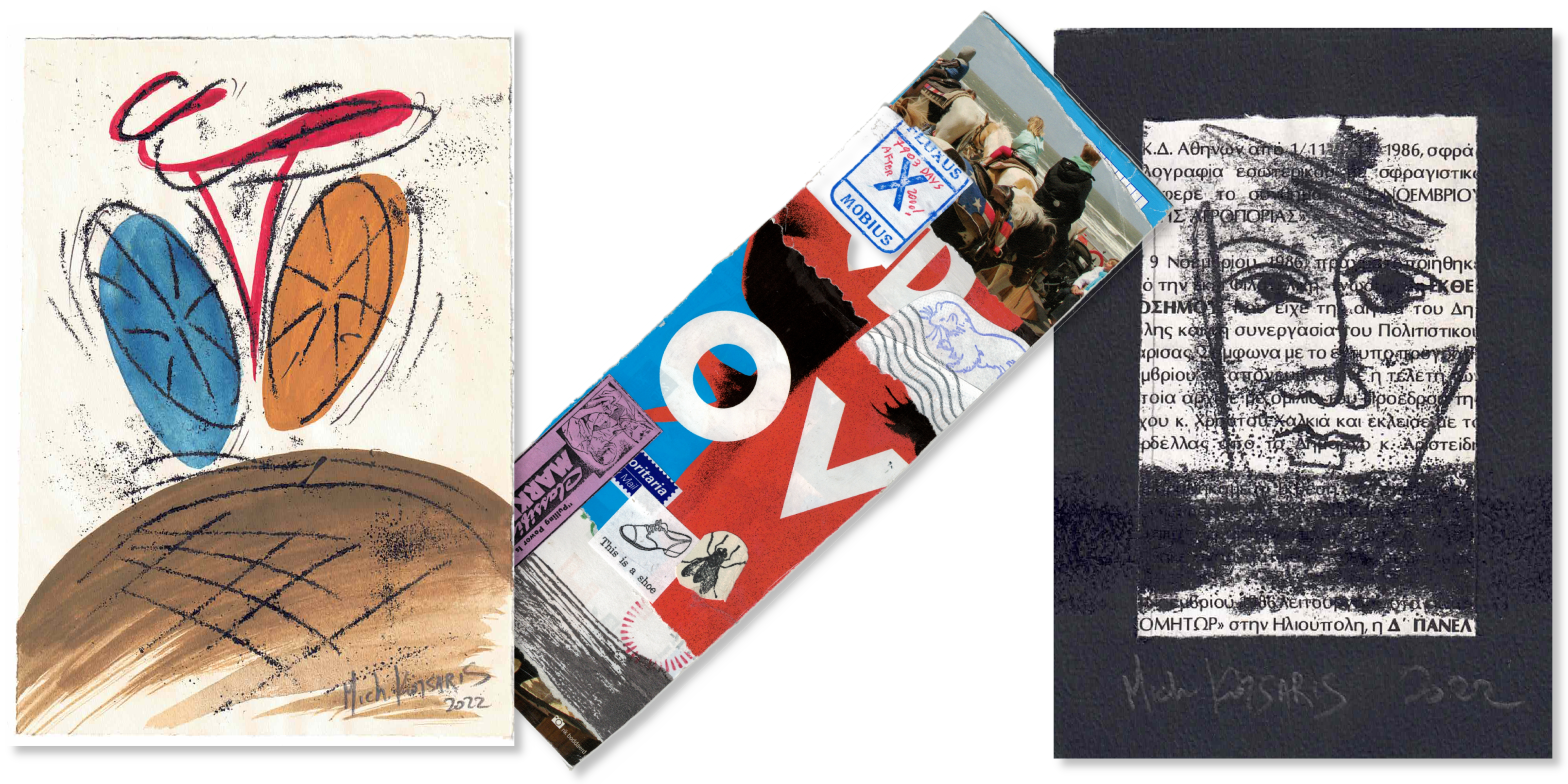
  • Michalis Kotsaris from Aitoliko, a small, yet beautiful town in Western Greece sent us two cards which form the left and right part of the triptych on this page. He is a fellow member of the IUOMA. – Ευχαριστώ πολύ, Μιχάλη.
    He recently organized the international mail art exhibition Island City / Πόλις Νήσος.
  • The collage in the middle is from Jean-Philippe Giniot, a Belgian mail artist who loves old records and unexpected combinations of things. You can find some of his works on Instagram.

Pensando y hablando

No Dejes que Mueran las Palabras” era el título de una convocatoria internacional, organizada por Stella Maris Velasco y Mariela De Brasi. En la exposition en la Liga del Comercio y la Industria San Martin, Argentina, participan los siguientes artistas y poetas de Argentina a Singapur:

  • Abanico del Arte – Argentina
  • Adriana Martínez – Argentina
  • Adriana Novello – Argentina
  • Andreina Argiolas – Italia
  • Antonella Prota Giurleo – Italia
  • Alicia Altobelli Argentina
  • Albina Dealessi – Italia
  • Ámbar Jhohanna Hernández – Venezuela
  • Benedetta Jandolo – Italia
  • Blanca Núñez – Argentina
  • Bruno Chiarlone – Italia
  • Carina Rosello – Argentina
  • Cinzia  Fariña Italia
  • Claudia García- Argentina
  • Cynthia Petry – USA
  • Fabio Di Ojuara – Brasil
  • Florencia Parentti – Uruguay
  • Franklin Valverde  Brasil
  • Floki Gauvry- Argentina
  • Geraldhyne Fernandez – Argentina
  • Gerald Jatzek – Austria
  • Graziella Di Grezia – Italia
  • Guijarro Cinco – México 
  • Guiovanni & Renata Stra DaDa –  Italia.
  • Gloria Ken – Singapur
  • _Guroga – Venezuela
  • Héctor Daniel Soler – Argentina
  • Ignacio Navarro Cortes – Mexico
  • Inés Passiarini – Argentina
  • Irina Hall Novikova – Bielorrusia
  • Iwa Kruczkowska-Król – Polonia
  • Laura Grané . Argentina
  • Laura Lambré – Argentina
  • Lucia Caro – Argentina
  • Luis María Labrador – España
  • Marcela Peral – Argentina
  • María C.Melchiore – Argentina
  • María Leal – Venezuela
  • Mariangeles Metivè / Cesar Spais – Argentina
  • María Victoria Boné – Uruguay.
  • Mariela Di Brasi- Argentina
  • Michelangelo Mayo – USA
  • Mirta Caccaro – Italia
  • Mónika Vergara – México
  • Néstor Rossi – Argentina
  • Silvia Ariza – Argentina 
  • Susanne Schumacher  – Alemania
  • Stella Maris Amitrano – Argentina
  • Stella Maris Velasco – Argentina
  • Olga Chávez – Argentina
  • Patricia Negreira – Argentina
  • Renata Lichańska – Polonia
  • Roberto Scala  – Italia
  • Silvia Ariza – Argentina
  • Simón Warren – Gran Bretania
  • Víctor Valqui Vidal – Perú  

Die Post als Zensurstelle?

Die Österreichische Post ist das größte Logistik- und Postunternehmen des Landes und das einzige, das Briefe und Karten zustellt. Umso wichtiger wäre strikte Neutralität in Hinsicht auf die beförderten Objekte. Leider ist das nicht der Fall.

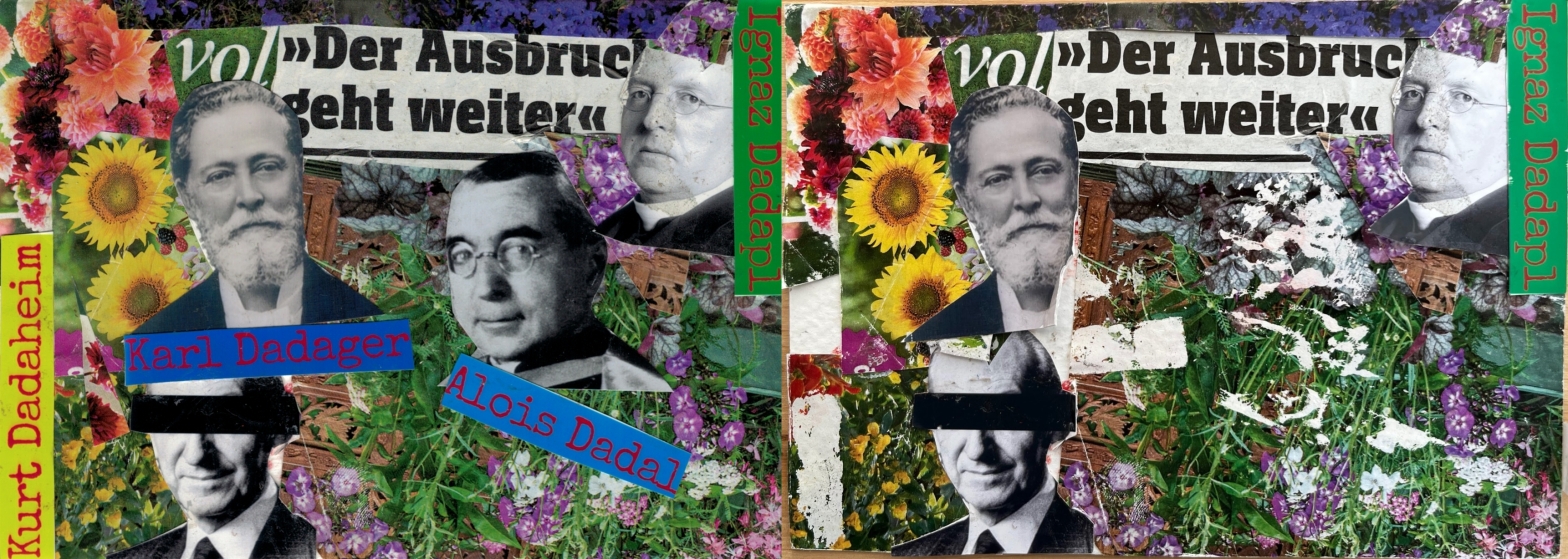
Die obenstehende – bewusst grob gearbeitete – Collage von Gerald Jatzek wurde auf dem Weg von Wien nach Grünbach am Schneeberg schwer beschädigt. Es mag sein, dass die Darstellung heuchlerischer christlicher Politiker von Lueger bis Waldheim nicht jedermanns Zustimmung findet. Es geht aber nicht an, dass deshalb Objekte, die das Unternehmen zum Transport übernommen hat, zerstört werden.

Eine hochauflösende Darstellung der obigen Bilder befindet sich hier.

Beiträge, die in den vergangenen Jahren zu Ausstellungen in Argentinien, Australien, Belgien, Deutschland, Italien, Rumänien, Spanien, Ungarn und den USA geschickt wurden, kamen übrigens samt und sonders ohne den geringsten Kratzer an.

Political Art

Words against system’s headaches/ Words for new utopia is the title of an exhibition in Namur. The show was curated by Laurent Wilmet and Anne Gilis for the the Belgian educational movement CEPAG.

They state:

“Indeed, words are not innocent. Words are not neutral, they are socially situated and criticism of their use, of their meaning should be part of the political struggle.”

Gerald’s Poem

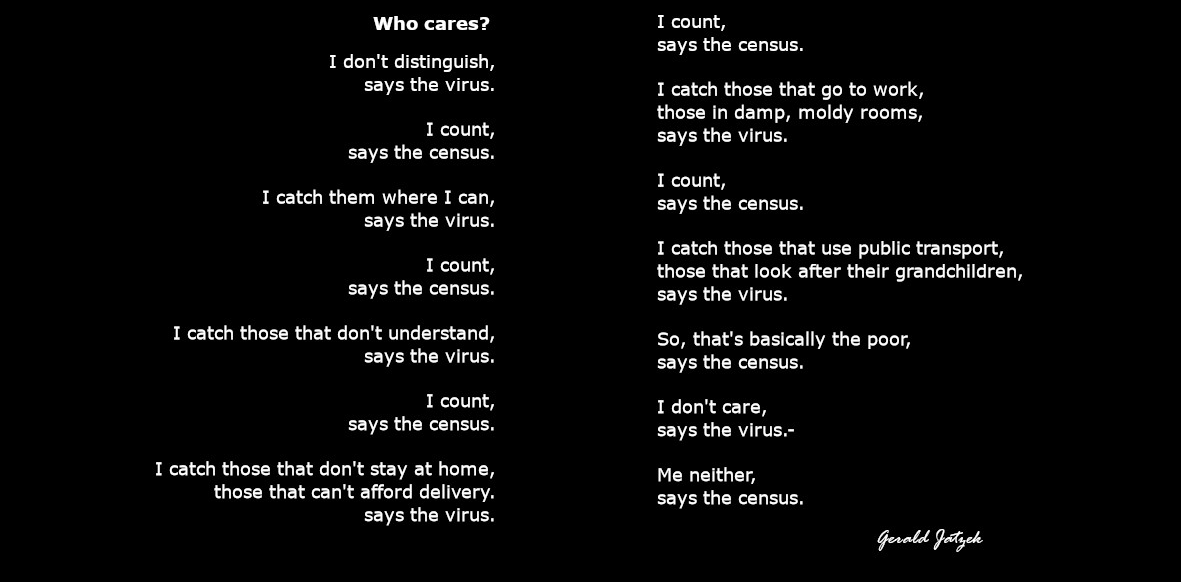
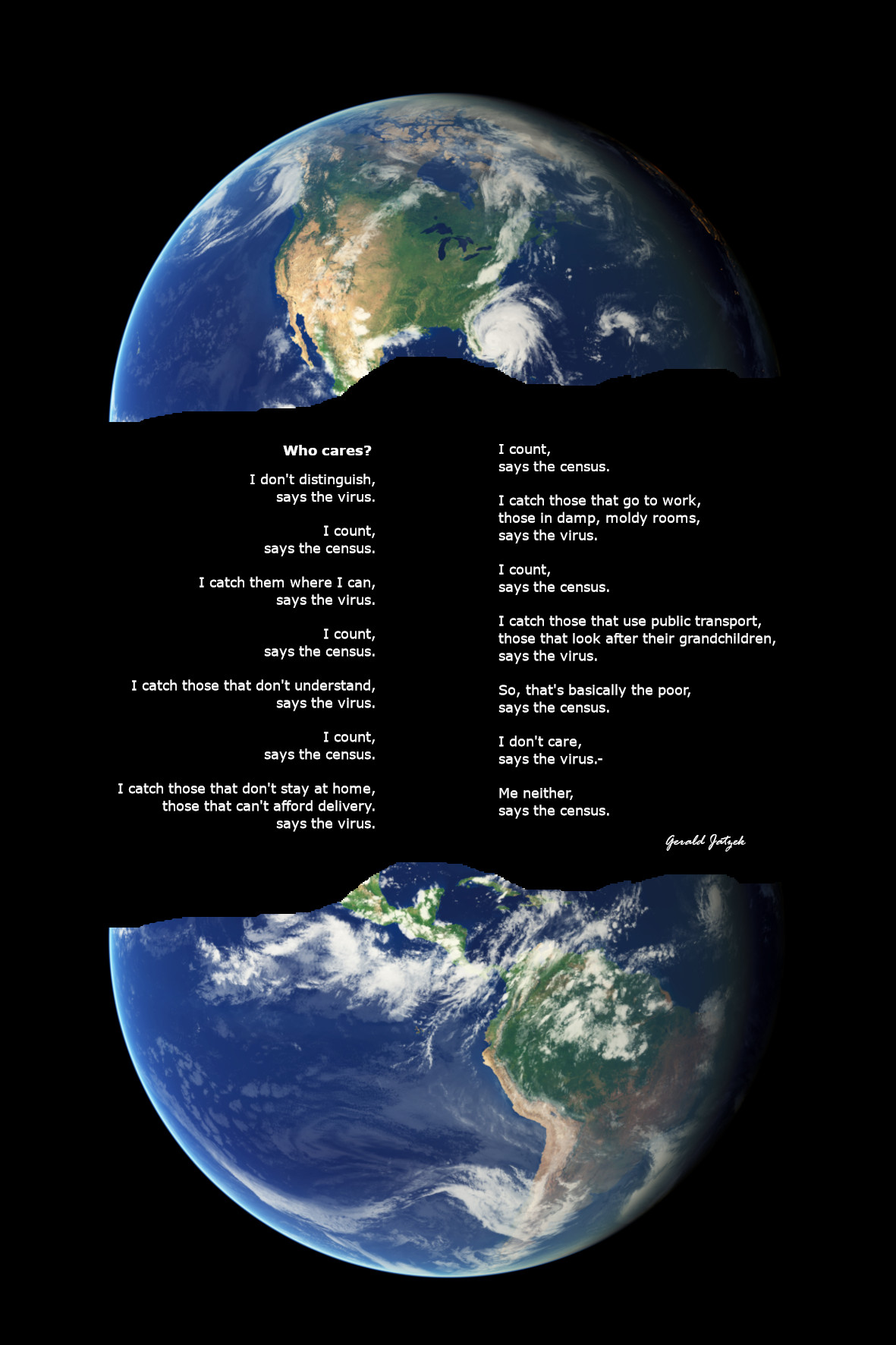
Gerald uses Brecht’s alienation effect when he lets the COVID-19 virus and the census discuss the effects of the disease on different social groups.

Both of them show not interest in the fate of humans. Yet, the reader is compelled to realize that health is a class-specific asset …

The Exhibition

Des mots pour d’autres, mots d’ailes de société et des mots contre les maux du système
Abattoirs of Bomel, Traverse des Muses, 18
5000 Namur, Belgique
Open from 14th till 18th of September from 14 to 18:00

The Catalog

A Short Introduction

What is Mail Art? (3)

This video offers a brief introduction to Mail Art as a form of art that defies the global art market:

See also:

To learn more about this brainchild of Dada and Fluxus, you may want to visit the Site of the International Union of Mail-Artists.