Wundertüte aus Berlin

Der Berliner Ulrich Kattenstroth vagabundiert durch Kunstsparten, ohne sich viel um Grenzen zu kümmern. Im Juli schickte er einen Umschlag nach Wien, der das Haus des kürzlich verstorbenen Schweizer Künstlers und Aktionisten Hans Ruedi Fricker (1947-2023) zeigt.

Auf der Vorderseite befindet sich die Botschaft: FLUXUS IST LUXUS. Was hiermit zur fröhlichen Diskussion gestellt sei.

In dem Kuvert befanden sich wie in einer Wundertüte jede Menge Überraschungen wie ein Polaroid von Kattenstroths Projekts Kunst des Fährtenlesens, ein Druck von einem Brief Frickers, eine Maskenverpackung, eine Werbung für eine professionelle Prinzessinnendarstellerin und mehr.

© Ulrich Kattenstroth 7/2023

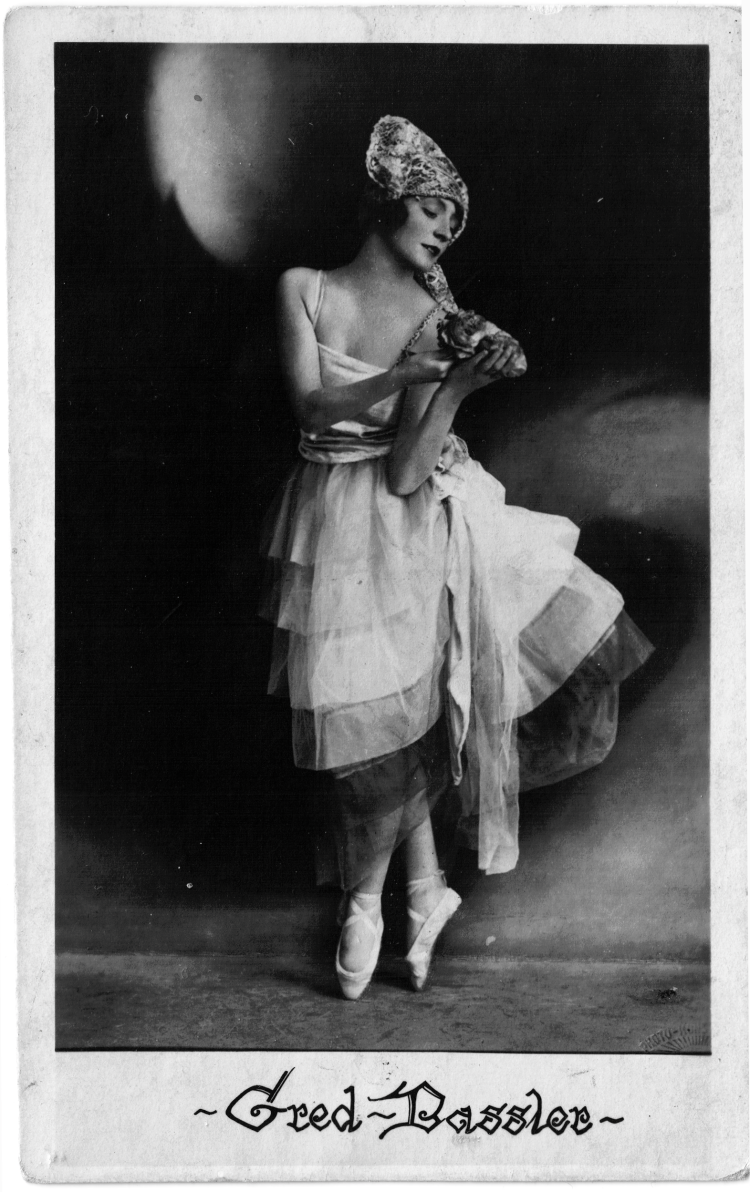
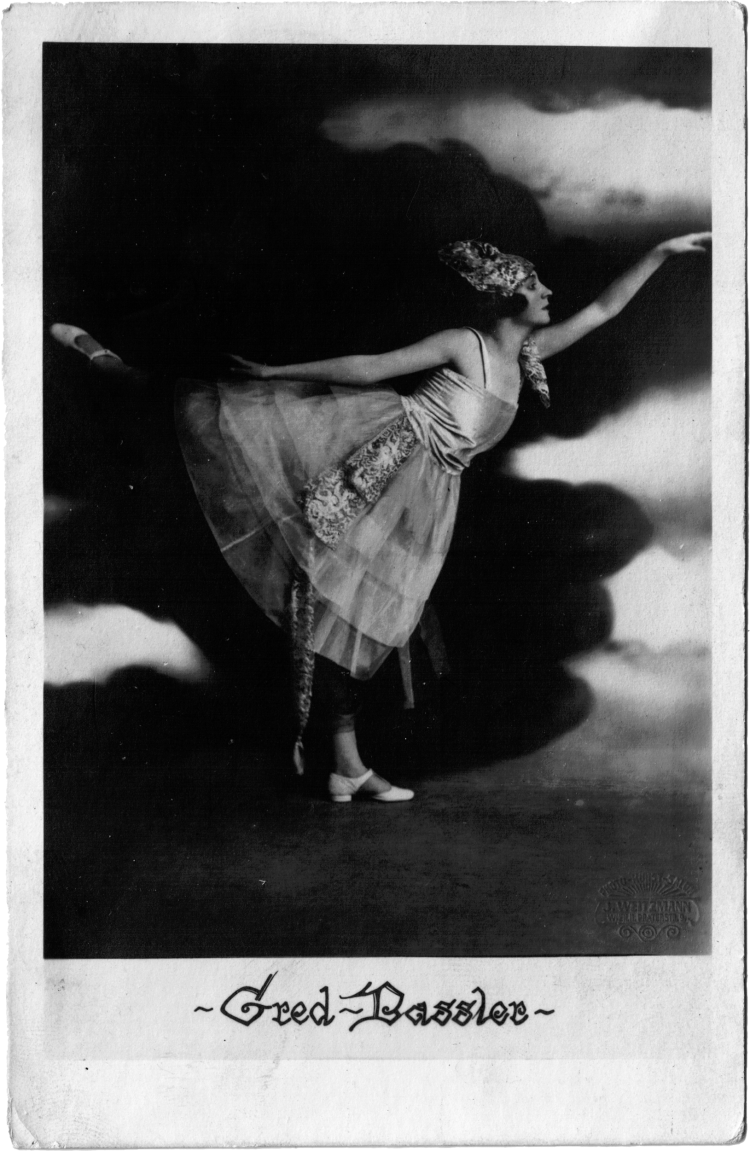
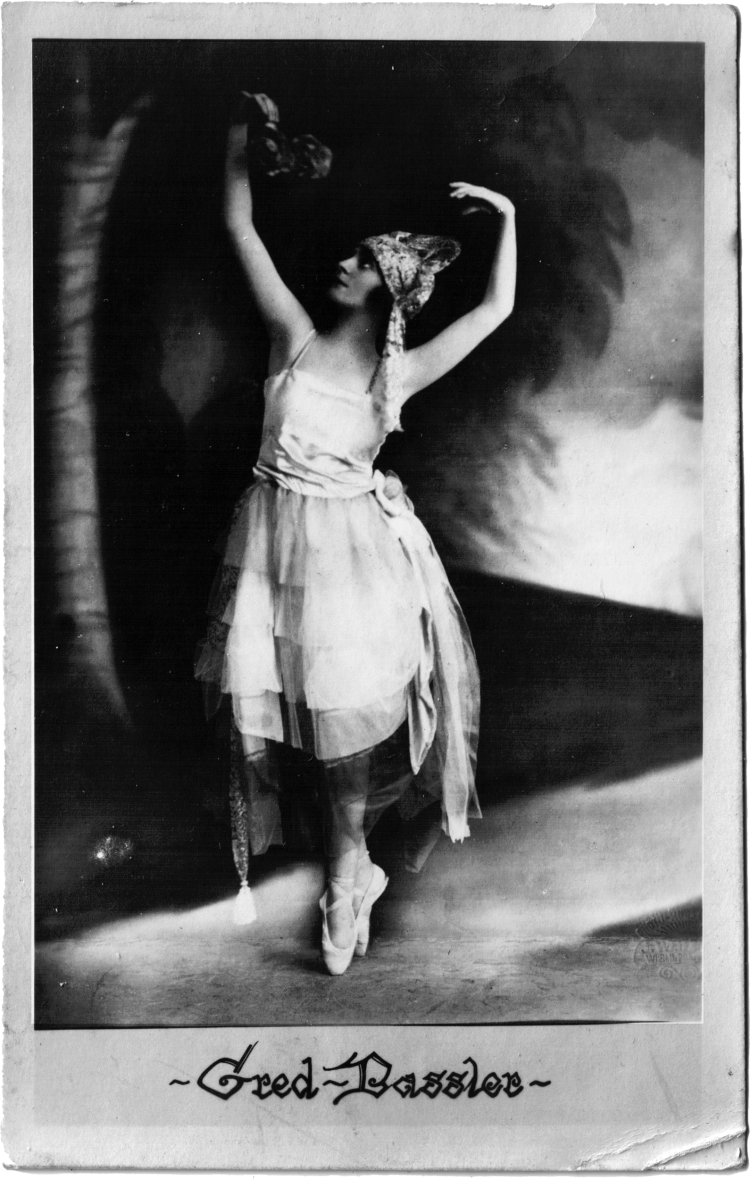
Photos: A familiar Dancer

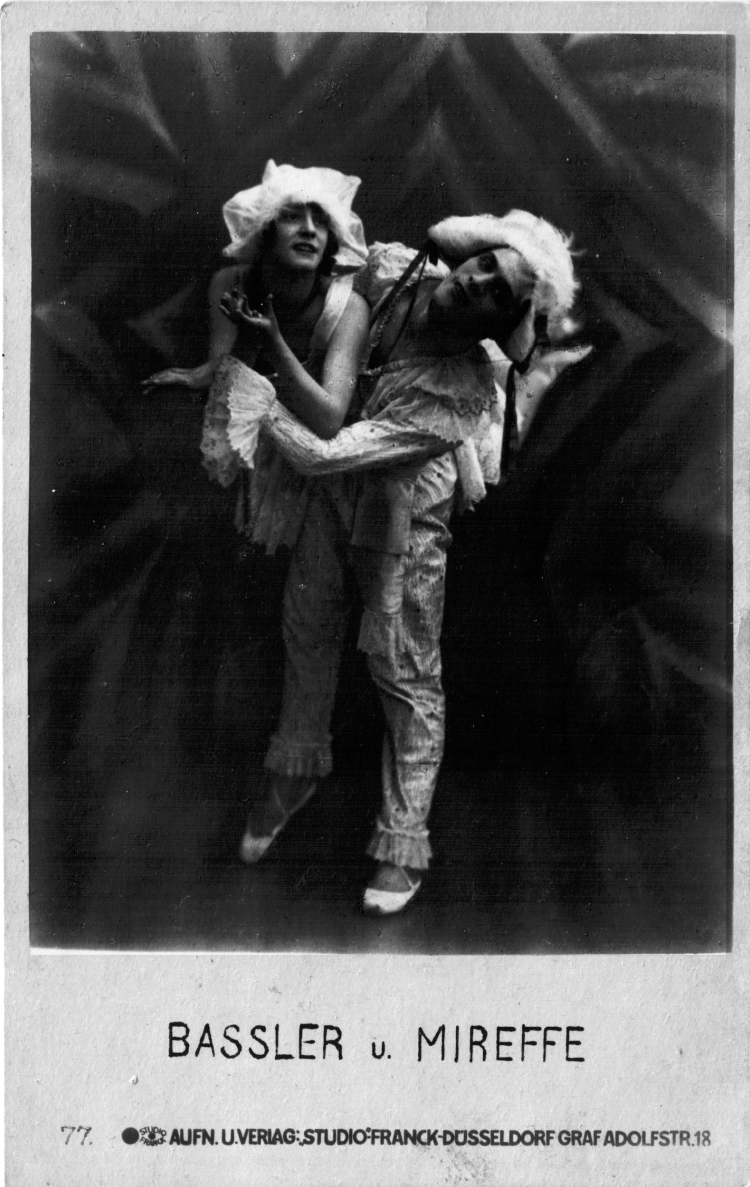
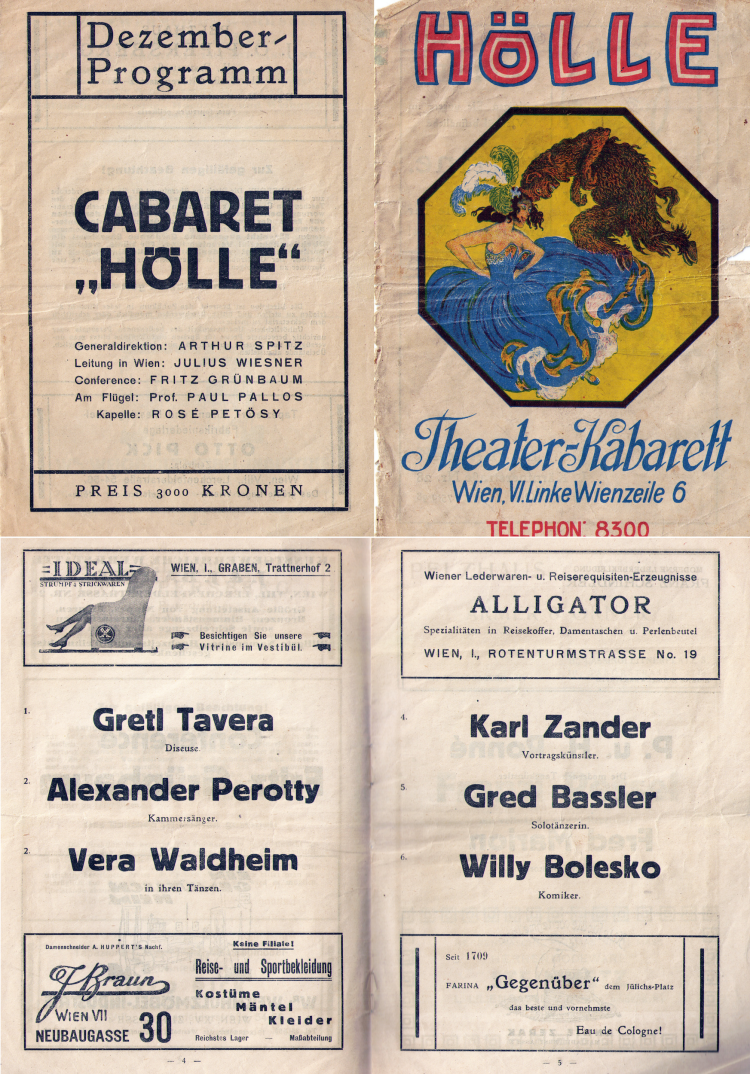
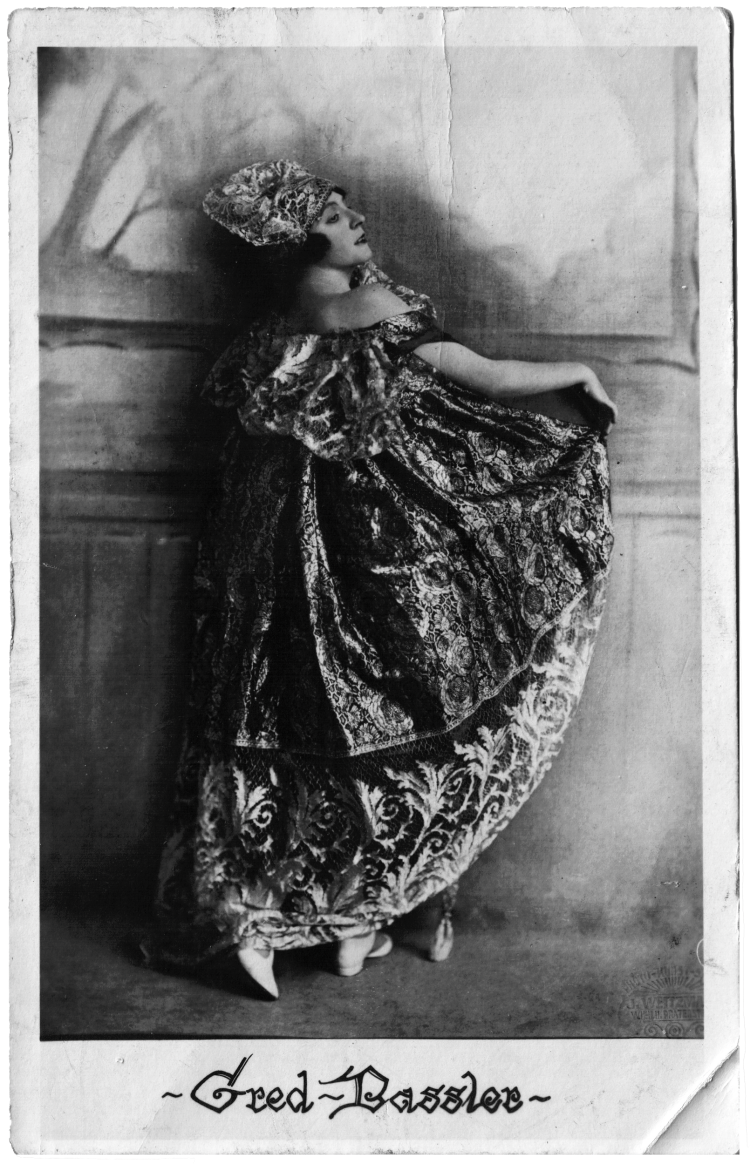
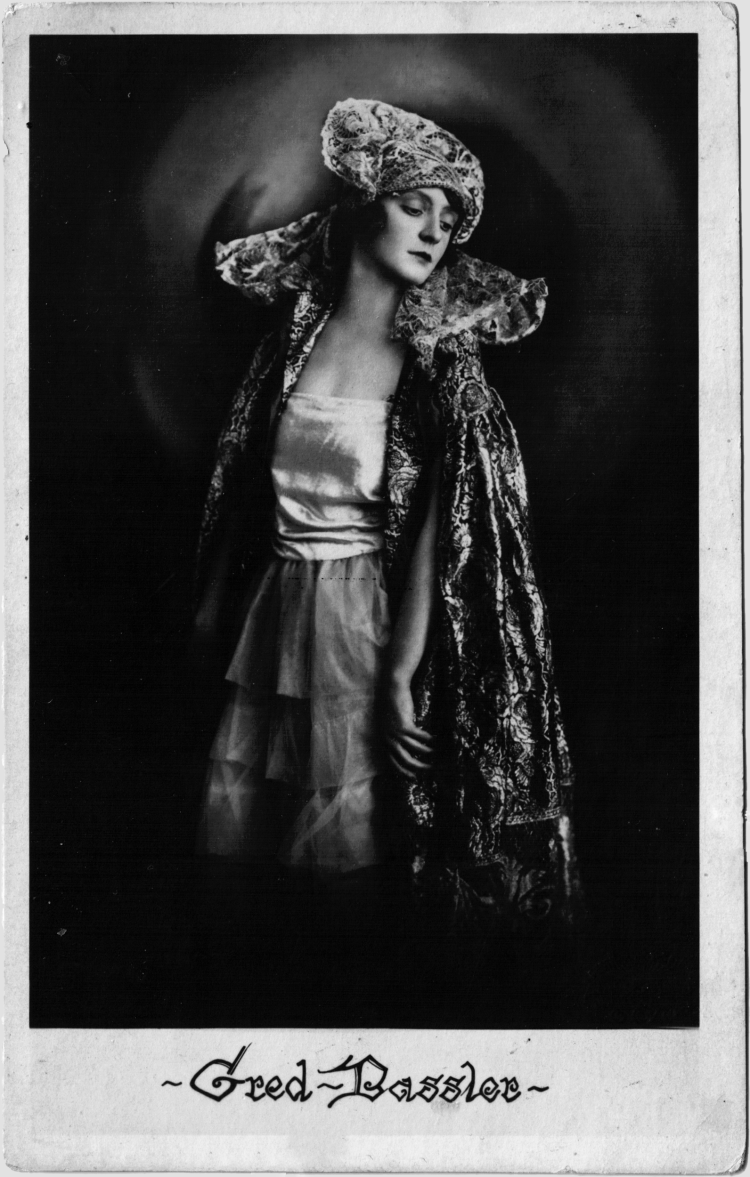
My grandmother Margaretha Jatzek gave her debut as a dancer at the Vienna Opera at the age of eight. But times got worse, and classical dance was not the most in-demand profession. Therefore, she joined vaudeville shows under her stage name Gred Bassler to make a living in the 1930s.

The advertisement poster for the Cabaret Fledermaus on top of this article announces singers, dancers, a lute player, a “musical puppet”, and a jazz band.

When I was a kid, granny never talked to me about her appearances. It seems that she turned the page on her artistic career when she married my grandfather and consequently lived in places like Neustettin (nowadays Szczecinek), Eberswalde and Oderberg – which were pretty exotic for a young woman from Vienna.

  • Gred Bassler & Louis Mireffe
  • Program "Cabaret Hölle"
  • Gred Bassler
  • Gred Bassler
  • Gred Bassler
  • Gred Bassler

One of her colleagues in some of these shows was the famous songwriter, and standup comedian Fritz Grünbaum who took the role of the master of ceremonies. Grünbaum died in the concentration camp Dachau  on 14 January 1941.

Acknowledgements

Many thanks to my brother Thomas who found and collected these photographs.

In Harmony with Nature in Elba

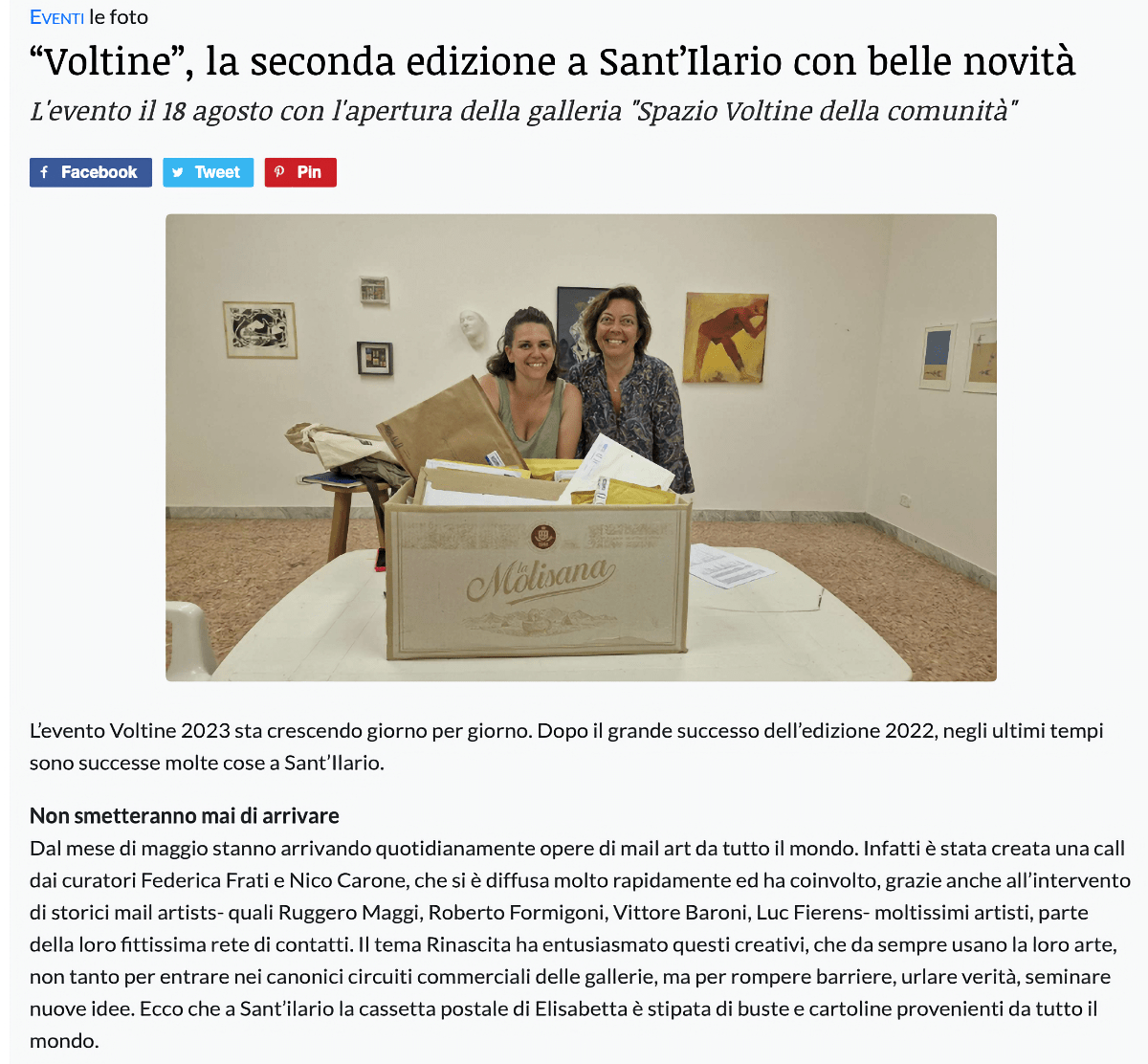
Sant’Ilario on the island of Elba is not a spot that everybody knows. Well, not yet, because there’s an active group  called Voltine that started to reach out to mail artists from all over the world. The opening of the exhibition of the works they received will take place on Friday 18 August at 7 pm.

It’s already the second edition of the event, and Luca Polesi will present the catalog with the works they received last year. The curators Frederica Frati and Nico Carone will talk about the organisation of the exhibition, their expectations and the outcome of their worldwide call. Giulio Visibelli, renowned saxophonist and flutist, will be responsible for the music.

The exhibition will feature a print (no. 3/3) by Gerald that confronts the world of yesterday (a section from Marinetti’s car-crazy futurist manifesto) with today’s necessity to find a way to once again live in harmony with our planet, symbolized by the bicycle. The text on the left says: We have no fear.

Links

Moving Poetry

Dorina Harangus is a multilingual actress and dancer from Romania who likes to switch between styles and disciplines, including singing, drama, movement and poetry.

The project Word & Movement is based on the results of a mail art and poetry call. From the works that she received, Dorina formed a “performative exhibition” in two German cities, namely Tübingen and in Stuttgart. The photos here are from her performance in the famous Club Voltaire in Tübingen.

QR codes formed another expansion of the exhibition, linking the cards with videos which showDorina’s reactions to the pictures and the poetic texts. Her goal was to transform every picture to just one movement.

There will be one more show in Tübingen around the end of the year.

Participants

Vasilis Karkatselis– Greece, Mzia Valerian – Belgium, Bertholdus Sibum – Netherlands, Mindaugas Zuromskas – Lithuania, Luc Fierens – Belgium, Jeff Bagato – USA, Horst Tress – Germany, Selejan Elena Felicia – Romania, Pedro Bericat – Spain, Carmen Morosanu – Spain, Bruno Chiarlone – Italy, Carien van Hest – Netherlands, Peter Abajkovics – Hungary, Keiichi Nakamura – Japan, Miche – Art – Universalis – Belgium, Roberto Scala – Italy, Alexandru Jakabhazi – Romania, Eduard Jakabhazi – Romania, Suely Castro Melo – Brazil, VEB Freie Brandstiftung – Germany, Mikel Untzilla – Basque Country, Ana Paula Barros – Schweiz, Renata Danicek – Brazil, Claudio Gavina – Italy, Klaus Pinter – Austria, Tofu – USA, Johanna Reckers – Germany, Sabela Bana – Spain, Guido Capuano – Italy, Katerina Mandarik – France, Miguel Jimenez – Spain, Nestor Rossi – Argentina, Katerina Nikoltsou – Greece, Biro Ildiko – Hungary, Shahrul Sahee – Malaysia, Veronique Pozzi Paine – Italy, Suzlee Ibrahim – Malaysia, Marcia Rosenberg – Brazil, The Wasted Angel – Belgium, Guido Capuano – Italy, Giovanni and Renata Strada – Italy, Michael Georg Bregel – Germany Bernhard Zilling – Germany, Nihal Güres – Turkey, Felipe Lamadrid – Spain, Luciana Maria Cassettari – Brazil, Bruno Cassaglia – Italy, Vostinar Daniela Areta – Romania, Adam Blackshaw – Australia, Viviana Ravelli – Italy, Leslie Atkins – USA, Atelier d’art postal La Chevalerie – France, Sue Jenkins – USA, Rosalie Gancie – USA, Serse Luigetti – Italy, Jenifer Weigel – USA, Meral Agar – Turkey, Susan Gold – Canada, Jose Rufino – Brazil, Paulo Teles Brottas – Portugal, Uwe Höfig – Germany, Gruze Mayer – Belgium, Merja H. Lopisto – Finland, William Lee – Austria, Chiara Bertoncello – Italy, Cristina Holm – Spain, Rebekka Schmidt – Germany, Marzia Braglia – Italy, Helen Cubova – Czech Rep., Emilia Loseva – Latvia, Türkan Elci – Turkey, Maria Baptista Mery – Brasil, Anja Mattila Tolvanen – Finland, Irina Novikova, Susanne Schumacher – Germany, Hilal Tursoluk – Turkey, Pascal Coupechoux – France, Francisca Geron Herrera – Mexico, Gerald Jatzek – Austria, Peter Schubert – Germany, Popescu Ramona Cristina – Romania, Mariuta Adeline Valeria – Romania, Militaru Iona Alexandra – Romania, Henri Grahn Hermunen und Rikard Larson – Finland, DO DO – Belgium, Christiane Carre – France, Lars Schumacher – Germany, Roberto Keppler – Brasil, Avrill Lajune – Belgium, Guroga – Venzuela, Alexander Limarev Russia, RF Cote – Canada, Ryosuke Cohen – Japan, Edyta Dzierz – Poland, Bruno Cassaglia – Italy, Simon Warren – UK, Virginie Loreau – France, Vida Soraya Verzosa – Canada, Vitka Ribarova – Czech Republic, Edna Toffoli – Brasil Michelangelo Mayo – USA, Simon Warren – UK, Monica Morosanu and Secondary School children from Tureoc – Romania, Honoria Starbuck – USA, Christine Cho – France, Cecilia Ossi – Italia, Zegrean Sergiu – Romania, Cindy Magee – USA, Juan Petri – Spain, Norberto Hose Martinez – Argentina, Maria Victoria Bone – Uruguay.

There is an online catalog on Dorina’s website Colector.de.

A Watercolor Card

Canadian artist Awyn is a very active member of the mail art community. All the more it is very nice that she found the time to draw two watercolor paintings and send them as a postcard to Austria.

The front page that features a folk guitar player on a typical stool is accompanied by a short poem about the role of music in our lives. On the backside we find two figures in polka-dot-skirts.

Those who have difficulties reading the poem, are kindly requestred to follow this link.

Tiefdruck mit Tiefgang

Ein alchemistisches Werkstattbuch für Radierer von Wolfgang Autenrieth

Es gibt zig Bücher über die Techniken der Radierung, und in den meisten finden sich gedrechselte Verweise auf die Kunstgeschichte und Abbildungen von großartigen Werken. Eben das lässt Wolfgang Autenrieth aus. Dafür beschreibt er detailgenau sämtliche Arbeitsabläufe vom Aufbau der Werkstatt über die Vorbereitung der Platten und die diversen künstlerischen Techniken und das Ätzen bis zum Druck und der Signatur. Und zwar von A bis Z aus eigener Erfahrung, wie etwa die Cyanotypie neben dem Buch zeigt.

In den vergangenen 40 Jahren hat der “passionierte Jäger und Sammler” Tipps und Tricks, Anleitungen und Rezepte aus fünf Jahrhunderten gesammelt, ausprobiert und mit den eigenen Erfahrungen angereichert. In klarer Sprache geschrieben, bietet das Buch Anfängern und erfahrenen Radierern und Radiererinnen wertvolle Hinweise und Anregungen zum Experimentieren. 

Die Auflistung der Grundausstattung mit den Angaben alternativer Bezugsquellen zum Kunstfachhandel kann besonders dem Neuling Geld ersparen. Das Kapitel Plattenvorbereitung enthält nicht nur Rezepte für Sparsame, Perfektionisten und Nostalgiker, sondern auch verschiedene Methoden des Entgratens, Schleifens, Entfettens und der Abdeckung von Vorder- und Rückseite. Die Darstellungen der manuellen und fotochemischen Techniken des Kopierens, das besonders beim Druck auf mehreren Platten ein wichtiges Hilfsmittel ist, können Enttäuschungen beim ersten Probedruck vermeiden. 

Bei den “trockenen” Techniken geht der Autor auch auf wenig bekannte Vorgangsweisen im Bereich Mezzotinto ein, etwa dem Aufrauen der Platte mit Sand und Schmirgel.

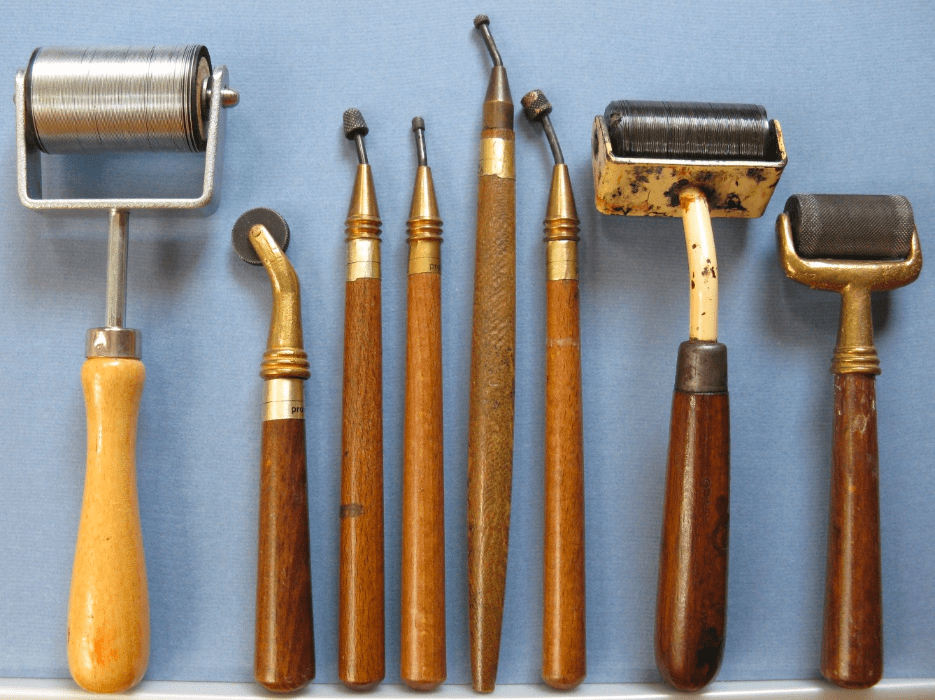
Um Missverstämdnisse auszuschalten, hat Autenrieth die Illustrationen akribisch zusammengesucht, etwa Roulettes, Moulettes und Granierwalzen (Bild: Toni Pecoraro / Public Domain). Wo er nichts fand, hat er selbst Skizzen angefertigt.

“Haben Sie einen Kaktus auf dem Fensterbrett?”, fragt er im ausführlichen Abschnitt über die “nassen” Techniken, das Ätzradieren. Dass dickere Kaktusdornen hervorragende Radiernadeln für das Zeichnen im weichen Abdecklack ergeben, ist nur einer der vielen ungewöhnlichen Tipps des Fachmanns.

Interessante Rezepturen und Vorgangsweisen enthalten die Kapitel über Abdecklacke für Hart- und Weichgründe, die Flächenätzung und Absprengverfahren, in denen auch Zufalls- und Mischtechniken behandelt werden. 

Aus “Eigennutz” hat Autenrieth, unter anderem auch Photograph, das besonders von Kunstphotographen angewendete Edeldruckverfahren mit zahlreichen Rezepturen aufgenommen.

Pflichtlektüre ist schließlich der Abschnitt über die Ätzung und den Umgang mit Säuren, wobei sich beim Thema Dichtemessung zeigt, dass der Autor auch studierter Mathematiker ist. Hilfreiche Erfahrungen vermitteln weiters Kapiteln über Radierwerkzeug, Plattenmaterial, Farbe und Farbherstellung, Papier und das Drucken.

Ergänzt wird das Buch durch ein Chemikalienverzeichnis, eine ausführliche Bibliographie und ein umfassendes Stichwortverzeichnis. Unerwähnt bleibt bloß, dass zur Grundausstattung für den Tiefdruck auch dieser Band gehört.

Wolfgang Autenrieth: Neue und alte Techniken der Radierung und Edeldruckverfahren – Ein alchemistisches Werkstattbuch für Radierer. Tipps und Tricks aus der Praxis, 232 Seiten im Großformat 21 x 29,5 cm, erweiterte und überarbeitete 7. Auflage, ISBN 978-3-98217650-5

Bestellbar ist der Band in jeder Buchhandlung in Österreich, Deutschland und der Schweiz oder oder direkt beim Autor um 35 € (incl. Versand in BRD), 41,25 € in EU-Länder und und 46 € in die Schweiz, auf Anfrage mit einer netten Widmung.

Post von einer Kunstreise

Schon vor einiger Zeit ist ein dickes Kuvert von Stephan J. Mitterwieser bei uns eingetroffen. Der hat sich zuletzt voll in die Kunst gestürzt, wovon etwa gedruckte Postkarten vom Dada Zentrum Kamenz, Robert Rehfeldt und Ruth Wolf Rehfeldt oder Programme von der Städtischen Galerie Dresden (Cornelia Schleime) und der Galerie Eigen in Leipzig (Neo Rauch) künden.

Natürlich hat unser Kollege aus Stadtbergen auch eigene Werke mitgeschickt: Er hat mit wenig Farben eine Skulptur gemalt. Vielleicht sind es auch zwei Köpfe oder Einzelteile, die der Betrachter für sich zusammensetzt.

Die Elemente sind mit festem schwarzem Strich umrahmt. Nur ein Teil ist oben offen und schwebt ein wenig im dunkelgrauen Hintergrund. Ein paar kleine Flecken helles Blau und ein paar Punkte helles Rot genügen, dass das Bild recht fröhlich wirkt. Es ist zudem mit rotem Faden sorgfältig auf schwarzes Papier genäht.

Der Faden umrahmt auch das Blatt mit Textcollage. Es sind Stephans Gedanken zum Bild, bzw. umgekehrt.

Mehr Druck!

Manueller Bilddruck ist eine Leidenschaft, die für Produzenten wie Konsumenten gleichermaßen Vorteile bringt. Einerseits bietet die Vielfalt der Techniken eine kaum überschaubare Vielfalt von kombinierbaren Möglichkeiten, andrerseits werden Kunstwerke in kleinen Auflagen auch für Kunstliebhaber mit wenig Budget interessant. 

Eine der aktivsten Initiativen des Landes, die Kunst&Druckwerkstatt am Bahnhof in Hausmening, hat im Juli ein Symposium mit mehr als 20 Teilnehmern organisiert, dessen Ergebnisse gestern in Schloss Ulmerfeld präsentiert wurden. Vertreten sind die Sparten Holz- und Linolschnitt, Radierung, Lithographie,Monotypie und Siebdruck. Das Thema Umbruch sollte die Künstlerinnen und Künstler herausfordern, auf aktuelle Situationen zu reagieren.

Teilgenommen haben bei diesem ersten Symposium:  Johann Kreitler, Ingo Kreuzer, Gabriele Müller, Karlheinz Vinkov, Hedwig Finster, Ernst Hager, Hannelore Mann, Helga Neuhauser, Charlotte Pohl, Franz Rupp, Ingrid Rupp, Sarah Schindelar, Leopold Schoder, Luise Weidum, Willibald Zahrl, Josef Hofstetter, Manuela Aigner, Anna Doppler, Brigitte Meissl, Susanne Schober, Olga Djomina, Katharina Erben und Renée Kellner.


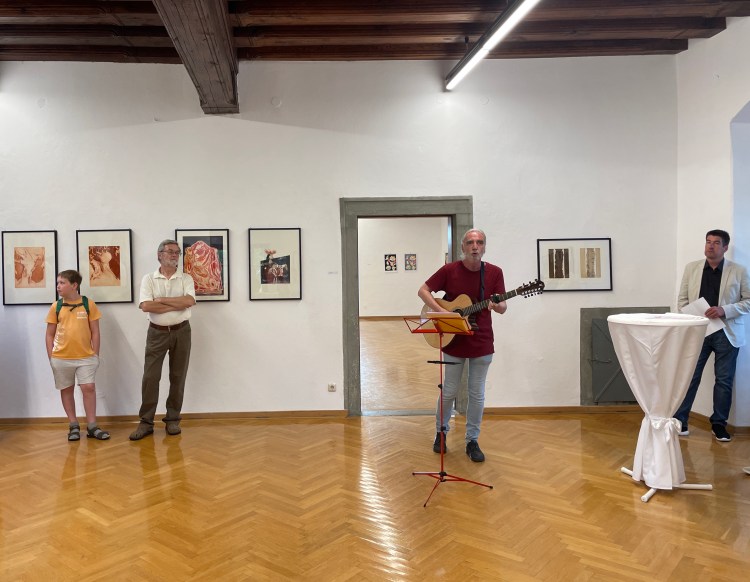
Bei der Eröffnung trug Gerald Jatzek europäische Folksongs in verschiedenen Sprachen vor.

Ausstellung

Schloss Ulmerfeld bei Amstetten
14.7.-16.7. jeweils 10-12 und 14-17 Uhr

BILDNACHWEIS: Symposium Umbruch 2023 © Kunst&Druckwerkstatt am Bahnhof

Der Katalog

Katalog: Gabriele Müller

Eine Broschüre, in der Werke und Teilnehmende vorgestellt werden, kann man kostenlos bei Yumpu herunterladen.

A virtual Country

Dadaland is a country that only exists within the realm of the International Union of Mail-Artists (IOUMA). It is the brainchild of Predrag Petrovic who appointed himself as Head of Mission of the country’s embassy on the IOUMA server. If you try to find Dadaland on the map, please bear in mind Predrag’s definition:

It is located wherever a citizen of Dadaland is walking / talking.

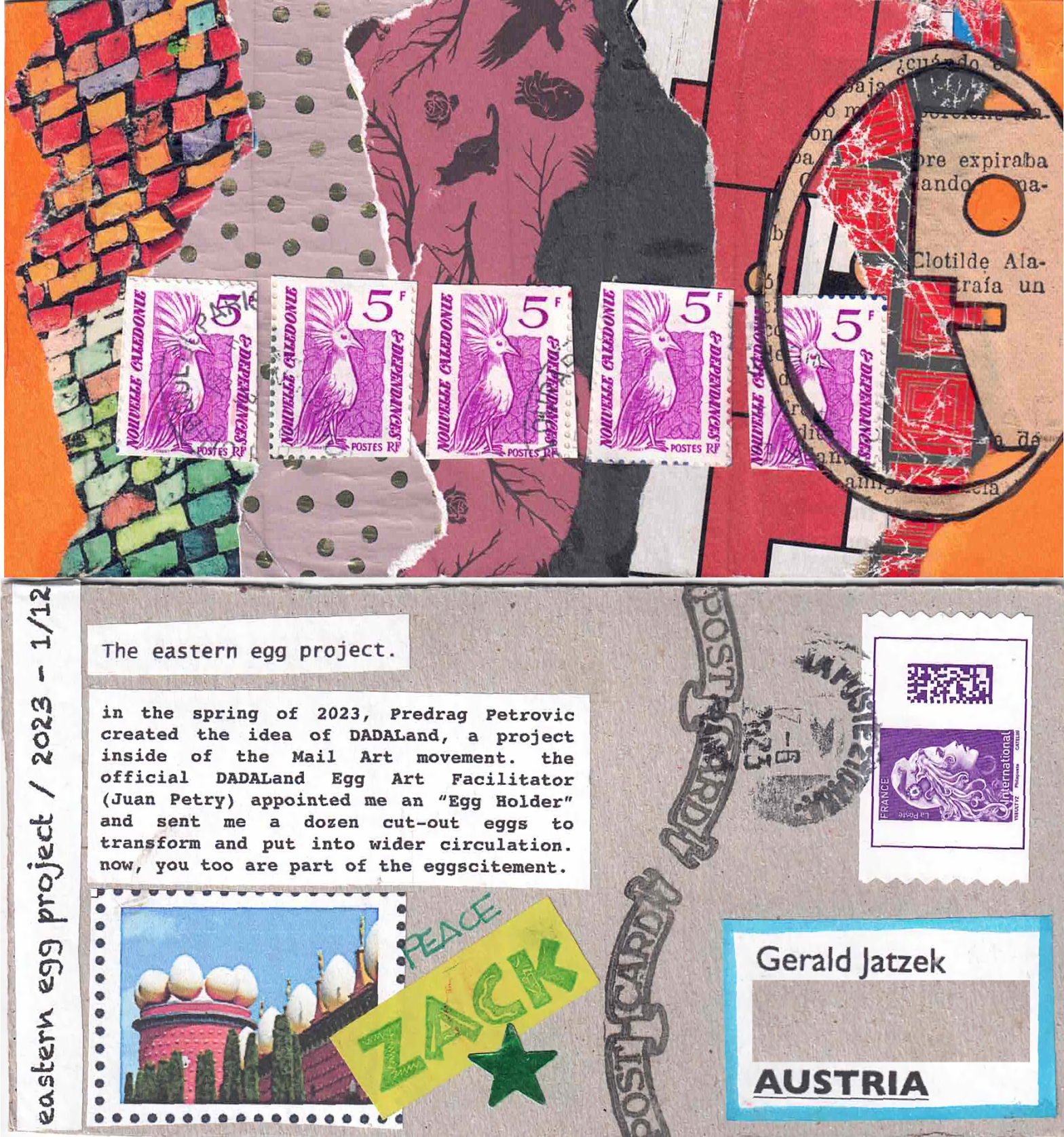
Juan Petry, the country’s renowned and important Egg Art Facilitator, recently sent out cut-out eggs to other artists to transform them and send them to members of the community.

Gerald received a colorful collage by Zack from France who calls himself a Neopostmodadadaist.

3x Poesiealbum

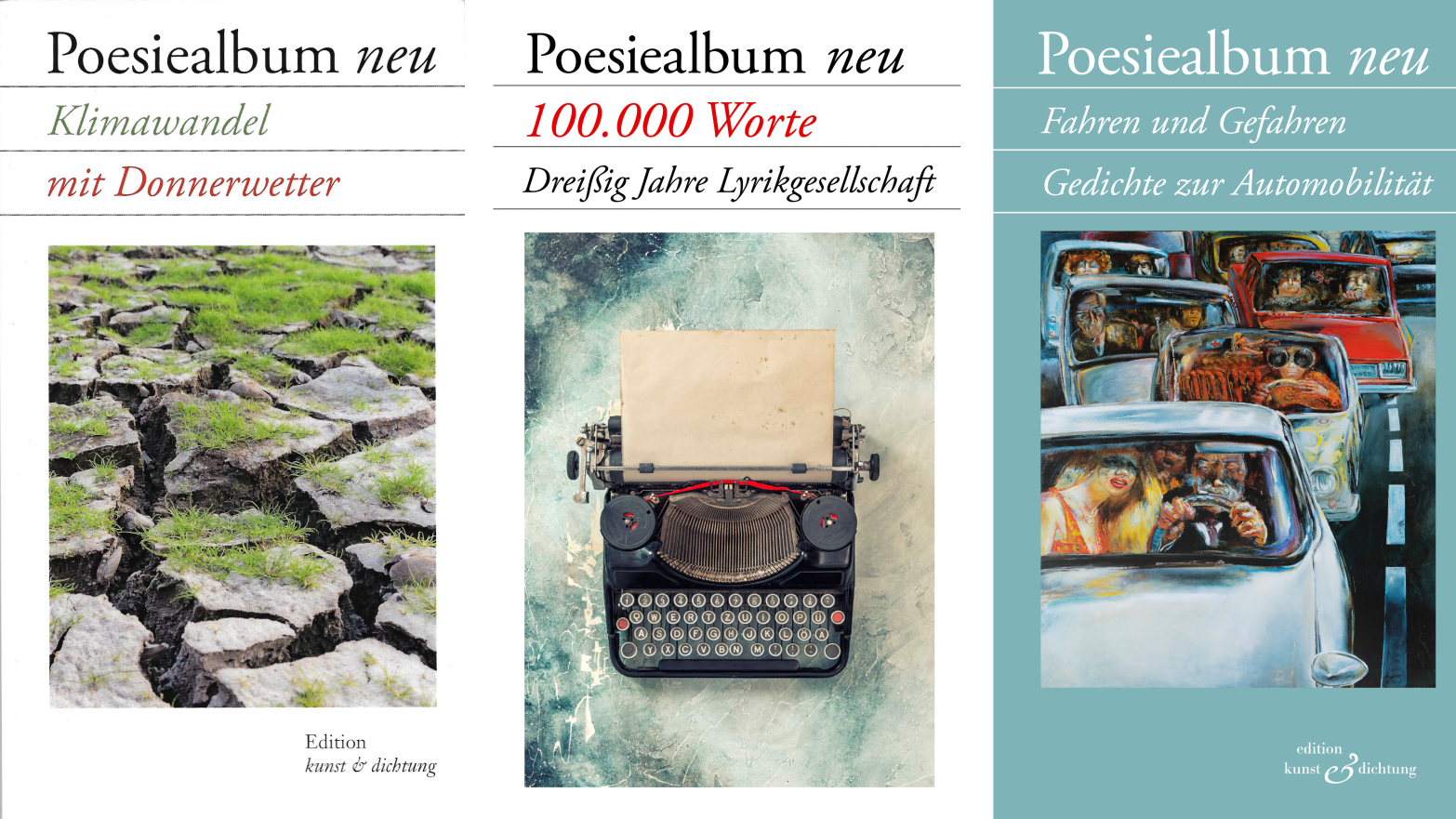
Ein hübsches Ensemble ergeben drei Publikationen der Gesellschaft für zeitgenössische Lyrik in Leipzig. Gemeinsam ist ihnen, dass sie Gedichte von Gerald Jatzek enthalten:

  • Poesiealbum neu Heft 1/2023: Klimawandel mit Donnerwetter, 92 Seiten
    mit Beiträgen von Anna Arning, Dirk-Uwe Becker, Ingo Cesaro, Sonja Crone, Jan-Eike Hornauer, Carmen Jaud, Marina Jenkner, Birgit Petri, Wolf Wiechert, Renate Wunderer u.a.

    Die Leipziger Zeitung schreibt:
    Im Grunde bringt es Gerald Jatzek mit ein paar wenigen Worten auf den Punkt: ‘Sie hatten alle Daten / und ließen ihre / Erde sterben / Kategorie Idioten …‘ Transgalaktisches Archiv hat er sein Gedicht genannt, das den kosmischen Blick wagt, den die meisten Menschen in ihrer Wohlstandsvernarrtheit ganz eindeutig nicht haben.” (Link)
  • 100.000 Worte. Dreißig Jahre Lyrikgesellschaft, Anthologie 2023, 224 Seiten
    Der Band enthält Beiträge von Manfred Ach, Esther Ackermann, Johanna Anderka, Danilo Art-Merbitz, Michael Augustin, Roland Bärwinkel, Ulrich Beck, Dirk-Uwe Becker, Marianne Beese, Jochen Berendes, Eva-Maria Berg, Heidi Bergmann, K.U. Robert Berrer, Franziska Beyer-Lallauret, Katrin Bibiella, Rosa Both, Regina Elfryda Braunsdorf, Hartmut Brie, Pitt Büerken, Gero Bühler, Ralf Burnicki, Ingo Cesaro, Sonja Crone, Herta Dietrich, Ulrike Diez, Róža Domašcyna, Renate Düpmann, Linda Entz, Eckhard Erxleben, Patricia Falkenburg, Beate Fischer, Ruth Forschbach, André Franke, Peter Frömmig, Wolfram Malte Fues, Paula C. Georges, Ingrid Gorr, Sabine Göttel, Joachim Gräber, Boris Greff, Ralph Grüneberger, Monika Hähnel, Rolf Handrow, Hanno Hartwig, Manfred Peter Hein, Gisela Hemau, Uwe Herms, Jörg Hirsch, Jan-Eike Hornauer, Johanne Jastram, Gerald Jatzek, Stefan Kabisch, Christine Kayser, Manfred Klenk, Andreas Knapp, Andreas Köllner, Charlott Ruth Kott, Grit Kurth, Tamara Labas, Birgit Littmann, Eva Lübbe, Britta Lübbers, Guido Luft, Hans-Hermann Mahnken, Anne Mai, Salean A. Maiwald, Michael Manzek, Wolfgang Mayer König, Renate Meier, Ingrid Miller, Manfred Moll, Andreas Müller, Susanne Müller, Anne Müllerschön, Erica Natale, Ingrid Niegel, Klaus Nührig, Erich Pfefferlen, Jutta Pillat, Nada Pomper, Rainer Rebscher, Bettine Reichelt, Renate Maria Riehemann, Wolfgang Rischer, Andreas-W. Rohr, Jörn Sack, Bärbel Sánchez, Sabine van de Sandt, Barbara Schaffeld, Nadine Maria Schmidt, Maren Schönfeld, Ulrich Schröder, Ralph Schüller, Helga Schulz Blank, Steffen Schulz-Lorenz, Christiane Schulz, Roswitha Charlotte Schwenk, Dirk Seeger, Tarik Shah, Ju Sobing, Gerhard A. Spiller, Joanna W. Stein, Norbert Sternmut, Wolfgang Stock, Heidrun Stödtler, Ulrich Straeter, Jochen Stüsser-Simpson, Rüdiger Stüwe, Magnus Tautz, Angelika Tonner, Dieter Treeck, Gisela Verges, Martin A. Völker, Ursula Maria Wartmann, Rainer Wedler, Thomas Weiß, Wolf Wiechert, Helmund Wiese, Kristin Wolz und Ute Zimmermann.
  • Poesiealbum neu Heft 1/2021: Fahren und Gefahren – Gedichte zur Automobilität, 64 Seiten
    mit Beiträgen von Manfred Ach, Johanna Anderka, Michael Augustin, Yvan Goll, Ralph Grüneberger, Anton G. Leitner, Anne Mai, Wolfgang Mayer König, Marianne Rieger, Joachim Ringelnatz, Jürgen Theobaldy, Peter Wawerzinek u.a.

Lots of Marks …

“Fingerprints identify us, distinguish us, reveal us, while describing our trail, our path, our wanderings… It seems vital and necessary to pass through this world leaving a positive residue, an essence of our own, an emotional perfume, a particular way of being. Go through this world LEAVING A MARK. Fingerprints, handprints, footprints, heartprints, soulprints… The poet Antonio Machado speaks to us about the unmarked footprints and paths, about the open and shared footprints of our lives, in his remarkable poem: “Walker, they are your footprints / the path and nothing else; / walker, there is no path, the path is made by walking”. Let’s follow his footsteps, from ours.”

“The approximately 600 works received, by post or online, at the Villa de Móstoles Cultural Centre, after the Call launched in October 2022, extraordinarily exemplify the enriching practice and experience of this experimental (in) discipline. Dozens of responses sent by mail artists and experimental artists from around the world, in the form of visual and textual interventions on the “official postcard” of the Call or with freer works, always related to its theme and motto: DEJANDO HUELLA – LEAVING A MARK.”

(From the opening statement for the exhibition by Pepe Murciego, the coordinator of the PERIFERIA IMAGINARIA project, in which the call is framed.)

The exhibition takes place in the Centro Cultural Villa de Móstoles, Plaza de la Cultura, Móstoles, Madrid, and it is open until 19 July.

The photo [large version] shows small sections of the fantastic exhibition and a photo-poem-combination by Gerald Jatzek.

Quotes for Art Lovers, Part 2

What is Mail Art (4)

“Well, the idea is that it’s a way to convey a message or a kind of idea to someone which is not verbal; it is not a confrontation of two people It’s an object which is opened in privacy probably and the message is looked at.”
Ray Johnson (1968)

“The term ‚Mail-Art‘ and its relation to the alternative structure. Posted Art is undoubtedly “Mail(ed)” Art but not necessarily “Mail-Art”! When freedom is a basic principle, it is not easy to indicate any limits. Therefore it is no use to give strict standards to judge wether something might be false or real M-A. Whether a work can be classified under the heading M-A does not only depend on its aesthetic qualities, but also – or especially – on the informative, communicative and cultural intentions included in the mailing of the work itself.”
Guy Bleus (1983)

Open Letter to everybody on the Network

1) An important function of exhibitions and other group projects in the network is: to open channels to other human beings.

2) After your exhibition is shown and the documentation sent, or after you have recieved such a documentation with a list of addresses, use the channels!

3) Create person-to-person correspondence. The network is no longer a school,(sorry, Ray Johnson) it is real life now.

4) You have your own unique energy which you can give to others through your work: visual, audio, verbal, many others.

5) This energy is best used when it is exchanged for energy from another person with the same intentions.

6) The power of the network is in the quality of the direct correspondence, not the quantity.

We have learned this from our own mistakes.
Mark Bloch and H.R. Fricker (1984)

“Correspondence art is an elusive art form, far more variegated by its very nature than, say, painting. Where a painting always involves paint and a support surface, correspondence art can appear as any one of dozens of media transmitted through the mail. While the vast majority of correspondence art or mail art activities take place in the mail, today’s new forms of electronic communication blur the edges of that forum. In the 1960s, when correspondence art first began to blossom, most artists found the postal service to be the most readily available – and least expensive – medium of exchange. Today’s micro-computers with modern facilities offer anyone computing and communicating power that two decades ago were available only to the largest institutions and corporations, and only a few decades previous weren’t available to anyone at any price.”
Ken Friedman (1984)

“Mail art involves a multitude of lateral exchanges that inherently resists conventional art historical interpretation. Many mail artists maintain that the structures of communication are more important than mailed objects themselves, and others privilege the perpetual circulation of mailed art works over their preservation.”
Matt Ferranto (2000)

“A trailblazing aspect of the Network – and one which is still relevant today – is its ability to form alternatives. This did not ultimately succeed in breaking the monopoly of the established institutions of art communication such as journals, galleries and museums, but it did provide an alternative, at least for some time.”
Kornelia Röder (2008)

Illustration

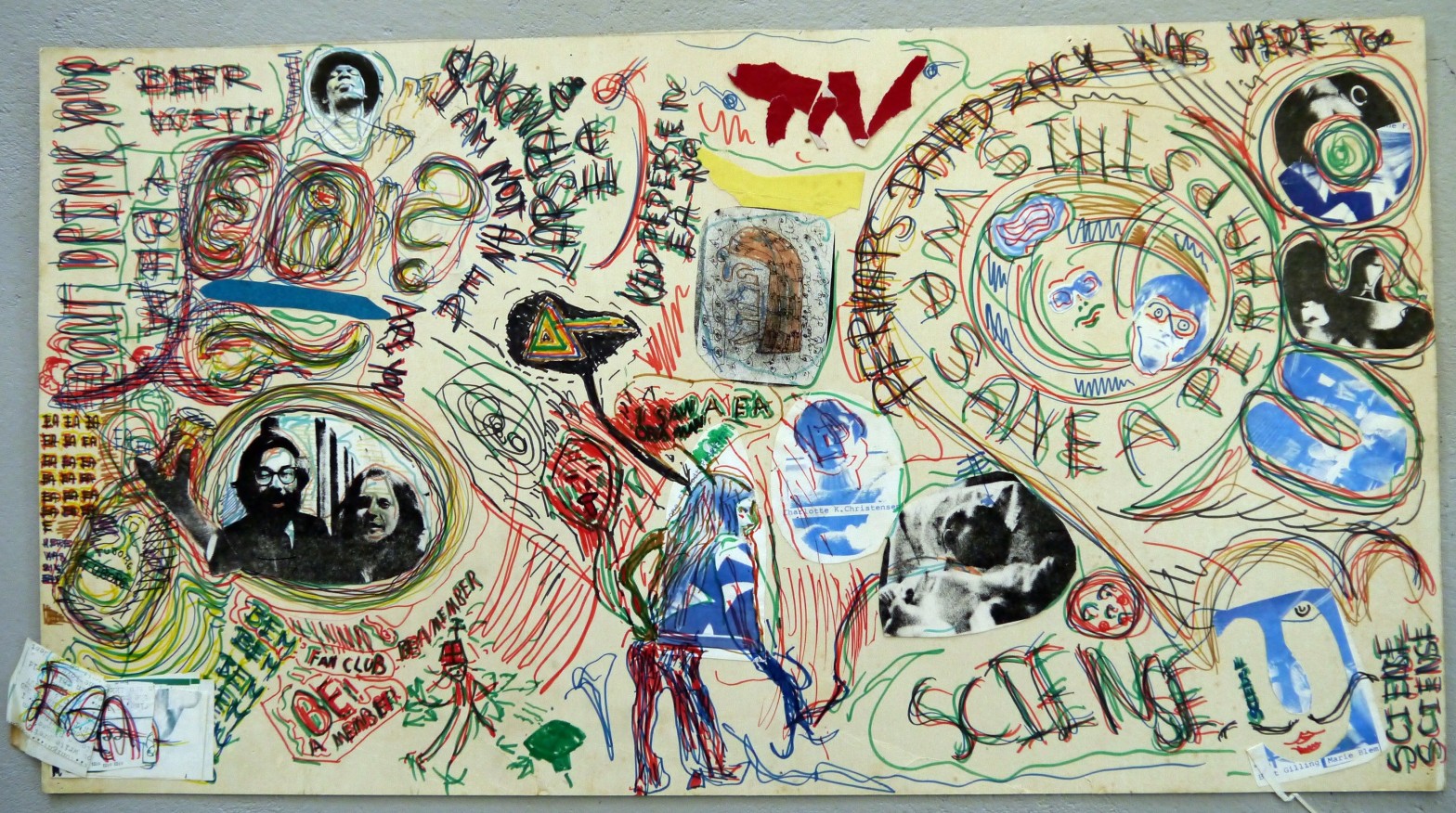
The image is a piece of mail art called Sciense by Zack (1979) that is part of the vast collection of the Lomholt Archive.

Dante again

One year after the first exhibition, Dante’s fictitious journey reached its next stop: Stella Maris Velasco organized and designed the show in the beautiful premises of the  Asociación Italiana de Belgrano.

Moldes 2153
CP  C1428CRG
Belgrano, CABA

tel: (11) 4781 0371
open: 9.6.-16.6., 9 am – 4 pm

Cat Art

Wikipedia tells us:

“Research has suggested that viewing online cat media is related to positive emotions, and that it even may work as a form of digital therapy or stress relief for some users. Some elements of research also shows that feelings of guilt when postponing tasks can be reduced by viewing cat content.”

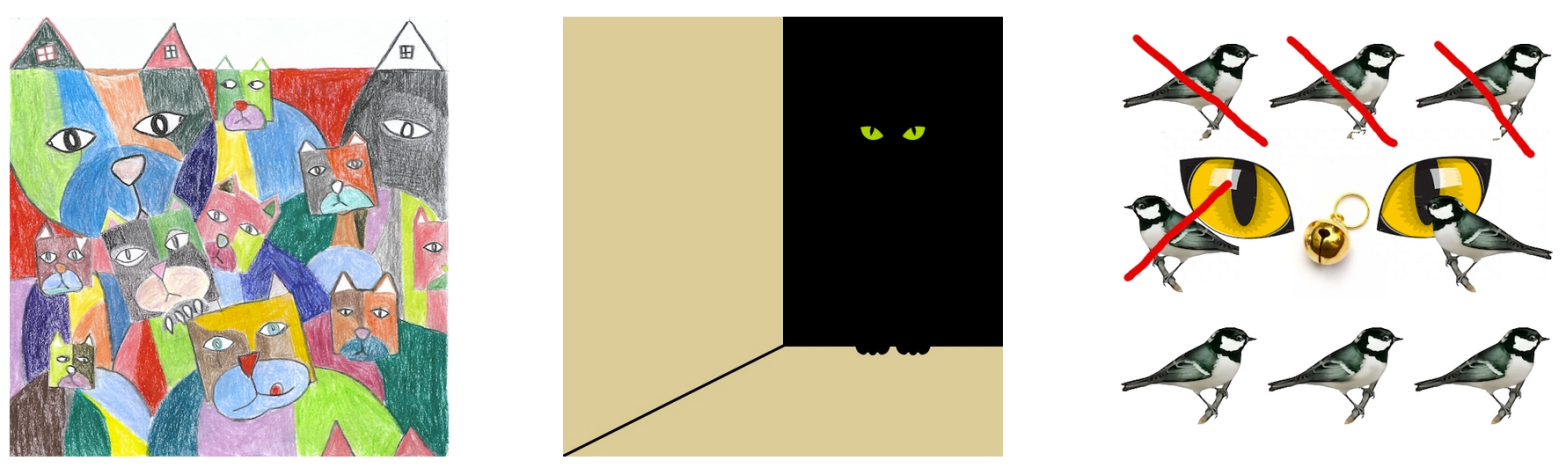
If that is true, then Ervin Zsubori’s latest call for [e]mail art can be seen as an initiative to make the world a better place. His current online exhibition features 105 contributions of feline art from photos to paintings, from minimal art to collages.

The three works shown here are by Gabriele Müller, Ervin Zsubori and Gerald Jatzek.

The results of all 61 calls since 2004 are collected on the site Arnolfini Mini[e]Mail Art.

Music is your only Friend

What shall be our legacy? That was the question behind Puskás Pálma’s call for works on the subject of time capsule.

Participants were invited to create a postcard which tells future generations what we enjoy the most in our lives. The results can be found as an online exhibition on the mailasmile.org. If there will be a real world show, is not yet clear.

One of the works is a collage that uses photos of some of Gerald’s favorite musicians to emphasize Jim Morrison’s statement

Well, the music is your special friend.
Dance on fire, as it intends.
Music is your only friend
until the end.

Until the end.

(The Doors: The End)

The Doors playing “The End” in Toronto 1968.
Nico singing “The End” in London 1974 (David Peel Session)

Poetry Walls

A month ago, the mail poetry exhibition in the former prison of Avellino closed its doors. (Though, you can still visit the collection on facebook.) The show featured texts from international writers as well as poetic statements by Italian children.

When organizer Graziella Di Grezia raised an artistic call for poetry on postcards, she was overwhelmed by the reactions. She received about 400 cards from 20 countries, many of them with sophisticated design.

The submissions were arrangend by countries. As you can see, the only item from Austria is Gerald Jatzek’s poem.

The Portal wwwItalia.eu called the exhibition a lucky marriage between art and poetry.

Links

Mit Liebe gemacht

Ingo Cesaro ist nicht nur Autor zahlreicher Werke. Er gestaltet und druckt auch Bücher, und die gehören zu den schönsten im deutschen Sprachraum. Vergangenes Jahr initiierte er ein Mail-Art-Projekt mit dem doppeltem Thema:

  • Geburt von Lucas Cranach dem Älteren vor 550 Jahren
  • September-Testament Martin Luthers vor 500 Jahren

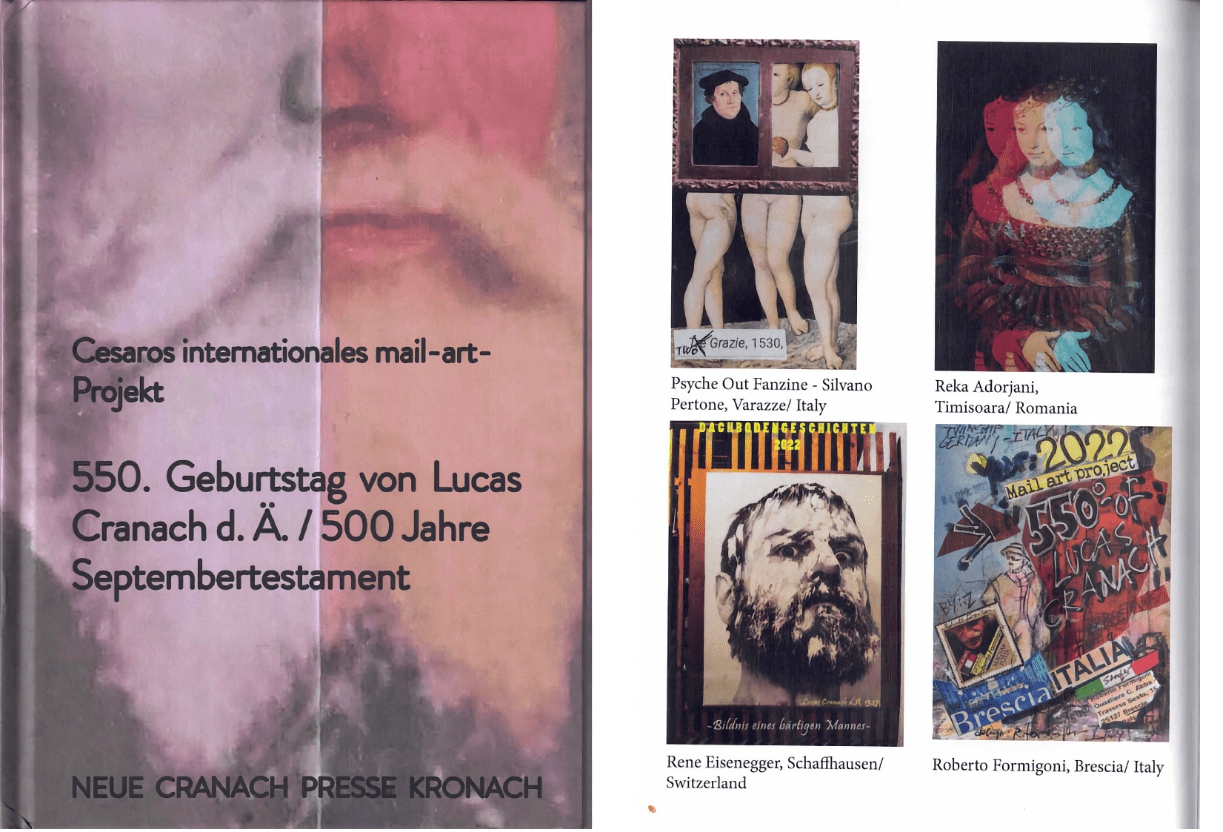
510 Postkarten trafen in Kronach ein. Während Cranach d. Ä. weltweit als künstlerische Herausforderung angenommen wurde, zeigte sich, dass das Septembertestament (der Urdruck von Luthers Übersetzung des Neuen Testaments) außerhalb des deutschsprachigen Raums wenig bekannt sein dürfte. Nachdem die Werke unter Mithilfe von Lutz Anders geordnet waren, wurden sie im Rahmen einer großen Ausstellung in Kronach gezeigt.

Nun hat Cesaro einen wunderschönen Katalog mit einer zweisprachigen Einleitung herausgebracht. Zwei Seiten und den Umschlag kann man oben bewundern.

Painting & Poem

This combination of a watercolor painting and a poem is an addendum to the documentation of 2022. The card was sent to Laura Pintus / Mail Art Sardinia in October.

The poem includes a reference to a haiku by the Japanese master Hōjō Dansui (1663-1711):

The scarecrow does not
doff his rain hat, not even
for the emperor

[Background: Tobias Jäkel / CC BY-SA 3.0]