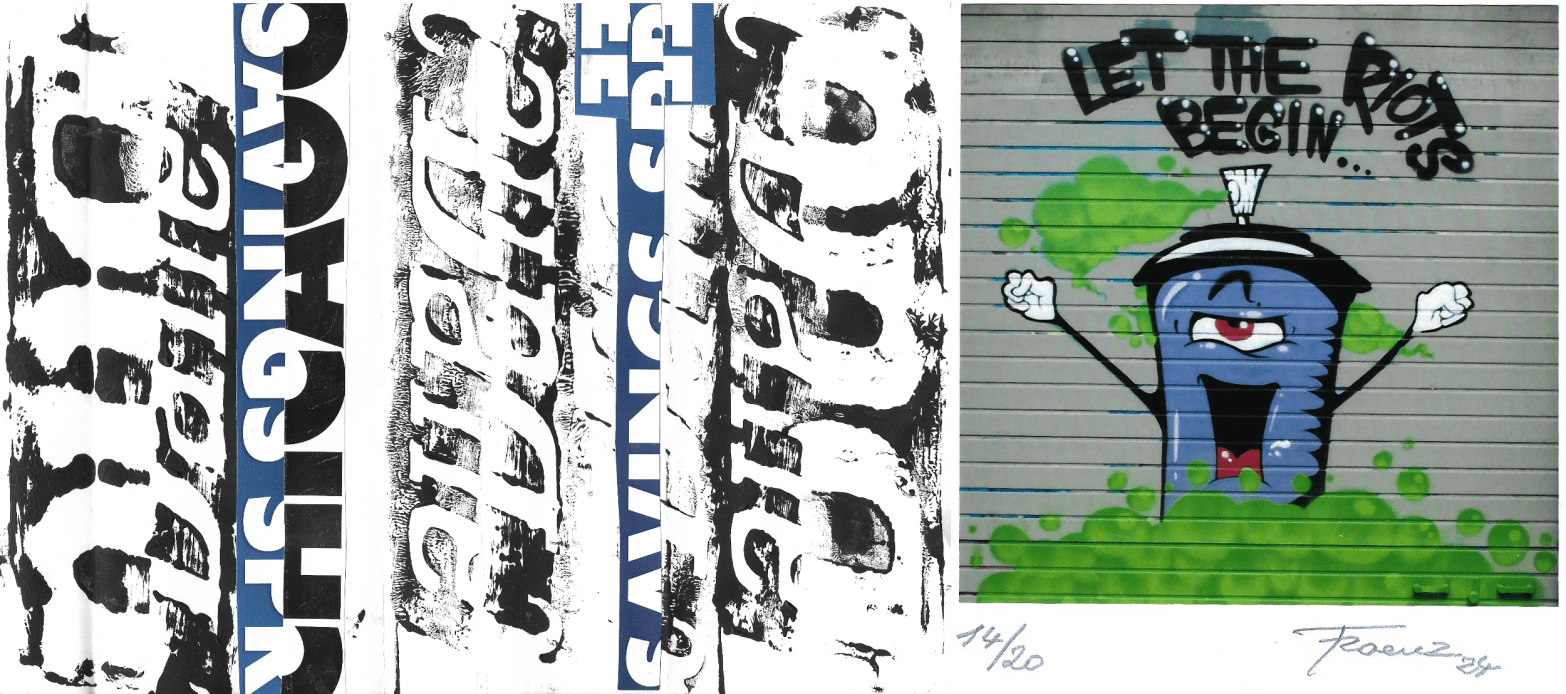
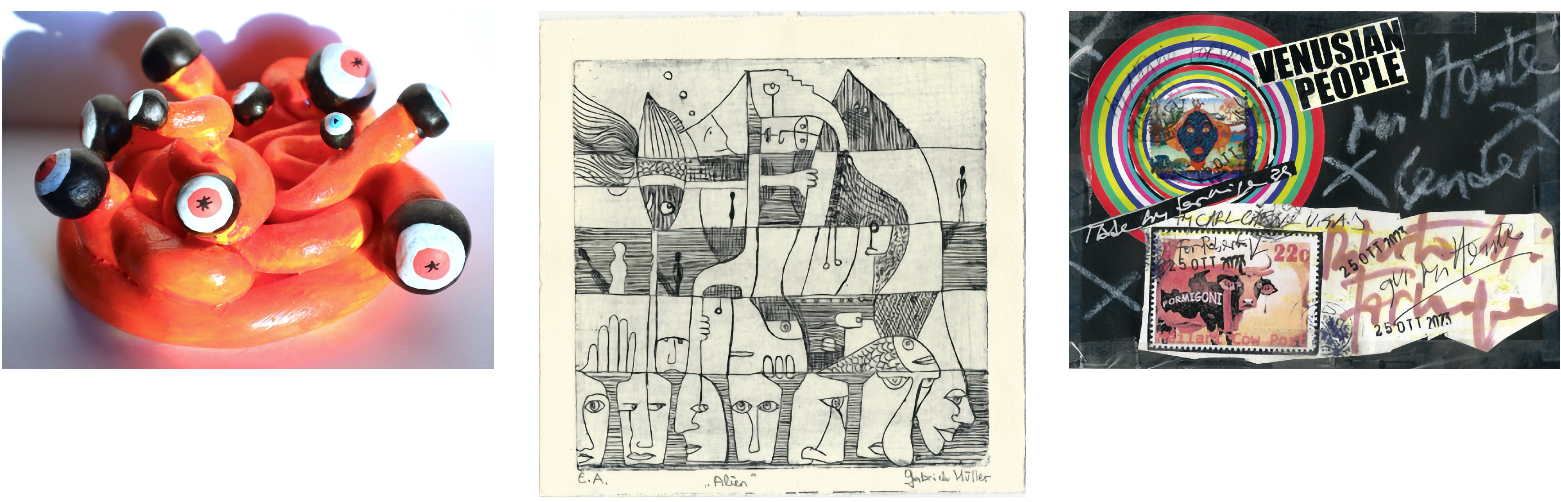
Recently, the works of two artists reached MailYourArt:
The first image is a collage by Matthew Stolte from Wisconsin, USA, who is a fellow member of the International Union of Mail-Artists (IUOMA) . He produces mail art in the form of visual poetry. He runs eMTeVisPub, a micro-press of concrete, visual & experimental poetry, On his site at blogspot he informs about his manyfold projects.
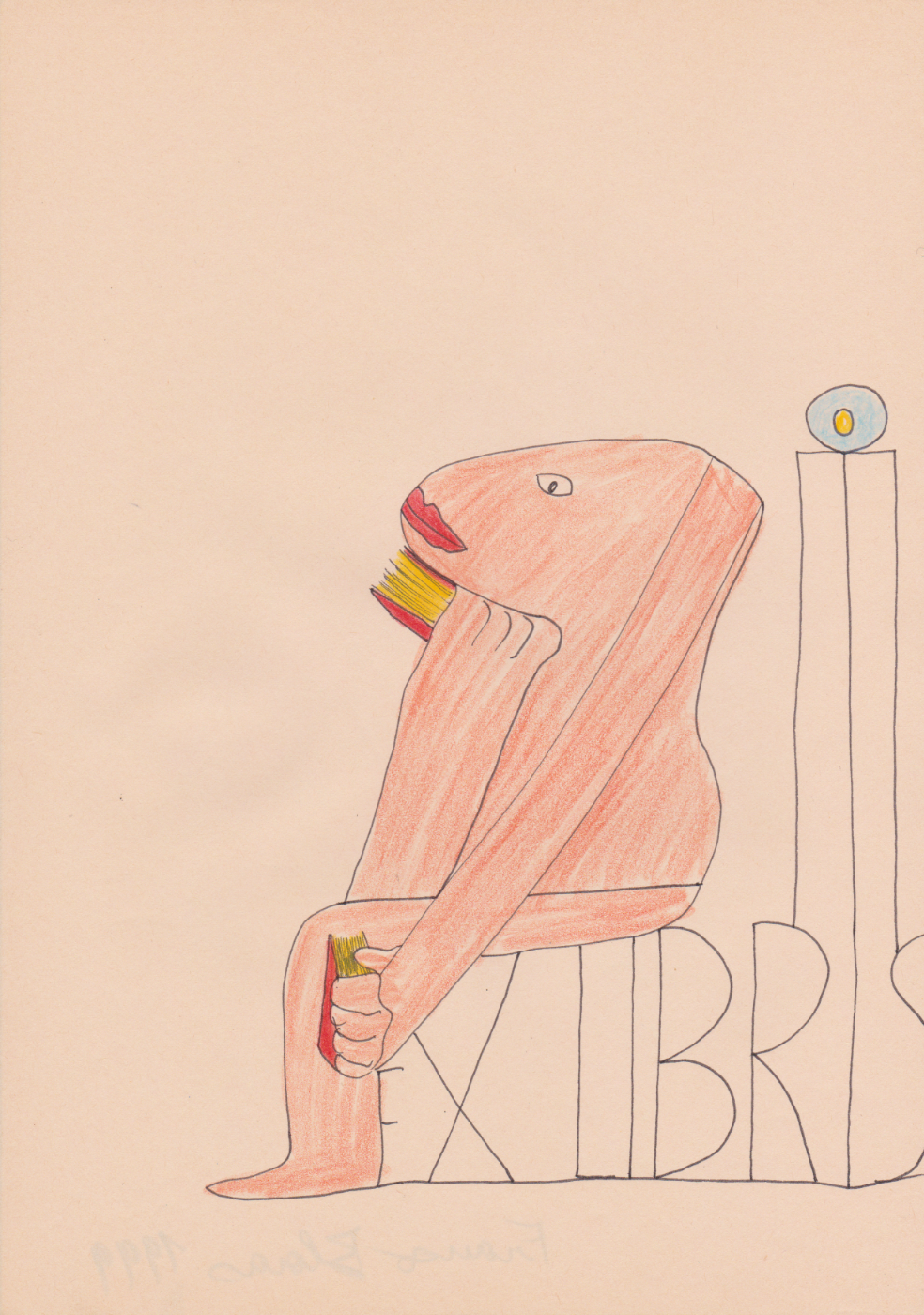
The image on the right side is from Fraenz from Luxemburg. He is a member of the country’s only engraver’s workshop who has been active in the field of mail art since 2002. Fraenz has designed personal postcards and artistamps as well as illustrations. He runs the extensive mail artist list with addresses of artists from all over the world.
A Mail Art Exhibition as Part of the World Book Night 2024
World Book Night (WBN) is the umbrella term for a series of events by the Centre for Print Research at the University of the West of England in Bristol. The institution deals with art in books as well as books in art. The focus of attention is on artists’ books, about which the website states:
“Artists’ books have emerged as an energetic contemporary artform since the 1960s in their bypassing the constraints of the gallery; as a vehicle for the dissemination of ideas and a radical format of bringing art to a wider public through artists self-publishing their work.”
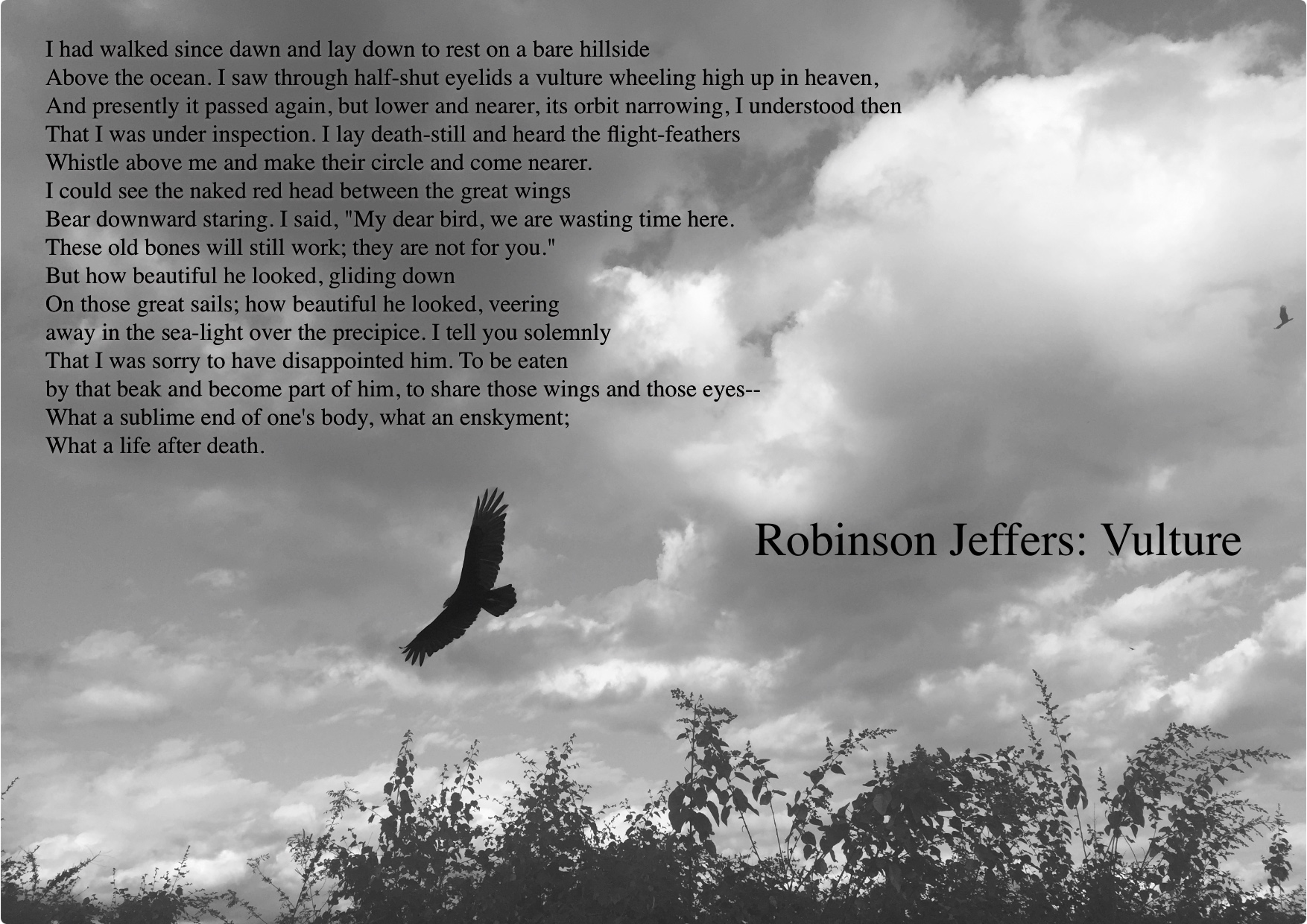
These are also the aims of mail art, which is why there are numerous artists who are active in both areas. This year, Sarah Bodman and Linda Parr, the industrious souls behind the WBN, asked participants to respond to a text or book about birds, then make a postcard to send for an exhibition and mail art swap …
… and they received more than 250 cards which are shown both on- and offline.
Exhibitions
Exhibition “In Praise of Birds” (UK) hosted by the Bower Ashton Library, Bristol, UK Friday 19th April – Tuesday 2nd July 2024
Exhibition on Instagram Linda Parr, co-organiser of the World Book Night, put together a virtual collection on Instagram.
Exhibition “In Praise of Birds” (HK) Printout posters of all postcards will be shown at the Learning Resources Centre, Hong Kong Design Institute (HKDI), 1st September – 31st October 2024.
Exhibition on YouTube Finally, many cards are featured in a WBN video, accompanied by music by Si Butler and Simon Smith.
Video with music by with music by Si Butler and Simon Smith.
Swapping Cards
After the exhibition in Bristol, the postcards will be swapped and sent out to participating artists with an extra gift from WBN 2024 of commissioned postcards designed by rubber stamp artist Stephen Fowler.
Birds represented in the exhibition include: Asian Hornbill, Australian Magpie, Bar-Tailed Godwit, Barn Owl, Bearded Vulture, Bee-Eaters, Bewick’s Swans, Bittern, Blackbird, Blue-Black Grassquit, Bluebirds, Bluetit, Blue Dodo, Brambling, Buzzard, Canada Goose, Cardinalidae, Chaffinch, Chicken, Chiffchaff, Common Chiffchaff, Corbie, Cormorant, Crane, Crow, Cuckoo, Curlew, Dodo, Dove, Duck, Dunnock, Eagle, Eastern Yellow Robin, Egrets, Eider Hen, Elfin-Woods Warbler, Emus, Eurasian Collared Dove, European Robin, European Rollers, Eurasian Wren, Falcon, Flamingos, Friarbirds, Galapagos Finches, Goldcrest, Goldfinch, Goose, Goshawk, Great Black-Backed Gull, Great Tit, Grey Warbler, Hawk, Hermit Thrush, Heron, Hoopoes, House Martins, House Sparrow, Hummingbird, Kestrel, Kingfisher, Kookaburra, Lark, Little Bunting, Long Tailed Tit, Magpie, Mockingbird, Ñandues , Nightingale, Ornithes Areioi, Ortolan, Owls, Palestine Sunbird, Parrot, Peacock, Pelicans, Pewees, Phoenix, Pigeon, Pipits, Raven, Red Kite, Red-Throated Pipits, Robin, Rook, Rooster, Sanderling, Seagull, Snowy Owl, Songbirds, Sparrow Hawk, Starlings, Strigiformes, Stork, Sunbirds, Swallow, Swan, Swifts, Tawny Owl, Thrushes, Toucans, Tree Sparrow, Turtle Doves, Ugly Duckling, Vulture, Wagtails, Warbler, Wheatears, White Ibis, White-Tailed Eagle, Willow Warblers, Wren.
… and the Participants
Abbie Edbrooke, Agata Korny, Ahlrich van Ohlen, Alastair Noble, Ali Woozley, Alisa Chinnock, Alison Raybould, Amber Rollinson, Ana Paula Barros, Andrea Hill, Andrea Moore, Andrea Robinson, Andy Gilroy, Andy Robson, Angela Callanan, Angela Caporaso, Angela James, Angela Thames, Angelo Ricciardi, Angie Butler, Anna Juchnowicz, Anna Walsh, Anne Bossenbroek, Anne Buckingham, Aoife Rhatigan, Beck Richins, bernd w. plake, Brie Barnacle, Brooke Koven, Caren Ding, Caren Florance, Carinna Parraman, Carol Stark, Caroline Case, Catherine Cartwright, Catherine Polley, Cathey Webb, Cathryn Miller, Cecilia Mandrile & Maria del, Carmen Marengo, Celine Chun Sze Ling , Christine Dong, Christine Martin, Chrystal Cherniwchan & Craig Tattersall, Clair Schwarz, Claire B. Marcus, Claire Forward, Claire Shields, Clare Revolta, Clare Rogers, Corinne Welch, Daniel Lehan, David Dellafiora, David Nicolato, Dianne Goacher, Dmitry Sayenko, Éilis Kirby, Elaine Knight, Emily Lucas, Emma Brown, Ermínia Marasca Soccol, Eva Hejdström, Fiona Hamilton, Frans Baake, Gen Harrison, Gerald Jatzek, GertRude, Gracia Haby & Louise Jennison, Graeme McNay, Grupo Gralha Azul livros de artista Brazil, Gwen Simpson, Hannah Galvin, Hazel Grainger, Hazel Strickland, Helen Rollinson, Jack Bessuges, Jane S. Balconi, Jane Vigus, Janet Allsebrook, Jennifer Wallace, Jeremy Dixon, Jessica Ho, Jil Fairclough, Jill Lauriston, Jill Vigus, Jo Barnfield, Jo Reed-Turner, Jon Dunning, Josephine Corcoran, Judy Rodrigues, Jussara Leite Kronbauer, Kar Mern Tan, Karen Christensen, Karen Darlington, Karen F Pierce, Kate Bernstein, Kath Bell, Kathy Bruce, Katrina Whitehead, Kausar Nigita Kay Rodriques, Kayleigh Dodd, Kei Wing Phoebe Hui, Kim Saunders, Kit Hartley, Kitty Oakley, Lihie Talmor, Linda France, Linda Parr, Ling Perrelet, Lisa Clare, Lizzie Brewer, Lorraine Lamothe, Lorraine Neeson, Lotte Huggel, Lotti Müller, Louise Gray, Lucy Guenot, Lucy Willder, Luiza Gutierrez, Maggie Brown, Man Ying Luo, Mara Caruso, Marama Warren, Marcia Rosenberger, Maria do Carmo Toniolo Kuhn, Maria White, Marian Kilpatrick, Marie-Therese Wisniowski, Mark Valentine, Marlene MacCallum, Martin Polley, Mary Rarehare, Mavina Baker, Megan Harris, Megan Jenkins, Mette-Sofie D. Ambeck, Michael Hampton, Michelle Keegan, Michelle Lynn Dyrness, Mignonne Busser, Mike Clements, Mikko Ng, Mireille Ribière, Mónica Goldstein, Morgan Connolly, Nancy Campbell, Neil Crawford, Niamh Fahy, Marian Kilpatrick, Nora Quinlan, Odine Lang, Paul Hearn, Paul Salt, Pauline Lamont-Fisher, Peter Andrews, Peter Hebden, Peter McCallion, Prerna Chandiramani, Qiling Xu & David Wilkinson, Rachael Holley, Rachel Marsh – Semple Press, Rachel Singel, Rachèle Riviere, Renata Danicek, Richard Shipp, Robert Corrigan, Roelof Bakker, Rosemary Everett, Rosie Ford, Roy Willingham, Ruby Sams, Sam Bryan, Sam Jewell, Sam Treadaway, Samantha Hartley, Sandra Lopes, Sara Bowen, Sara Elgerot, Sarah Bodman, Sarah Figlio, Shania Sampson, Sharmila Aravind, Sharon Hall Shipp, Shaun Oaten, Shih Chi Lai, Sigrid Ehemann, Sirlei Caetano, Sonia Leggett, Stephen Fowler, Su Fahy, Suchadar White, Sue Vallance, Suely Castro Mello, Sumi Perera, Susan Bovington, Susan Holmes, Susan Shaw, Susanne Klein, Sylee Gore, T. J. Robinson, Tamar MacLellan & Philippa Wood, Tania Luzzatto, Teresa Ogando, Therezinha Lima, Tim Shore, Timothy Winkler, Tsui Kin Wun, Valerie O’Regan, Vera Presotto, Veronique Pozzi Painé, Wendy Falconer, Yashfa Raza, Zie Smith.
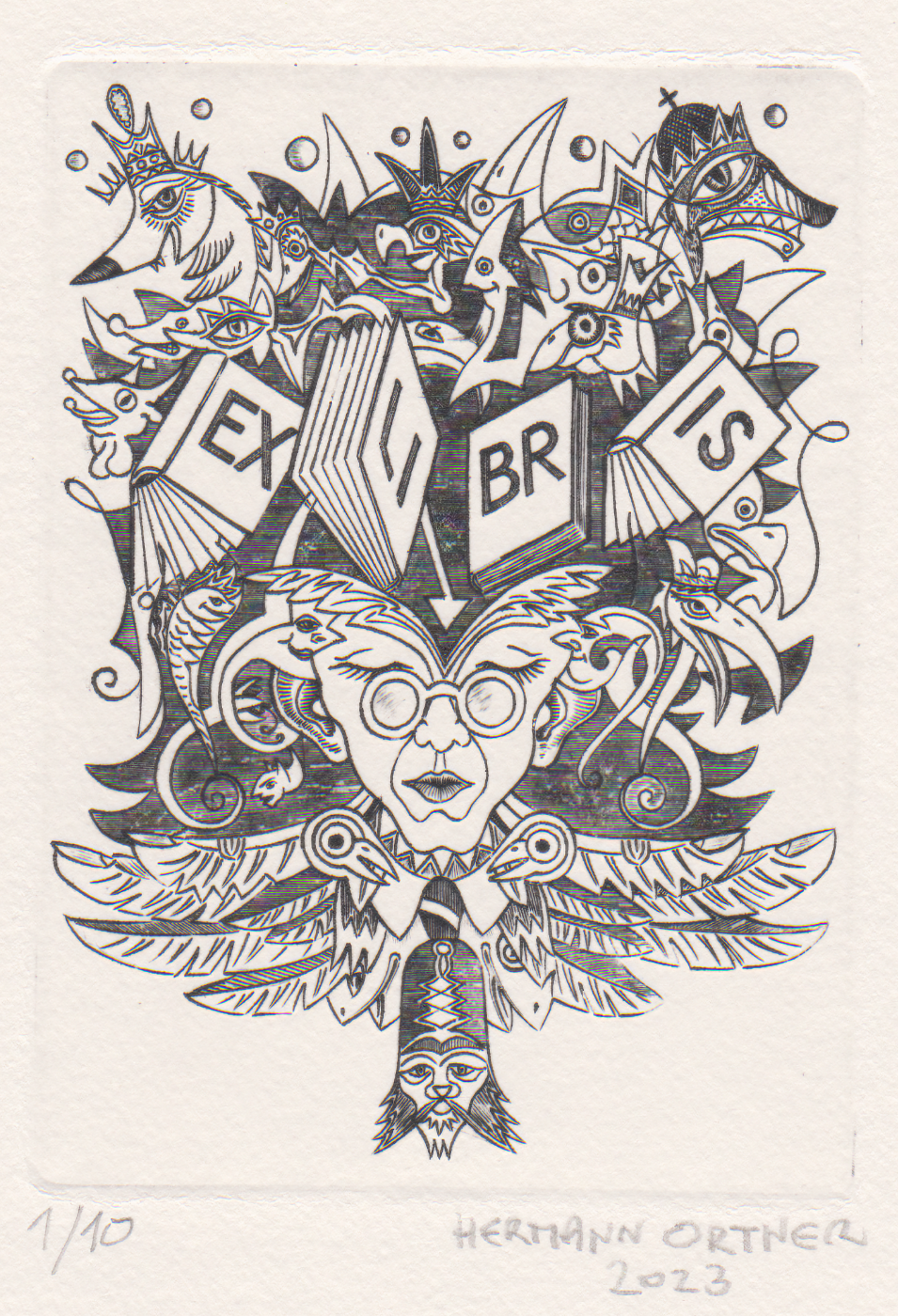
Zwischen 1470 und 1490 wollten zwei geistliche Herren ihren Besitz schützen: Der schwäbische Kartäusermönch Hilprand Brandenburg von Biberach und der hessische Vikar Hanns Igler Knabensberger trauten Freunden, die sich Bücher ausborgten, nicht über den Weg. Deshalb versahen sie die wertvollen Bände mit Eigentumsnachweisen und erfanden so das Exlibris.
Weil es schon damals uncool war, sich ständig Sorgen um seinen Besitz zu machen, verbarg man die Angst hinter kleinen Kunstwerken, die als Holzschnitt, Kupferstich, Stahlstich u.s.w. ausgeführt wurden. Die Entwürfe dazu kamen von Größen wie Albrecht Dürer, Lucas Cranach d. Ä. und Hans Holbein d. J.
Auf dem eBook Reader haben die Drucke nichts mehr verloren, aber es gibt ja noch genügend Leser und Sammler von Büchern aus Papier. Für sie werden im Schriftmuseum Bartlhaus zeitgenössische Exlibris gezeigt, die eigens für diese Ausstellung geschaffen wurden.
“With his mail art, Padhi Frieberger has disseminated the concerns of ecological and pacifist movements and referred to political debates.”
This statement started the international call on the subject of borders by the Italian Gallery L’A/telier. The highly topical issue is in line with the trend towards using mail art as a political tool again. After all, this non-commercial form of art has proved its worth as a medium of resistance and information in several dictatorships of Latin America and Eastern Europe during the 20th century.
All submitted works will be presented at the gallery which opens on April 19 and will remain open until May 19.
The Italian writer Italo Calvino (1923-1985) is still one of the best known and most influential writers of his country. By the time of his death, his books were available in 40 countries, among them Armenia, Burma, Bulgaria, China, Colombia, Iran, Lithuania, and Turkey. In 1974, Joseph McElroy, critic for the The New York Times, called him “Italy’s most original storyteller”. And, as Calvino admitted, “a tormentor of translators”, always ready to discuss at length the use of a single word.
Calvino, who was a partisan during the war and left the powerful Communist party because of the Soviet invasion of Hungary in 1956, combined a keen interest in physical and technical processes with an unbridled imagination.
In 1923, Sergio Guerrini invited the mail art community to participate in an exhibition dedicated to the Italian writer. Participants from all over the world followed the call.
Gerald Jatzek’s solution [enlarge] draws inspiration from Calvino’s preface to his novel Se una notte d’inverno un viaggiatore(If on a winter’s night a traveler, 1979). In this text, the author gives the reader the advice,
“Relax. Concentrate. Dispel every other thought. Let the world around you fade. Best to close the door; the TV is always on in the next room.”
The Exhibition
Raccontare Italo Calvino attraverso le cartoline postali, Galleria Artheka 32,
Via Sartena, 32, Ostia Lido, Roma (RM), Italy, 31.8..-12.9.2024
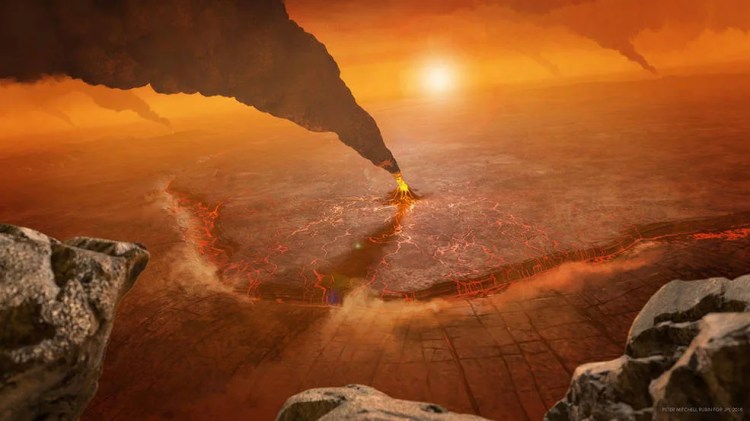
Until now it is not possible to be a citizen of the world because the world is divided into nations. The Venusian People project therefore offers the opportunity to legally acquire Venusian Citizenship.
The aim is to turn all the inhabitants of the Earth into Venusians and thus abolish the division of the Earth into nations.
There’s even a draft for a constitution which includes the following paragraphs:
To spread their ideas, the Friends of Venus have launched a mail art call. They were looking for contributions on the subject of alien stuff. They received 134 works by the end of the year which can be viewed on their website.
The analog exhibition will be open for on week:
Alien Stuff / Cose Aliene Arte Studio Morandi, Ponte Nossa, Lombardy 6.-12.4.2023
Der Beitrag der Druckgrafik zur Verbreitung von Kunst, Wissen und tradiertem Kulturgut war ursprünglich nur mit dem Buchdruck vergleichbar. Mit der Digitalisierung und nicht zuletzt mit unkontrollierten Auflagenhöhen hat die handgedruckte Originalgrafik auf dem Kunstmarkt an Bedeutung verloren. Dennoch fasziniert der manuelle Bilddruck, der gediegenes Handwerk und künstlerisches Schaffen vereint, weiterhin zahlreiche Künstler und Künstlerinnen.
Dass Handwerk und die Förderung alter druckgrafischer Techniken ist das Anliegen der jungen Edition art in print. Der Verlag wurde 2018 von Elisabeth Kreuzhuber und Nandita Reisinger-Chowdhury gegründet und stellt Kunst von Frauen ins Zentrum seiner Tätigkeit, wobei nicht ausgeschlossen wird, dass in Zukunft auch Werke von Männern verlegt werden.
Hochwertige Holz- und Linolschnitte, Lithografien, Radierungen und Siebdrucke in limitierten Auflagen von maximal 33 Stück sollen das Sammeln von Grafik wieder für möglichst viele Menschen attraktiv machen. Die Preise sind moderat, der Vertrieb erfolgt online, bei regelmäßigen Veranstaltungen können die Werke im Original betrachtet werden.
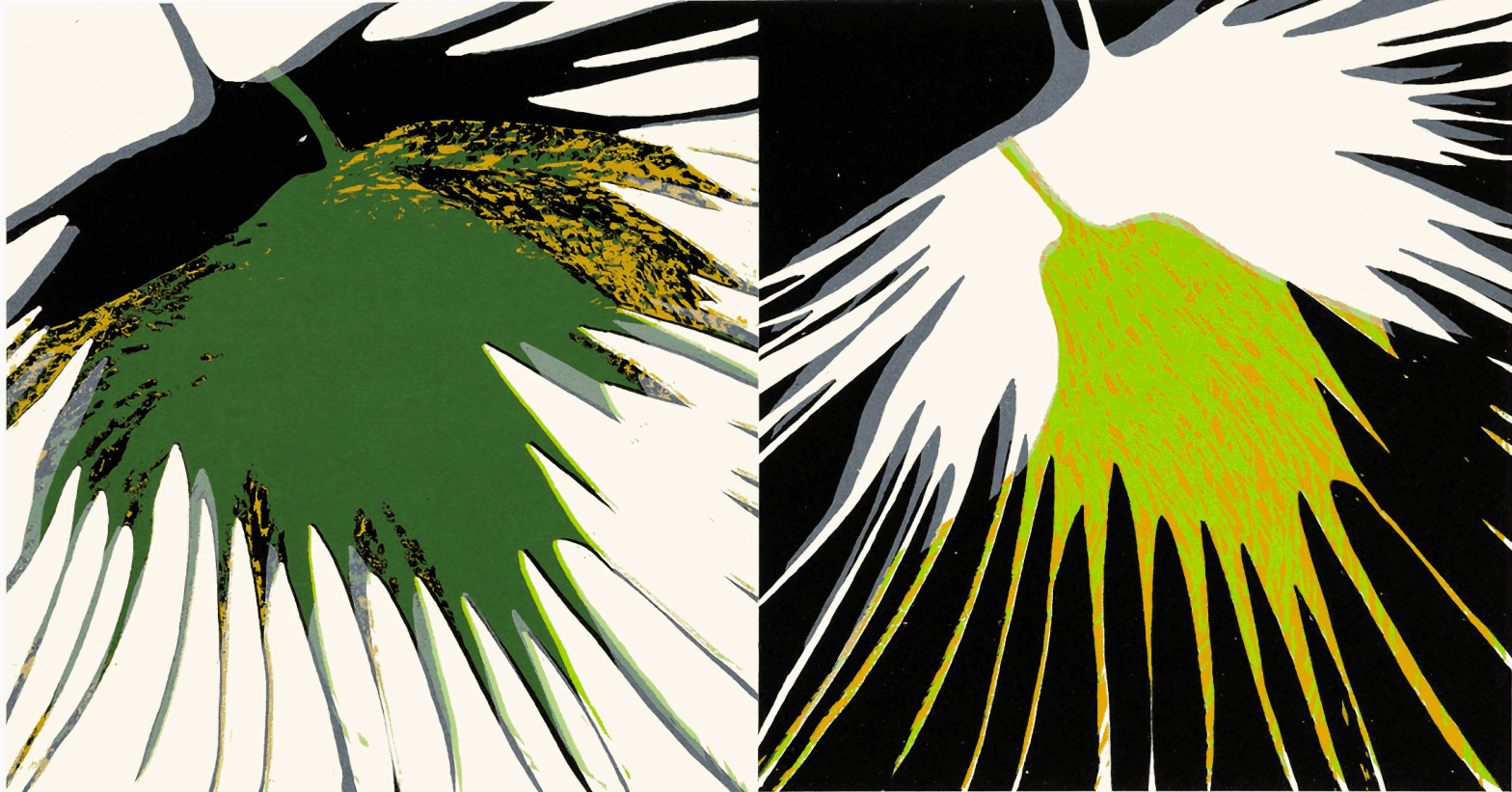
Den Anfang bildete die Edition women I, die das Schaffen ausgewählter Künstlerinnen der Generation der 1960er Jahre dokumentiert. Daraus stammt das Kopfbild der Seite, der Siebdruck aeolus von Gerlinde Thuma.
Larissa Leverenz: Big Fish (Siebdruck)
Aufgrund des Interesses folgten die Serien women II und women III. In Kooperation mit dem Lithographen Rudi Hörschläger, den Siebdruckern Robert Svoboda und Andreas Stalzer und dem Tiefdrucker Tom Phelan entstanden abstrakte und gegenständliche Kunstwerke.
Unter der Bezeichnung „small is beautiful“ erscheinen in loser Folge handgedruckte Grafiken im Format 21×21.
Auch größere Einzelarbeiten sind im Angebot. Die zuletzt präsentierte Arbeit im Format 50×40 cm mit dem Titel Clownery stammt von Bettina Patermo und ist Teil einer aufwendig gedruckten Holzschnittserie mit einer Auflage von je 19 Stück.
Links
art in print – Verlag für handgedruckte Originalgrafik
Künstlerinnen von art in print
Andrea Bischof, Helga Cmelka, Georgia Creimer, Babsi Daum, Michela Ghisetti, Margit Hartnagel, Barbara Höller, Eva Hradil, Alina Kunitsyna, Henriette Leinfellner, Larissa Leverenz, Sali Ölhafen, Bettina Patermo, Karin Pliem, Gabriele Schöne, Jelena Sredanović, Anna Stangl, Hannah Stippl, Gerlinde Thuma, Anya Triestram, Desislava Unger, Regina Zachhalmel, Birgit Zinner.
Am 21. März denkt die Welt wieder einmal an die Poesie, und das ist gut so, denn ohne Poesie gäbe es unsere moderne Welt nicht.
Viele Tausende Jahre war die klangvolle Sprache der Epen, der Balladen und Oden die beste Möglichkeit, Wissen zu bewahren und weiterzugeben. Die Rigveda, das Gilgamesch-Epos, die Odysee wurden lange mündlich weitergegeben, ehe sie schriftlich fixiert werden konnten.
Von vielen großartigen Gedichten der Antike kennen wir leider nur mehr Bruchstücke.
Fragment eines Gedichts von Sappho. (um 600 v.) – @ Wikipedia Commons – CC
Ältestes Liebesgedicht
Das älteste uns bekannte Liebesgedicht ist ein ritueller Text, der unter dem Titel Liebeslied einer Frau auf Schusuena (Istanbul #2461) bekannt ist. Das sumerische Gedicht, das etwa vom Ende des 3. Jahrtausends v. stammt, ist eine Hymne auf die körperliche Liebe. Eine Übertragung ibietet das untenstehende Video.
Links
Aktuelle Gedichte aus dem deutschsprachigen Raum findet man etwa hier:
Das Gedicht – das seit mehr als 30 Jahren von Anton G. Leitner herausgegebene Jahrbuch bietet auch einen stets aktuellen Blog.
Die Literaturvereinigung Podium veröffentlicht jedes Jahr ein Flugblatt zum Tag der Lyrik.
Zu ihrem 50-jährigen Jubiläum 2024 haben das Markgräfler Museum und der Markgräfler Museumsverein Müllheim Künstlerinnen und Künstler dazu aufgerufen, Mail Art zu dem Thema [R]Evolution per Post an das Museum zu senden. Damit sollte auch an die Revolution von 1848/49 erinnert werden, die 175 Jahre zuückliegt.
Erlaubt waren Beiträge zwischen zwischen 10 × 15 cm und 21 × 29,7 cm.
Die Initiative des 1974 gegründeten Museums im Blankenhorn-Palais wurde zum durchschlagenden Erfolg.
Wolfgang Faller, Frédéric Letellier und Sylvia T. Verwick vom Arbeitskreis AKKU des Museumsvereins sprachen damit ein Thema an, das enormen Widerhall fand: Mehr als 500 Einsendungen von 370 Teilnehmern aus 40 Ländern trafen im Müllheim ein.
Die Ausstellung
Markgräfler Museum Wilhelmstraße 7 79379 Müllheim im Markgräflerland Deutschland · Germany · Allemagne
23. Juni – 31. Dezember 2024 Öffnungszeiten : MI – SA 14:00 – 18:00 Uhr SO 11:00 – 18:00 Uhr
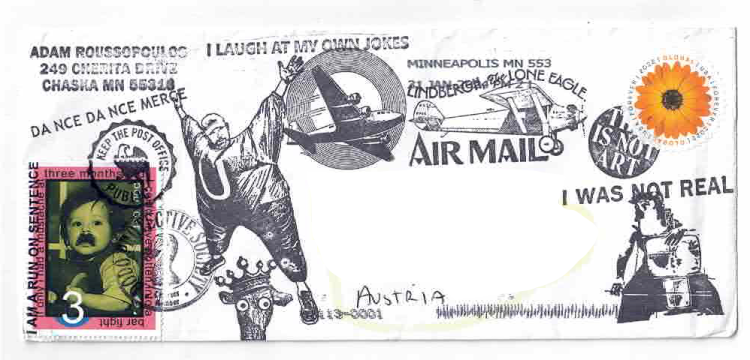
US-based mail artist Adam Roussopoulos has “passion for making artistamps”. Two sheets of his stamps reached Vienna two days ago and were well received by Gabriele and Gerald.
The black-and-white stamps are accompanied by three text fragments:
I was not real.
I dreamt I was real
I lost my memories in the shadow of my thoughts
Now here comes the creative part for our readers. We’d like you to develop your personal interpretations and leave them in the comments section.
The Culture Project Miradas Enredadas / Networking Glances coordinated by Professor Fabiane Pianowski of the Visual Arts in Study Research Group (AVE) of the Institute of Languages and Arts of the Federal University of Rio Grande (ILA/FURG) and has the support of students from the Center for Studies in Visual Arts (NAVE). The project organizes open art calls on changing themes.
In the year 2023 the theme was activism. The artistic task was to create a poetic record of one’s battle cry by expressing emotions and passions through various mediums.: drawing, photography, collage, embroidery, visual poem, video (up to 1 minute) etc.
Gerald Jatzek – Every final answer is wrong.
Exhibitions
Right now, the works are shown on facebook, but there will also be traveling exhibitions. The production of an e-catalogue is planned as well.
Google Map
Here is a map with the artists’ home towns, short biographies and their contributions.
The French painter Henri Julien Félix Rousseau (1844-1910) was always valued by other artists but unterrated by art critics. One of them wrote “Monsieur Rousseau paints with his feet, with a blindfold over his eyes.”
Picasso, on the other hand, knew quality when he saw it. He organized a Banquet for Rousseau which was attended by Guillaume Apollinaire, Jean Metzinger, Juan Gris, Max Jacob, Marie Laurencin, André Salmon, Maurice Raynal, Daniel-Henri Kahnweiler, Leo Stein, and Gertrude Stein.
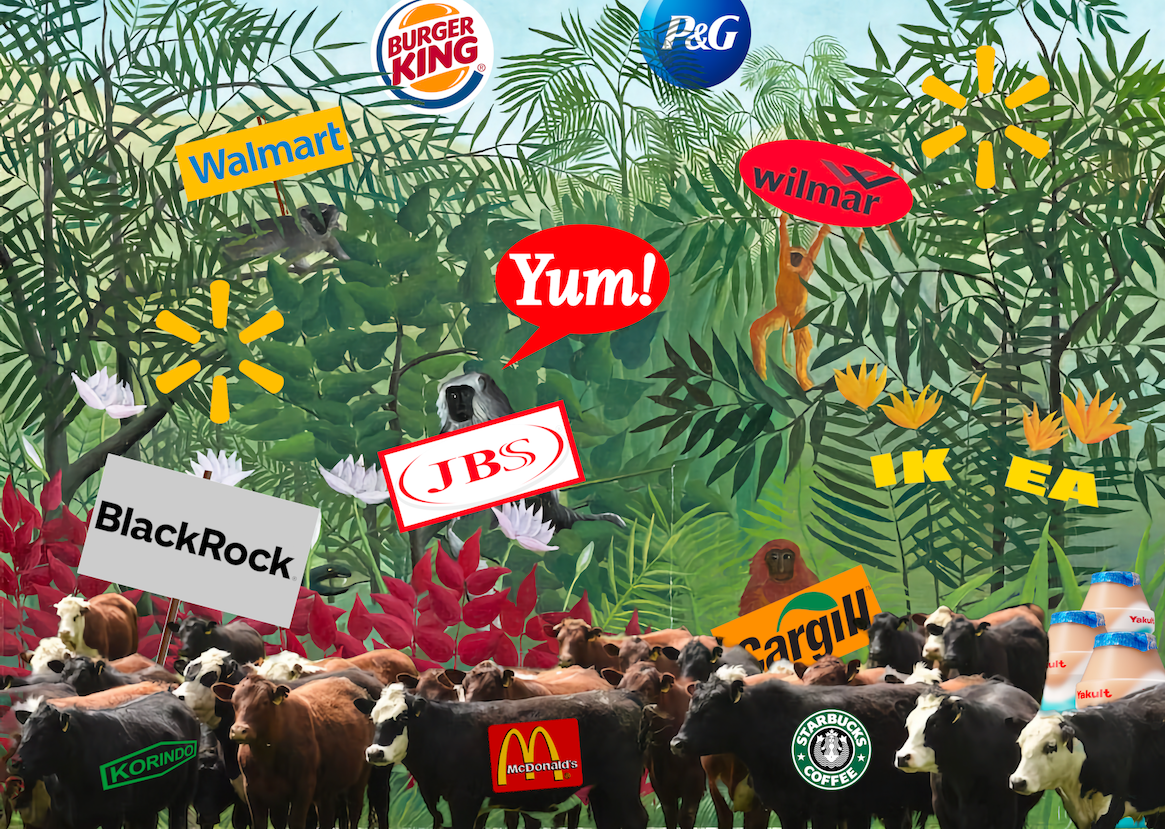
Gerald Jatzek confronted Rousseau’s dreamworld with today’s reality.
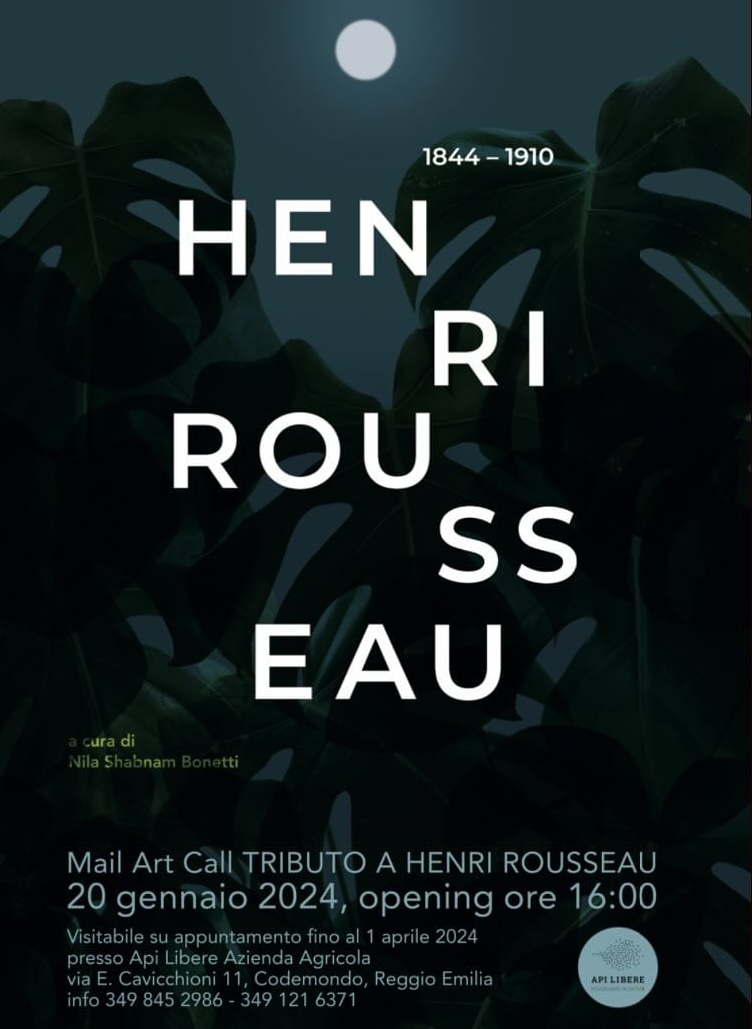
Curator Daniela Shabnam Bonetti, an Italian storyteller and therapist-in-training, states: “Henri Rousseau was highly appreciated by his contemporary colleagues and often mistreated by the critics of his time.”
She decided to organize a tribute to the French painter with reflexions on Rousseau’s works and invited contemporary mail artists to reinterpret them, overturn them, or play with them.
You can see a small sample of the solutions on top of the page.
Exhibitions
The real-world exhibition is open from January 20th to April 1st and can be visited by appointment at the Api Libere, via E. Cavicchioni 11, Codemondo, Reggio Emilia. For appointments and more information call 349 845 2986 or 349 121.
Una extensa colección de arte correo electrónico surgió desde 2008 por la iniciativa The Arnolfini Archives del artista, poeta y sociólogo Ervin Zsubori. Las existencias se amplían periódicamente por convocatorias temáticas, que culminan en exposiciones en línea.
La solución de las obras enviadas tiene que llenar un área de 600×600 pixeles (300 dpi), lo que confiere un aire harmónico a la presentación electrónica de piezas muy diversas.
Aquí van las contribuciones a las convocatorias vegetales y piedras, elaboradas por Gerald Jatzek (1,3) y Gabriele Müller (2,4).
Asemic writing is an umbrella term for all kinds of texts that have no explicit meaning. Be it that the characters used do not exist, or that letters are arranged in a way that cannot be deciphered.
The invention of deliberate illegible writing is sometimes credited to Tim Gaze and Jim Leftwich who coined the term asemic in 1995 for their quasi-calligraphic writing gestures.
They then began to distribute them to poetry magazines both online and in print. The authors explored sub-verbal and sub-letteral forms of writing, and textual asemia as a creative option and as an intentional practice.
However, there were “texts” that defied decoding long before that, for example by Wassily Kandinsky or the Dadaists.
Examples
On the left side you see a card that Gerald sent to the Dutch artist Carien van Hest. On the right is Carien’s reply in the form of a collage with painted and sewn pieces.
The mail art project Posdata: Esperanza Recuerda (hope remembered) goes back to 2014. For the 7th edition the group that is coordinated by Consuelo Vallejo Delgado and Pedro Osákar Olaiz was looking for public signs.
In the initial call they stated:
“We are developing an investigation about visual semiotic poems on the basis of guiding signs (mainly traffic signs, but others are accepted as well). Up to now, we have compiled more than 200. If you know any artwork of this kind which have already been published or displayed, we would be grateful if you could send the image, place, and date of publication (…)”
Exhibition
The results of the call will are on display between February 19 and March 31 at the Facultad de Bellas Artes of the University of Granada (España).
The photo on top of the page shows works by Franklin Valverde (Brazil), Suzlee Ibrahim (Malaysia), Michelangelo Mayo (USA), Koz Karen Olguín (Chile), Ela Rabasco (Madrid, España), Raimon Blu (Almeria, España), Horst Tress (Germany) and Marcia Rosenberger (Brazil).
This is Gerald’s card which features photographs from Germany, Spain, Portugal, Cuba, Greece and South Africa.
ARTE POSTAL SEÑALéTICA – VII POSDATA ESPERANZA RECUERDA
with works by
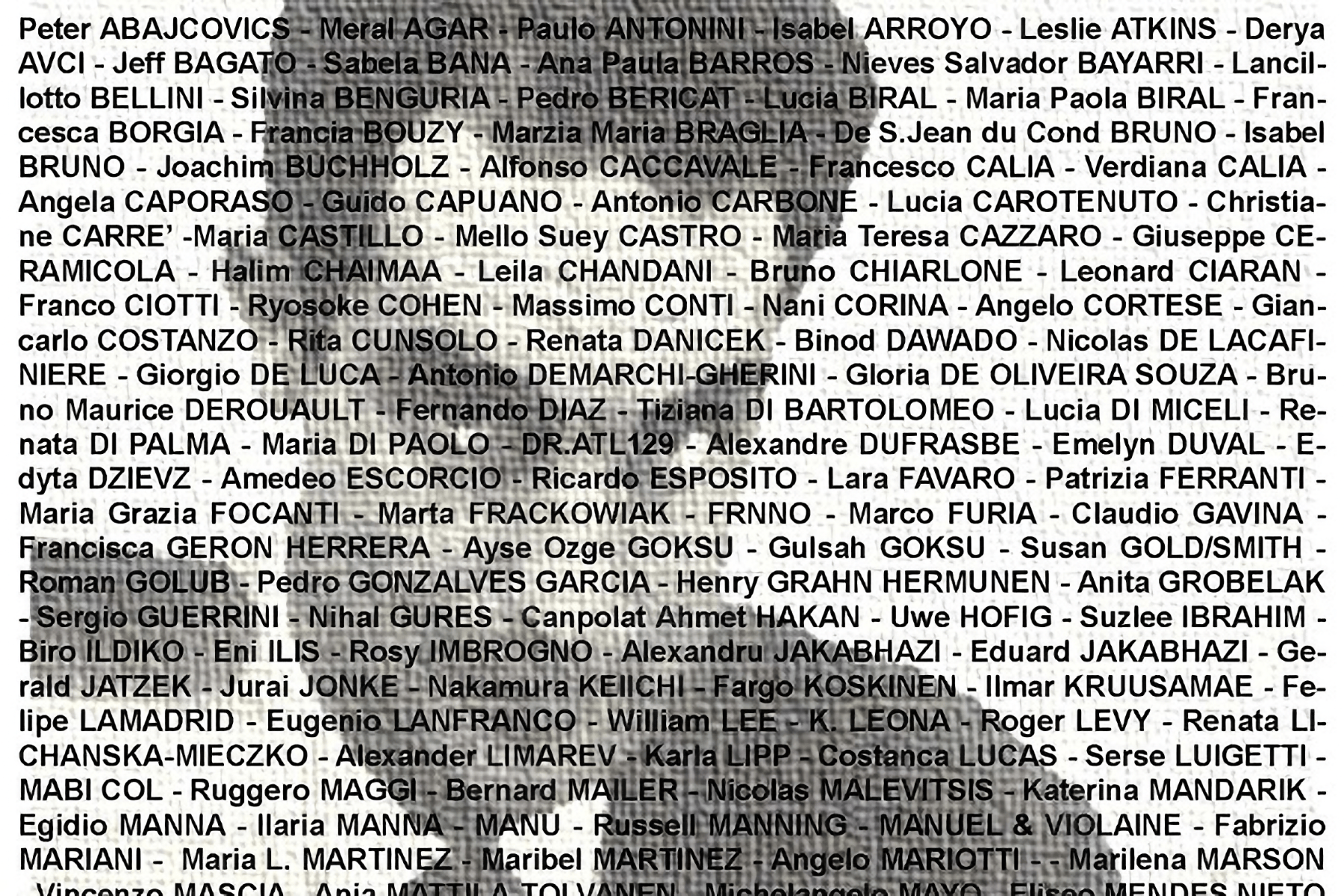
ALEMANIA Bernhard Zilling. Hors Tress. Isabella Hentz. Lars Schumacher. Uwe Höfig. ARGENTINA Claudia García. Leonor Kierzberg. María Castillo. Teresa Pego. AUSTRIA Gerald Jatzek. BRASIL Cristiane Grando. Franklin Valverde. Hugo Pontes. Luciana María Cassettari. Marcia Rosenberger. Renata Danicek. Rosilda Sa. María Nery. CHILE Koz Karen COLOMBIA Tulio Restrepo EEUU Perpetual Motion. Tofu.
ESPAÑA ANDALUCÍA ALMERÍA Emi Ortega. Fátima Jiménez. Francisco Escudero. Isabel. Romero. Ismael Lozano Garrido. Mabel Fernández. María de Gádor Galdeano Pérez. María MM. Melí L. Estévez. Raimón Blu. Triste Zara. CÁDIZ Manuela Malia. Patri Díez. GRANADA Ana Ruíz Holgado. Ángel Sanz Montero. La compañía. Consuelo Vallejo Delgado. Juan Antonio Sánchez. Manuel Ruiz Ruiz. Pablo Sánchez-Núñez. Rebecca Choate. Victoria García Mateos. Javier Seco. Julia Lillo de las Heras. Paqui Medina. JAÉN Encarna García Cabrero. Eva Patricia Vallejo Delgado. Manuel Ruíz de Quero. MÁLAGA Francisco Sánchez Gil. SEVILLLA. Manuel Carballido Macías. ARAGÓN Pedro Bericat. Victor Solanas-Díaz. CASTILLLA LA MANCHA. Daniel de Cullá. Juan Fran Núñez Parreño. CASTILLLA Y LEÓN. David Acebes. Isabel Gómez de Diego. Luís María Labrador. CATALUÑA César Reglero. Isabel Jover. Montserrat Bonet i Bonet. Pere Sousa. Valdor. C. VALENCIANA José Antonio Hinojos. Fernando Pérez Martín. Iván Albalate. Nuria de Espinosa. EXTREMADURA Antonio Gómez. Pura Martínez Llanera. GALICIA Manuel Xío Blanco. Pedro Gonzalvez. Sabela Baña. C. MADRID Ela Rabasco (Ela R que R). Isabel Arroyo. Mª del Pilar López. MURCIA Manolo Sales Maza. Mª José Cárceles Hernández PAÍS VASCO Patxi Serrano
FINLANDIA Merja Isomaa-James. FRANCIA Katerina Mandarik. Laura Apolonio. HUNGRÍA Peter Abajkovics ITALIA -Guroga. Ángela Caporaso. Bruno Chiarlone. Cinzia Farina. Emilio Morandi. Gianni Ramacciotti. Giovanni and Renata Stra DADA. Lara Favaro. María Teresa Cazzaro. Maya López Muro. Roberto Scala. Ruggero Maggi. Serse Luigetti.
MALASIA Suzlee Ibrahim MÉXICO Carolina Viñamata PORTUGAL Antonio Mousinho. Conceicao Bento. María José Silva-Mize. Renata Carneiro. REINO UNIDO Simon Warren. SUIZA Ana Paula Barros TURQUÍA Houvo Holocceli URUGUAY María Victoria Boné Ramírez.
Recibidas por correo electrónico y Whatsapp: Mahima Gupta. Anika Gupta (EEUU). Emily Shih (TAIWAN) Fotografías de intervenciones en el espacio público: Mª del Carmen Bellido Márquez. Luís Emilio Vallejo Delgado, EC13 • Cosmic Vibes (ESPAÑA).
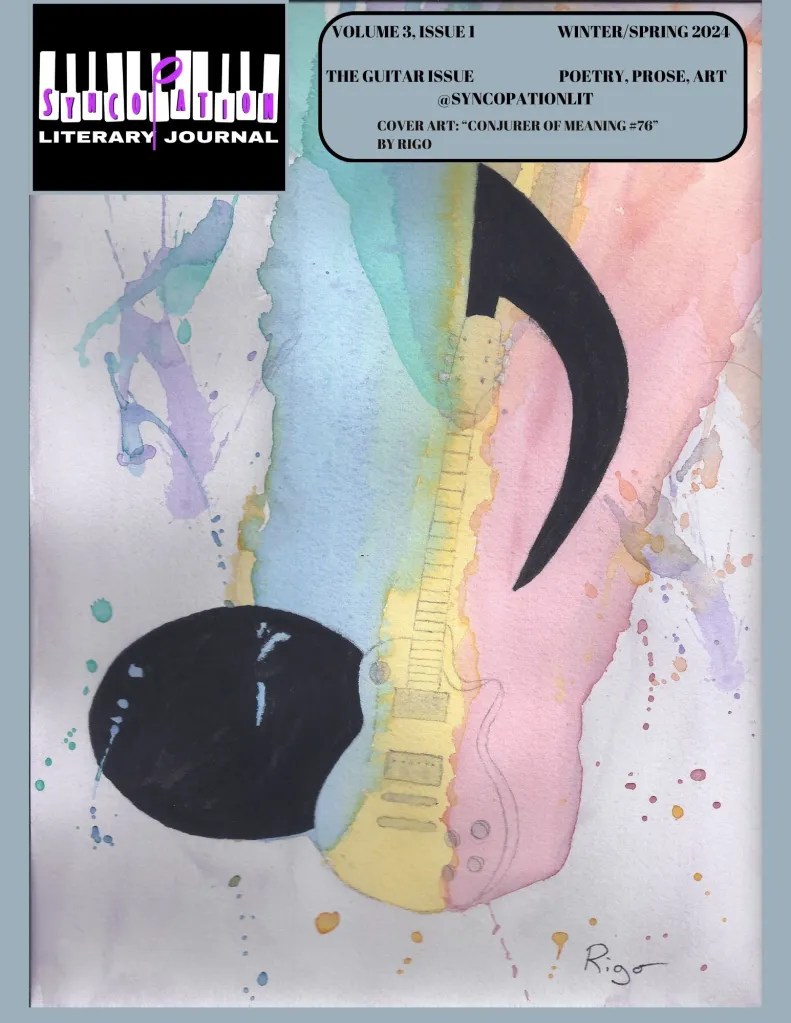
There’s a lot of music magazines around with a wide range of styles, objectives and audiences. But there is only one Syncopation Journal: an online platform dedicated to texts about music. We’re not talking about the industry’s press releases or the pseudo-intellectual drivel in music journals. We’re talking about – no need to be afraid – contemporary literature.
The self-descirption reads:
“This is the journal for all writers inspired by music. While everything we publish relates to music, you do not have to be a musician to submit.”
The magazine publishes poetry, flash prose, short stories and creative nonfiction as well as art.
The Guitar Issue
Volume 3, Issue 1 is about guitars and other plucked instruments and has just been published. Founding editor Natalie Welsh has selected a contribution from Gerald Jatzek, a short piece about the relationship between the instruments of the Balkans, which shows how strongly music connects the supposedly strictly separated ethnic groups.
The cover page
The first lines read:
“The Greek bouzouki and the baglamas are related to the Turkish bağlama family of instruments, which in turn goes back to the Persian dutar. The same applies to the Albanian çifteli. The Albanian and Kosovarian sharkia is a close relative of the šargija (…)
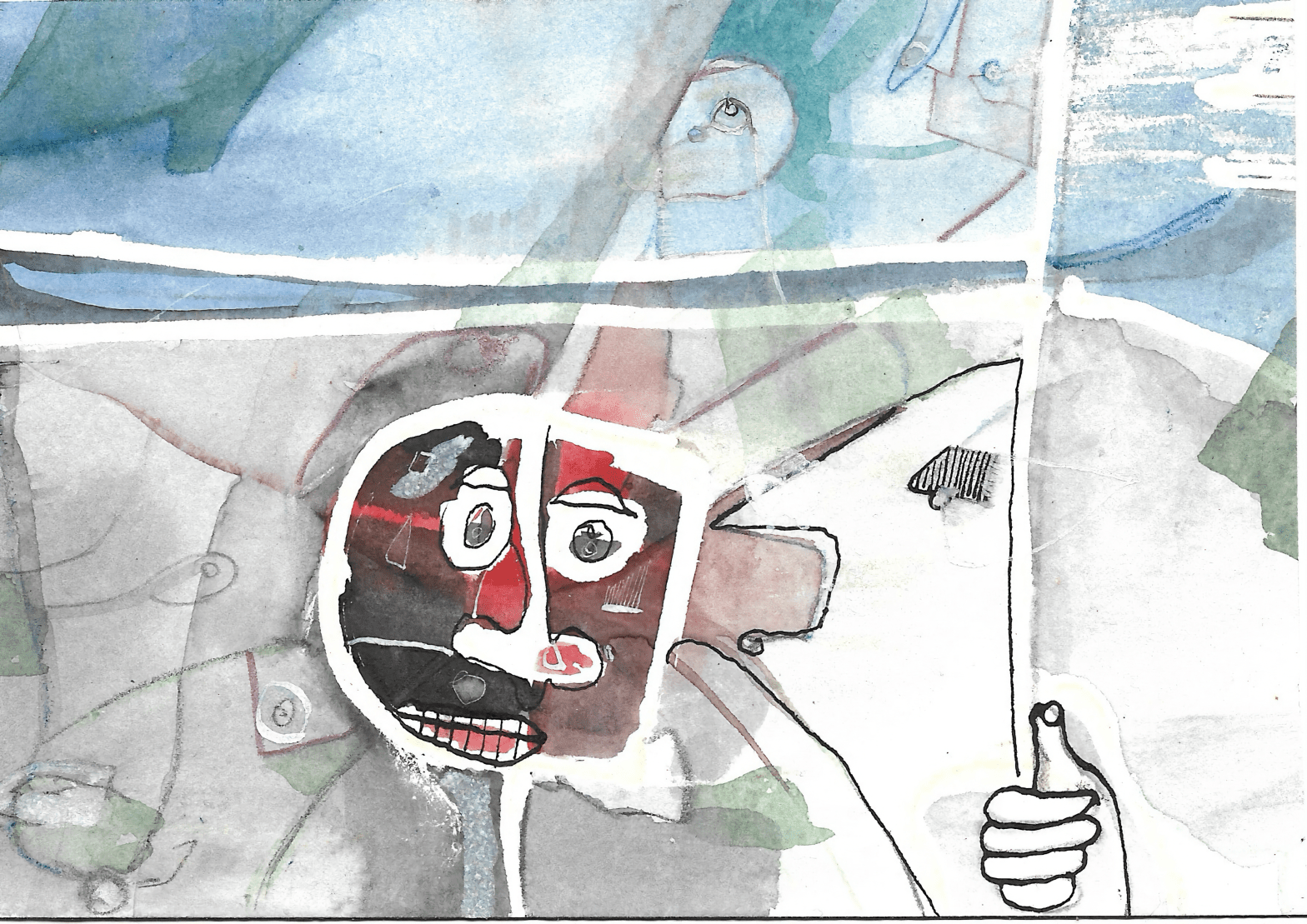
This card went out to Ruth Giles in England. It was once again a coproduction, consisting of Gabriele’s watercolor painting and Gerald’s haiku on the back side of the card.
The face reflects the surprise at the golden shine of the pebbles, while the haiku provides the explanation.
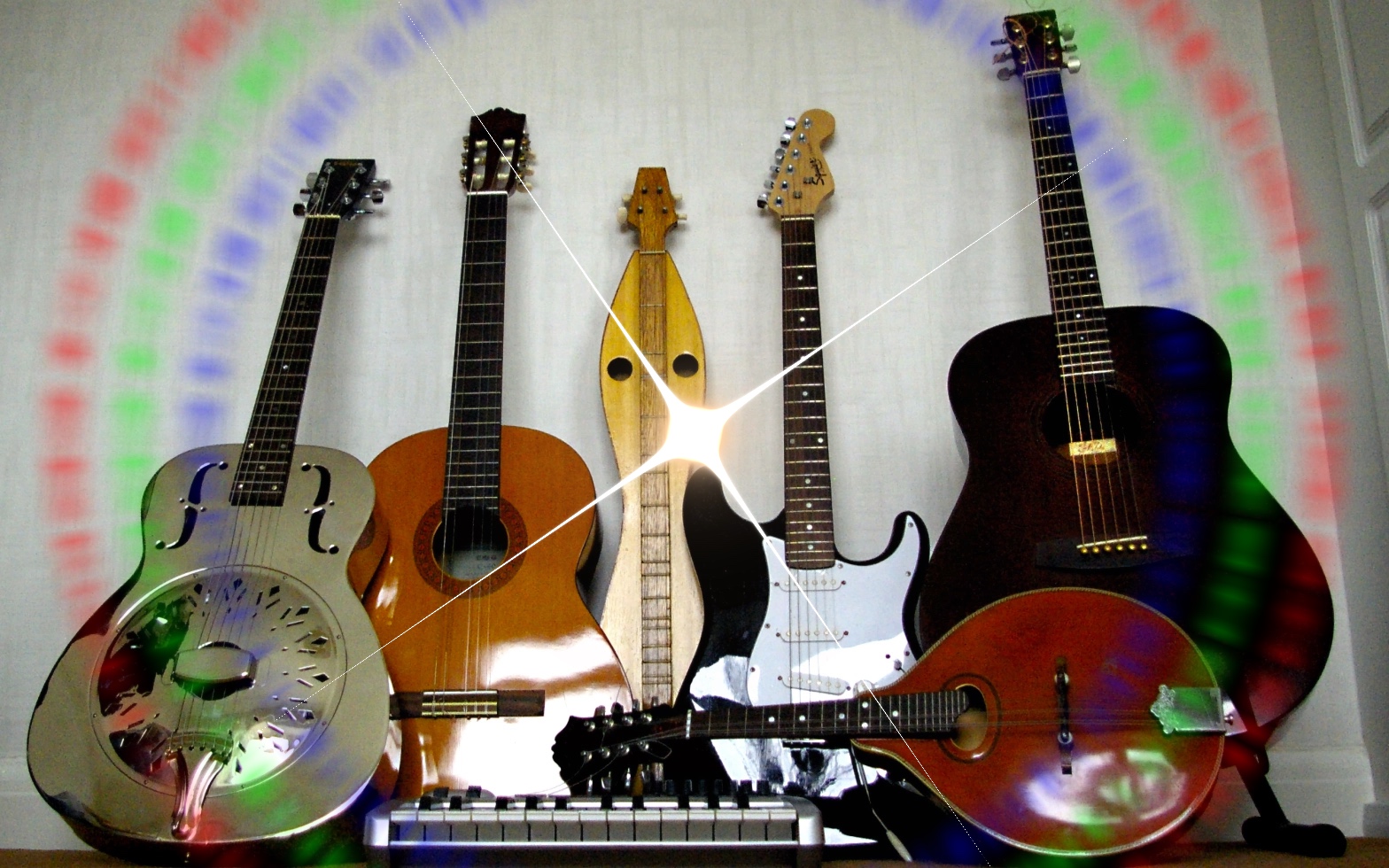
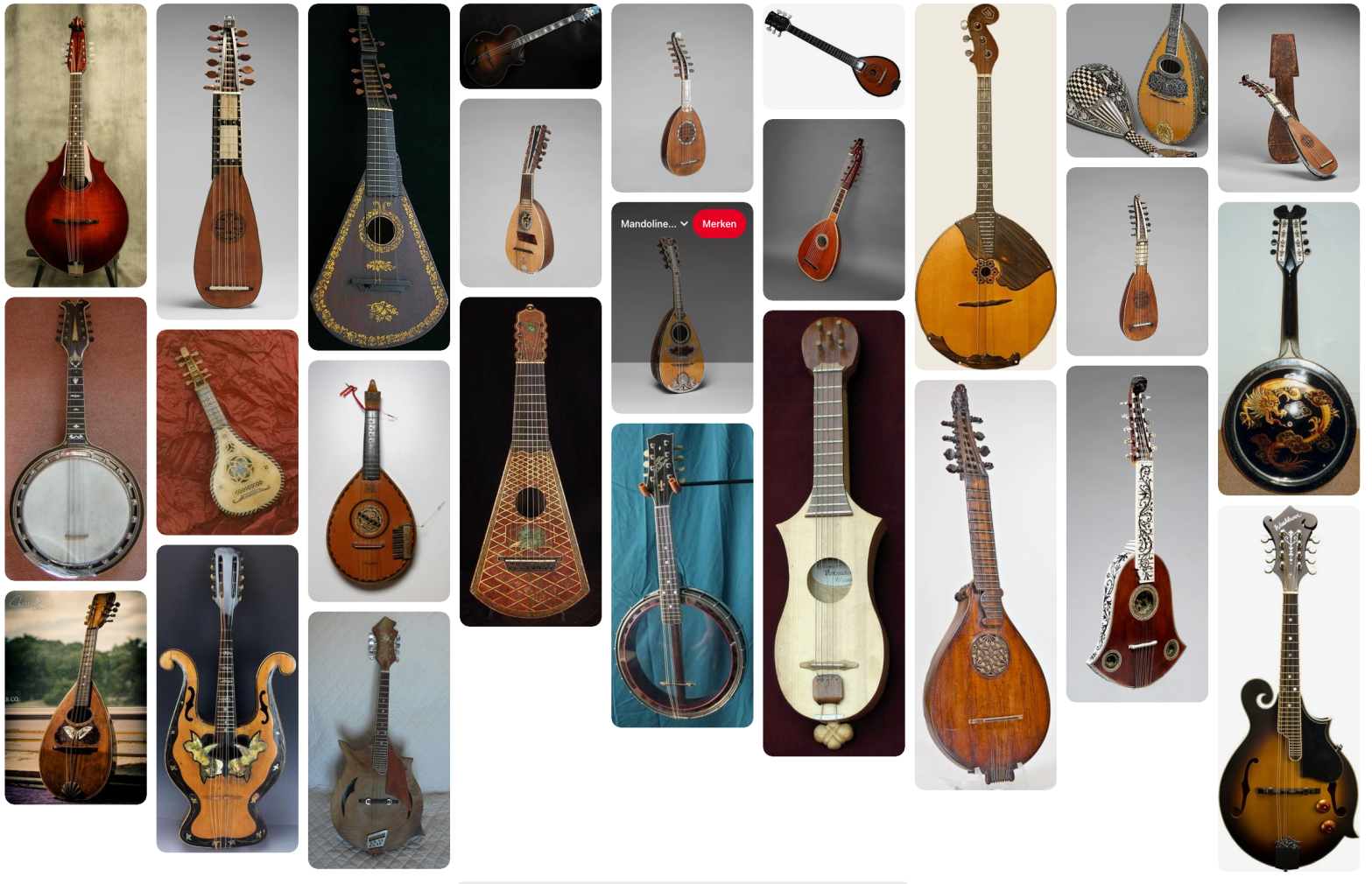
Mandolins are not only fun to play; many are real beauties as you can see here.
They form an extensive family of instruments with members in places like Italy, Brazil, India, Greece, the Balkans, the British Isles, the USA and others. They exist in a vast number of shapes, sizes and tunings from the piccolo mandolin’s c’ g’ d’’ a’’ to the mandocello which is tuned C G d a. And they are used in folk music as well as in classical music and in jazz.
Most mandolin instruments have double strings, usually tuned in unison, rarely in octaves with the low string above the high string as opposed to the 12-string guitar.
Every now and then, it is debatable to which group a particular instrument belongs. You can read lots of academic papers about the characteristics of mandolin instruments and citterns (citherns) and how to distinguish them. Then again, you may look at instruments in museums, in workshops, or in the hands of musicians – and time and again you’ll find mutual influences between the two families.
There’s only one thing that’s sure: ex oriente lux. The short-necked plucked lutes were developed in the East. Mesopotamia, to be exact.
Common mandolin types include:
The Neapolitan Mandolin
This venerable bowl-backed member of the family is used Italian and Greek folk music as well as in orchestras and classical ensembles. It has been a favourite of the German Wandervogel movement in the beginning of the 20th century as a portable alternative to the guitar. In the USA these instruments were called tater bug.
The flat-top Mandolin
The flat-back mandolin is easier to build and easier to play and was developed in the USA in the late 19th century. The very successful Gibson Army-Navy mandolin was flat-topped as well as flat-backed. High class instruments of this type are today built in the USA under the brand name Weber.
The Celtic Mandolin
The onion-shaped Celtic mandolin is the instrument of choice for British folk musicians. The design is also used for mandolins, mandolas, octave mandolins and Irish bouzoukis.
Pocket Mandolins
They usually have a flat top and a flat back, although there are some round-backs (with nylgut strings), usually from Sicily. In Italy these small instrument are called mandolino tascabile, and they are hard to find nowadays. They will probably become popular again because of the growing hostilities of (European) airlines against musicians.
The carved-top Mandolin
There are two distinctive shapes called the A and the F model. Both were developed by Orville Gibson around 1900. The A model is symmetrical and teardrop-shaped. The F (Florentine) model has two points on the lower body, a decorative scroll near the neck and usually a scroll carved into the headstock. A-4 and F-4 have oval sound holes, while A-5 and F-5 have two f-shaped sound holes like a violin.
Special Mandolins
The french mandolin Gelas has a double top. The top of the soundbox is only visible on the bottom half. This box runs all the way to the neck, and has its own sound-hole. A second piece of wood runs over the top-half of the box to the neck.
The mandriola has 4 courses of 3 strings and was played mostly in Germany. The middle string of the G and D courses may be an octave above the others (which makes it nearly impossible to play melodies without sounding out of tune).
The mandolinetto is a guitar-shaped mandolin. It first appeared around 1900 and was popular in the UK and the USA in the first part of the 20th century.
Then there are harp mandolins with and without sympathetic strings, models with two or three necks, lyre mandolins, mandolins with violin bodies, and bowl-backs with an aluminum body, and …
More…
If you want to spend some time gazing at beautiful things, visit my collection of mandolins & relatives on Pinterest.













 mail your art