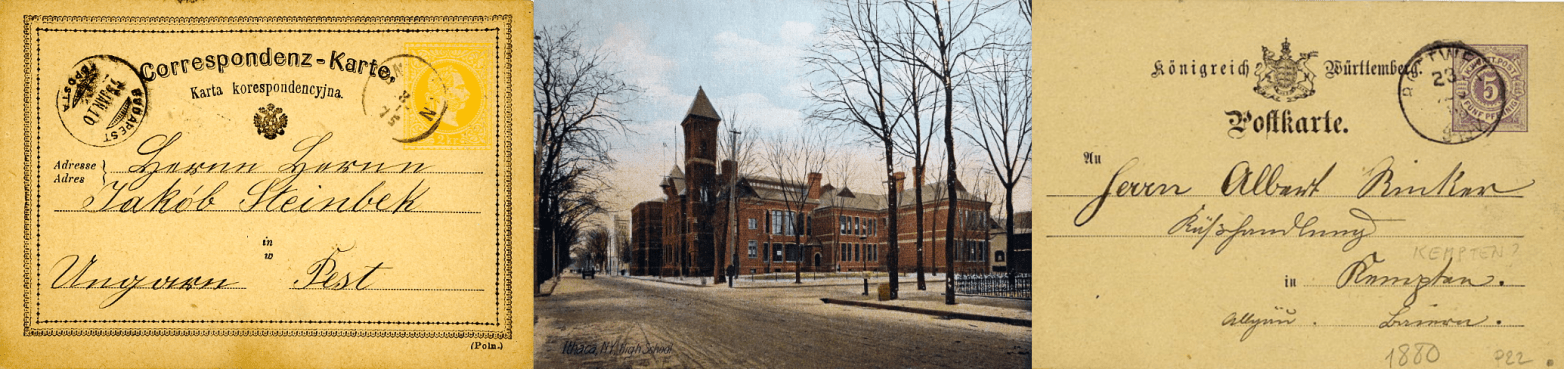
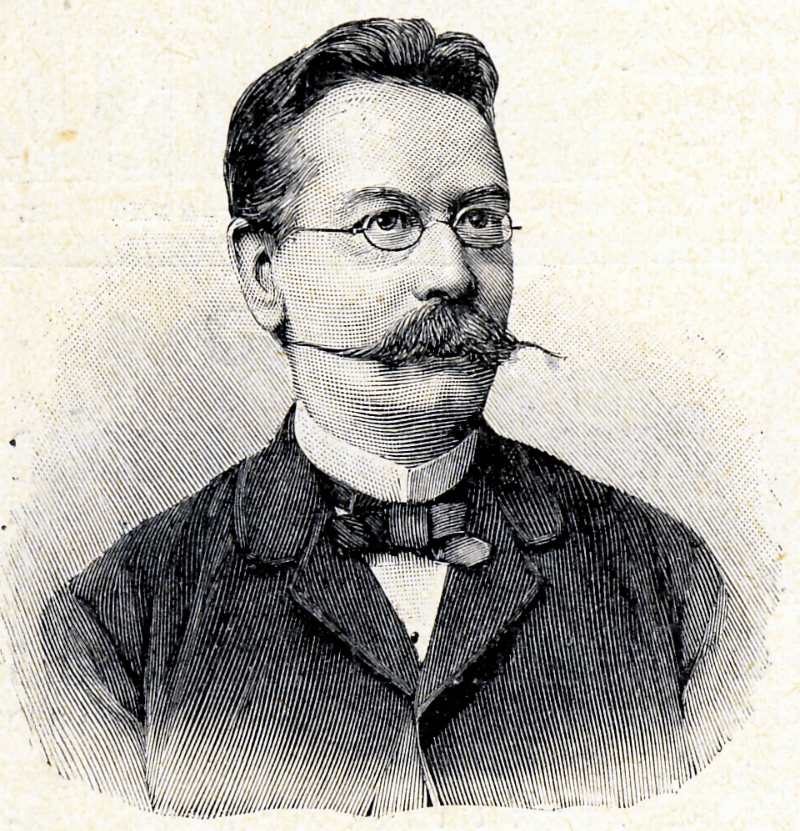
The history of the postcard began in Austria with the national economist Emanuel Hermann (1839-1902). On January 26, 1869, Hermann published an article in the influential daily newspaper Neue Freie Presse in which he proposed introducing a “Correspondenz-Karte” as an expensive alternative to a letter.
Despite — or perhaps because of — the lack of a marketing department at the Austrian k.k. Post- und Telegraphenverwaltung (PTV), the proposal was carried out on October 1, 1869.
The success far exceeded the state postal service’s expectations. The Correspondenz-Karte, as it was initially called, was a bit of a dry affair at first. There wasn’t much space for messages because one side was completely used for the address.
Though the early cards had no pictures, like today’s postal cards, more than two million were sold in the first three months alone. The idea was quickly copied by other countries. The United Kingdom, Finland, Switzerlan,d and Württemberg introduced postal cards in 1870.
In 1873, a German invention suddenly increased the profits of international postal services. With the reply-card system, the sender paid postage for both the outgoing and return cards, probably to ensure a prompt response. The post office didn’t have to worry whether it worked or not. They had already collected payment for two shipments.
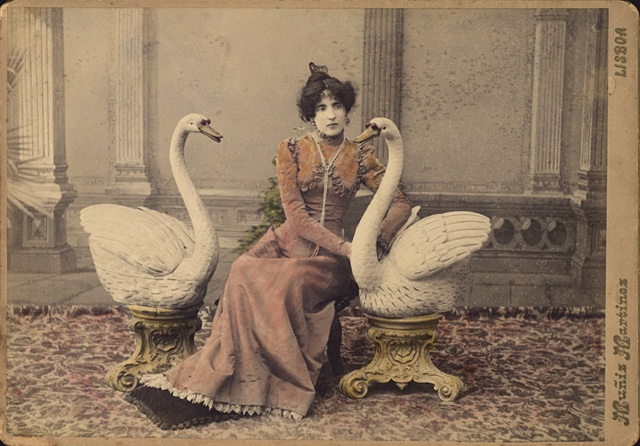
The first illustrated postcards were designed by the French bookseller Léon Besnardeau for soldiers fighting in the Franco-Prussian War (1870–1871). The cards featured small prints or vignettes, often depicting military units or patriotic symbols, and included space for a personal message.
In 1878, the Second Congress of the Universal Postal Union decided to use red stamps for postcards to simplify international processing.
By 1894, the (UPU) estimated that 1.7 billion postcards were exchanged annually between member countries.
Photos
The postal cards on top of the page are from Budapest (1869), the Ithaca High School (1885), and the Kingdom of Wurtemberg (1885). [enlarge].
 mail your art