What is Mail Art (4)
“Well, the idea is that it’s a way to convey a message or a kind of idea to someone which is not verbal; it is not a confrontation of two people It’s an object which is opened in privacy probably and the message is looked at.”
Ray Johnson (1968)
“The term ‚Mail-Art‘ and its relation to the alternative structure. Posted Art is undoubtedly “Mail(ed)” Art but not necessarily “Mail-Art”! When freedom is a basic principle, it is not easy to indicate any limits. Therefore it is no use to give strict standards to judge wether something might be false or real M-A. Whether a work can be classified under the heading M-A does not only depend on its aesthetic qualities, but also – or especially – on the informative, communicative and cultural intentions included in the mailing of the work itself.”
Guy Bleus (1983)
Open Letter to everybody on the Network
1) An important function of exhibitions and other group projects in the network is: to open channels to other human beings.
2) After your exhibition is shown and the documentation sent, or after you have recieved such a documentation with a list of addresses, use the channels!
3) Create person-to-person correspondence. The network is no longer a school,(sorry, Ray Johnson) it is real life now.
4) You have your own unique energy which you can give to others through your work: visual, audio, verbal, many others.
5) This energy is best used when it is exchanged for energy from another person with the same intentions.
6) The power of the network is in the quality of the direct correspondence, not the quantity.
We have learned this from our own mistakes.
Mark Bloch and H.R. Fricker (1984)
“Correspondence art is an elusive art form, far more variegated by its very nature than, say, painting. Where a painting always involves paint and a support surface, correspondence art can appear as any one of dozens of media transmitted through the mail. While the vast majority of correspondence art or mail art activities take place in the mail, today’s new forms of electronic communication blur the edges of that forum. In the 1960s, when correspondence art first began to blossom, most artists found the postal service to be the most readily available – and least expensive – medium of exchange. Today’s micro-computers with modern facilities offer anyone computing and communicating power that two decades ago were available only to the largest institutions and corporations, and only a few decades previous weren’t available to anyone at any price.”
Ken Friedman (1984)
“Mail art involves a multitude of lateral exchanges that inherently resists conventional art historical interpretation. Many mail artists maintain that the structures of communication are more important than mailed objects themselves, and others privilege the perpetual circulation of mailed art works over their preservation.”
Matt Ferranto (2000)
“A trailblazing aspect of the Network – and one which is still relevant today – is its ability to form alternatives. This did not ultimately succeed in breaking the monopoly of the established institutions of art communication such as journals, galleries and museums, but it did provide an alternative, at least for some time.”
Kornelia Röder (2008)
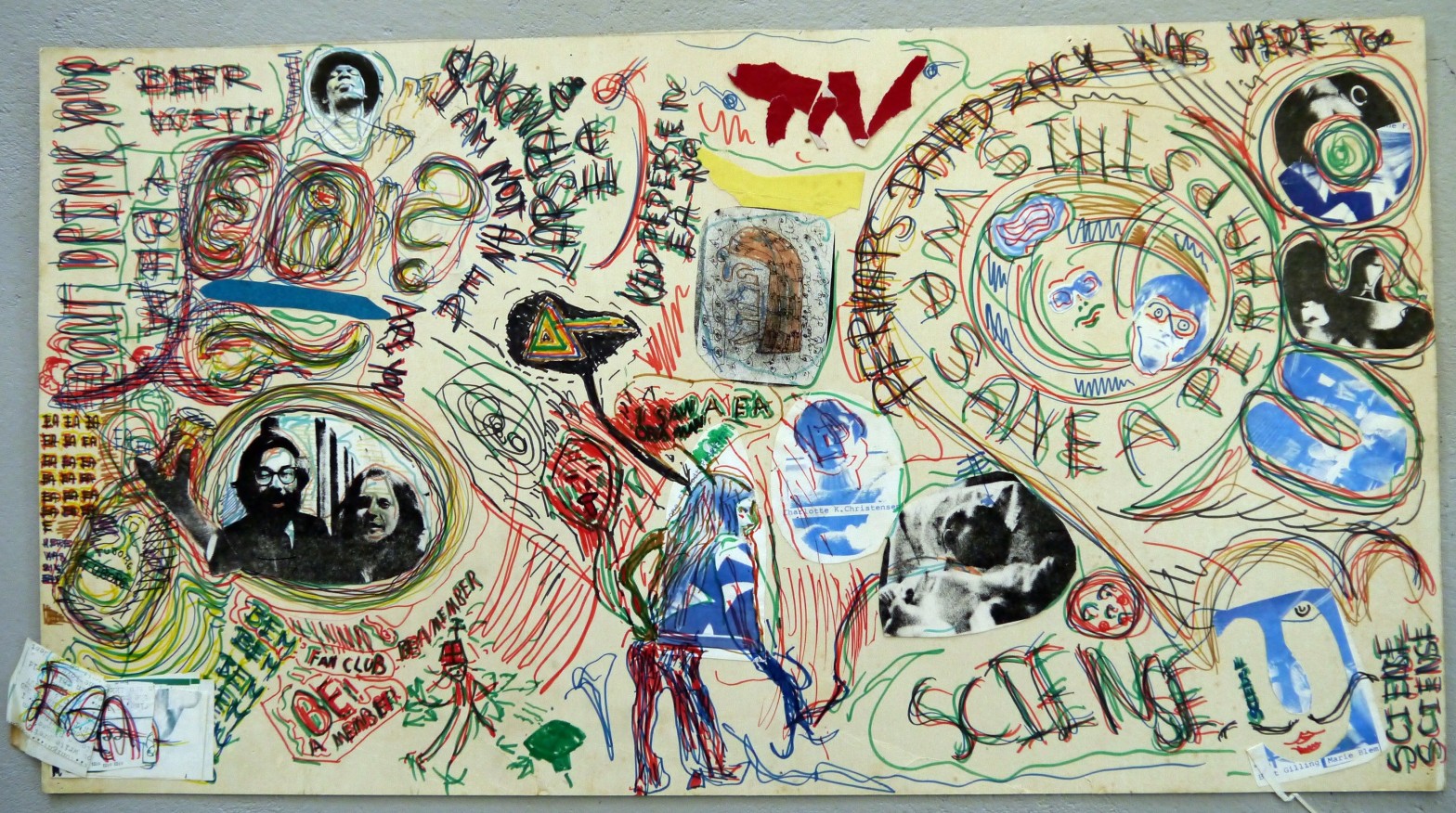
Illustration
The image is a piece of mail art called Sciense by Zack (1979) that is part of the vast collection of the Lomholt Archive.
 mail your art
One thought on “Quotes for Art Lovers, Part 2”